Hospitals today face the complex challenge of managing large numbers of patient appointments across diverse departments including outpatient clinics, diagnostic centers, and specialist consultations.
Each department operates with its own schedule, staff availability, and patient demand, creating a coordination puzzle that strains administrative resources.
When appointments are missed, the impact ripples throughout the organization: doctors sit idle, waiting lists grow longer, and patients who need care face extended delays.
Missed appointments disrupt hospital workflows, increase waiting times for other patients, and reduce overall operational efficiency.
An appointment management system in hospital environments provides a digital solution that helps automate scheduling, manage patient bookings, and reduce no-shows.
These systems improve patient flow, optimize the use of hospital resources, and create a more reliable foundation for healthcare service delivery.
Healthcare providers that integrated online appointment scheduling into their platforms have seen revenue increases of up to 120% due to improved patient volume and reduced idle time.
What Is an Appointment Management System in Hospitals?
An appointment management system in hospital settings is a digital platform used by healthcare providers to schedule, manage, and monitor patient appointments across departments.
This hospital appointment scheduling system is an important part of customer journey management that connects patient bookings with physician availability, creating a unified view of scheduling operations that eliminates the fragmentation common in manual approaches.
The system serves as a central hub for all appointment-related activities. Patients can book appointments through online portals or mobile apps, staff can manage schedules and view real-time availability, and administrators can monitor capacity utilization across the organization.
When a patient schedules an appointment, the system checks physician calendars, allocates the appropriate time slot, and updates all connected systems instantly.
This coordination ensures that no double bookings occur and that providers have accurate information about their daily schedules.
In addition to basic scheduling, modern healthcare appointment management platforms include features like waitlist management, automated rescheduling, and integration with clinical workflows.
These capabilities transform appointment management from an administrative task into a strategic function that supports both operational efficiency and quality patient care.
Why Reducing Patient No-Shows Is Critical for Hospitals
Patient no-shows represent one of the most persistent and costly challenges in healthcare operations. When patients fail to attend scheduled appointments without canceling, the consequences extend far beyond an empty time slot on a physician’s calendar.
- Financial impact is immediate and significant. Each no-show represents lost revenue that cannot be fully recovered, particularly when the appointment slot remains unfilled. For hospitals operating on thin margins, these losses accumulate quickly across hundreds or thousands of appointments weekly. The average cost of a single no-show appointment in a hospital setting is approximately $196 per patient, highlighting the substantial financial impact of missed appointments.
- Operational disruption follows closely behind. Physicians and clinical staff experience unplanned idle time, reducing overall productivity. Meanwhile, patients on waiting lists who could have used those slots remain untreated, potentially experiencing worsening conditions that require more intensive care later. This inefficiency creates a cycle where demand exceeds capacity not because resources are insufficient, but because existing capacity is poorly utilized.
- Patient care quality suffers as well. When no-shows occur regularly, hospitals may overbook appointments to compensate, leading to longer wait times for patients who do attend. Staff become stressed by unpredictable workloads, and the overall patient experience deteriorates. Reducing no-shows therefore addresses not just a scheduling problem but a fundamental barrier to delivering consistent, high-quality care.
Key Features of a Hospital Appointment Management System
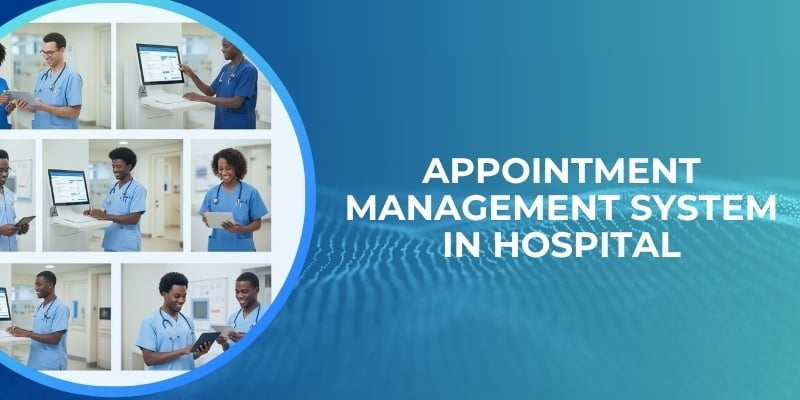
Modern hospital scheduling systems incorporate a range of features designed to streamline operations and reduce missed appointments.
Online Appointment Booking
Patients can schedule appointments digitally through hospital websites, patient portals, or mobile applications. This 24/7 availability accommodates patient schedules and preferences, removing the friction of phone-based scheduling that often requires multiple calls and wait times.
Patients can view available time slots, select their preferred provider, and receive immediate confirmation.
Automated Appointment Reminders
Automated reminders via SMS, email, or voice call significantly reduce no-show rates by ensuring patients do not forget their appointments. These reminders can be scheduled days before the appointment with follow-up reminders closer to the time.
Patients can confirm, reschedule, or cancel directly through the reminder, giving hospitals advance notice to fill vacated slots.
Physician Schedule Management
The system provides tools for managing doctor availability, consultation slots, and scheduling preferences.
Administrators can set up recurring schedules, block time for meetings or administrative duties, and adjust availability in response to staffing changes. This visibility ensures that appointment slots reflect actual capacity.
Integration With Patient Queues
When patients arrive, scheduled appointments connect seamlessly with queue management systems. Check-in at self-service kiosks or front desks triggers updates to the queue, ensuring patients are called at their appointed time.
This integration prevents confusion between scheduled appointments and walk-in patients, maintaining orderly service flow.
Improving Patient Flow Through Digital Appointment Scheduling
Digital appointment scheduling transforms how patients move through hospital environments by distributing arrivals more evenly throughout the day.
Without scheduled appointments, patient arrivals tend to cluster during early morning hours and immediately after lunch, creating overcrowded waiting areas and strained registration staff.
Appointment systems enable hospitals to spread demand across time slots, smoothing the peaks and valleys that characterize walk-in traffic.
Each appointment occupies a defined window, allowing staff to anticipate workload and prepare resources accordingly.
Registration desks and virtual queuing can help the staff know how many patients to expect at each hour, clinical staff understand their upcoming patient load, and waiting areas remain at manageable capacity.
Coordination between departments improves as well. When a patient requires multiple services (such as a consultation followed by diagnostic testing) the system can schedule related appointments in logical sequences that minimize patient travel and waiting.
This coordinated approach reduces the total time patients spend in the hospital while ensuring all necessary services are completed efficiently.
Integrating Appointment Systems With Hospital Technologies
Hospital appointment systems achieve their full potential when integrated with other technologies used in healthcare environments. This integration creates a seamless digital infrastructure that supports patients throughout their journey.
- Queue management systems connected to appointment platforms ensure that scheduled patients move smoothly through check-in, waiting, and service delivery. When patients arrive and check in, the queue system automatically places them in the appropriate service line with priority that reflects their scheduled time.
- Self-service kiosks provide patients with fast, independent check-in options. Patients can confirm their arrival, update personal information, and receive queue tickets or room assignments without waiting at a registration desk. This reduces administrative bottlenecks and gives patients greater control over their arrival experience.
- Digital signage displays real-time queue status and appointment information in waiting areas. Patients see their name or ticket number alongside estimated wait times, reducing anxiety and eliminating the need for staff to call names repeatedly.
- Hospital information systems integrate appointment data with electronic health records, billing systems, and clinical workflows. This connectivity ensures that when a patient checks in, their medical records are ready for the attending physician, and billing information is updated automatically.
Benefits of Appointment Management Systems for Hospitals
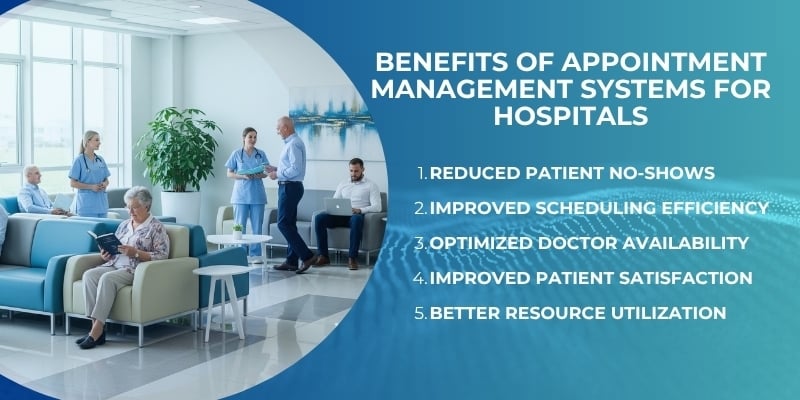
Implementing appointment scheduling systems in hospitals delivers measurable operational benefits that impact every aspect of service delivery.
- Reduced patient no-shows represent the most direct benefit. Automated reminders and easy rescheduling options give patients the tools they need to manage their appointments effectively. Hospitals typically see no-show reductions of 20 to 40 percent after implementing automated reminder systems.
- Improved scheduling efficiency results from centralized visibility into appointment availability. Staff spend less time managing conflicts, searching for open slots, and handling rescheduling requests. Administrative workload decreases, allowing staff to focus on patient care rather than calendar management.
- Optimized doctor availability ensures that clinical resources are used effectively. When physicians have full schedules with minimal gaps, patient access improves without requiring additional provider hours. This efficiency benefits both the hospital’s bottom line and patients waiting for appointments.
- Improved patient satisfaction follows naturally from reduced wait times, convenient booking options, and reliable scheduling. Patients who can book appointments online, receive timely reminders, and experience efficient check-in processes report higher satisfaction scores.
- Better resource utilization extends beyond clinical staff to facilities and equipment. Operating rooms, diagnostic equipment, and consultation rooms can be scheduled with precision, maximizing their productive use while maintaining appropriate time for cleaning and preparation between patients.
Designing Efficient Patient Service Areas
Digital appointment scheduling must be supported by physical service areas designed for efficient patient flow.
The physical environment either enables or undermines the benefits of digital scheduling, making service area design a critical consideration for hospitals.
- Registration areas should accommodate both scheduled patients and walk-in traffic without creating bottlenecks. Self-service kiosks strategically placed near entrances allow arriving patients to check in immediately, reducing queues at registration desks. Staffed stations remain available for patients who need assistance or have complex registration requirements.
- Waiting areas must be sized appropriately for expected patient volumes, with consideration for peak periods and the flow of patients through various stages of their visit. Seating arrangements should provide clear sightlines to digital signage displaying queue status, and comfortable spaces help patients feel at ease during any necessary waiting time.
- Consultation and treatment areas benefit from layouts that minimize patient movement while maintaining privacy and clinical functionality. Proximity between waiting areas and examination rooms reduces transit time and helps staff maintain efficient schedules.
Challenges Hospitals Face Without Appointment Management Systems
Hospitals relying on manual scheduling processes face persistent operational challenges that compromise efficiency and patient care.
- Scheduling conflicts occur frequently when multiple staff members manage paper or spreadsheet-based schedules without real-time visibility. Double bookings create patient frustration and disrupt physician schedules, while missed opportunities to fill available slots leave capacity unused.
- Administrative workload consumes significant staff time. Receptionists spend hours on phone-based scheduling, confirming appointments manually, and handling rescheduling requests. This administrative burden diverts resources from patient-facing activities and increases operational costs.
- Long patient waiting times result from inefficient scheduling and unpredictable patient flow. When appointments are not properly spaced or when walk-in traffic is not managed effectively, waiting areas become overcrowded and patients experience extended waits that damage satisfaction and potentially affect clinical outcomes.
- Inefficient use of medical resources means equipment, facilities, and staff time are not optimized. Underutilized resources represent wasted investment, while overutilized resources create bottlenecks that slow down entire departments.
Future of Appointment Management in Healthcare
Emerging innovations in healthcare scheduling technology promise to further transform how hospitals manage patient appointments and service delivery.
- AI-driven appointment scheduling will enable systems to learn from historical patterns and suggest optimal appointment times based on patient preferences, provider availability, and predicted no-show risks. Artificial intelligence can also identify patients at highest risk of missing appointments and trigger targeted interventions.
- Predictive patient flow management will use data from scheduling systems, real-time queue monitoring, and historical patterns to forecast wait times and resource needs. Hospitals will be able to anticipate bottlenecks before they develop and adjust staffing proactively.
- Integrated digital healthcare ecosystems will connect appointment scheduling with telemedicine platforms, remote monitoring tools, and patient engagement applications. Patients will move seamlessly between virtual and in-person care, with scheduling systems coordinating across modalities.
- Real-time healthcare analytics will provide administrators with continuous visibility into scheduling performance, patient flow, and resource utilization. Dashboards will highlight opportunities for improvement and enable data-driven decision making at all levels of the organization.
Real-World Use Cases of Appointment Management Systems in Healthcare
Outpatient clinic scheduling benefits from centralized management of multiple providers and treatment rooms. Patients can book follow-up appointments before leaving the clinic, and automated reminders reduce no-shows for critical care continuity.
Specialist consultation booking often involves referrals from primary care physicians. Integrated systems allow referring providers to schedule appointments directly, reducing the administrative burden on patients and ensuring timely access to specialty care.
Diagnostic appointment coordination requires precise scheduling across imaging, laboratory, and other testing departments. Appointment systems ensure that patients receive clear instructions for preparation and arrive at the correct locations at appropriate times.
Patient flow management in hospitals coordinates admissions, transfers, and discharges across inpatient units. Scheduling tools help bed managers allocate capacity efficiently and reduce delays that affect both patient experience and operational throughput.
Frequently Asked Questions About Appointment Management Systems in Hospitals
What is an appointment management system in hospitals?
An appointment management system in hospitals is a digital system used by healthcare providers to schedule, manage, and track patient appointments while optimizing doctor availability and hospital resources. It connects patient bookings with clinical schedules to streamline operations.
How do appointment systems reduce patient no-shows?
Automated reminders, digital confirmations, and easy rescheduling options help reduce missed appointments and improve patient attendance. Patients receive notifications days before appointments and can confirm or reschedule with minimal effort, reducing forgetfulness as a cause of no-shows.
What are the benefits of hospital appointment scheduling systems?
Benefits include improved patient flow, reduced administrative workload, optimized doctor schedules, and improved patient satisfaction. Hospitals also see reduced no-show rates and better utilization of clinical resources.
Can appointment systems integrate with other hospital technologies?
Appointment systems can integrate with queue management systems, hospital information systems, and digital service platforms to streamline healthcare workflows. These integrations create a seamless experience for patients and staff across the entire care journey.
Conclusion
The appointment management system in hospital environments plays a vital role in reducing no-shows and improving operational efficiency. Missed appointments disrupt care delivery, increase costs, and delay treatment for patients who need it most.
Digital scheduling tools help hospitals manage patient appointments more effectively while improving patient experiences and resource utilization.
The financial impact of no-shows, combined with the operational benefits of automated scheduling, makes appointment management systems a strategic investment for healthcare organizations.
By implementing these systems, hospitals can reduce administrative burden, optimize physician availability, and create more reliable access to care.
As patient expectations for convenience and digital engagement continue to rise, the healthcare appointment scheduling system will remain essential for hospitals committed to delivering efficient, high-quality care.
BOOK A FREE DEMO