Businesses today manage large volumes of customers across service centers, retail stores, banks, and government offices.
Queues are a common operational challenge that directly impacts customer satisfaction and operational efficiency.
When customers wait too long or encounter disorganized service, they leave frustrated, and businesses lose revenue and loyalty. However, waiting is inevitable in many service environments; the key is managing it effectively.
Queue management analytics provides organizations with the capability to track service performance, understand customer behavior, and identify operational bottlenecks.
By analyzing queue data and performance metrics, businesses can reduce waiting times, improve resource allocation, and enhance service delivery.
This data-driven approach transforms queue management from a reactive process into a strategic advantage that drives measurable improvements in both customer experience and operational efficiency.
Businesses implementing advanced queue management systems report significant improvements in customer experience and operational efficiency by leveraging real-time queue analytics and performance insights.
“Queue management analytics refers to the collection and analysis of data generated by queue management systems to measure customer wait times, service efficiency, and operational performance. Businesses use these insights to optimize staffing, improve service delivery, and enhance overall customer experience.”
What Is Queue Management Analytics?
Queue management analytics involves collecting data from queue systems and analyzing it to understand critical operational metrics. This includes measuring customer wait times, tracking service durations, monitoring queue lengths, and evaluating staff performance.
Modern queue analytics software captures this data automatically, eliminating the need for manual observations or stopwatch-based measurements that are inherently inaccurate and time-consuming.
The data is typically presented through queue performance analytics dashboards that help managers monitor service operations in real time. These dashboards display current queue status, alert staff to developing bottlenecks, and provide historical trends for strategic planning.
Unlike traditional approaches where managers relied on intuition or end-of-day reports, analytics enables proactive management based on actual performance data.
Analytics platforms can break down data by time of day, day of week, service type, staff member, and location. This granularity allows organizations to understand not just what is happening, but why it is happening.
For example, analytics might reveal that wait times spike at 11:00 AM on Tuesdays specifically at teller counters processing business deposits.
Armed with this insight, managers can adjust staffing schedules or implement dedicated business banking windows to address the root cause rather than simply reacting to complaints.
Why Queue Analytics Is Critical for Customer Experience
Customer expectations for fast, efficient service have never been higher. In an era where consumers can order products with one-click delivery and access services 24/7 from their phones, waiting in a physical queue feels increasingly burdensome.
Queue analytics helps businesses understand customer behavior and improve service delivery in ways that directly impact satisfaction.
Insights from queue data help organizations reduce wait times and optimize service processes. But beyond actual wait time, analytics enables something equally important: managing perceived wait time.
Research consistently shows that customers often overestimate how long they have waited, particularly when queues are disorganized or communication is poor.
Queue data analytics allows businesses to implement strategies that address both actual and perceived wait times. By understanding traffic patterns, organizations can staff appropriately to minimize actual waits.
By integrating analytics with digital signage and customer notifications, they can communicate expected wait times, reducing uncertainty and the anxiety that makes waits feel longer.
This combination of operational efficiency and transparent communication creates a fundamentally better customer experience.
Using digital signage to provide real-time updates and entertainment can reduce perceived wait times by up to 35%.
Key KPIs Every Business Should Track in Queue Management
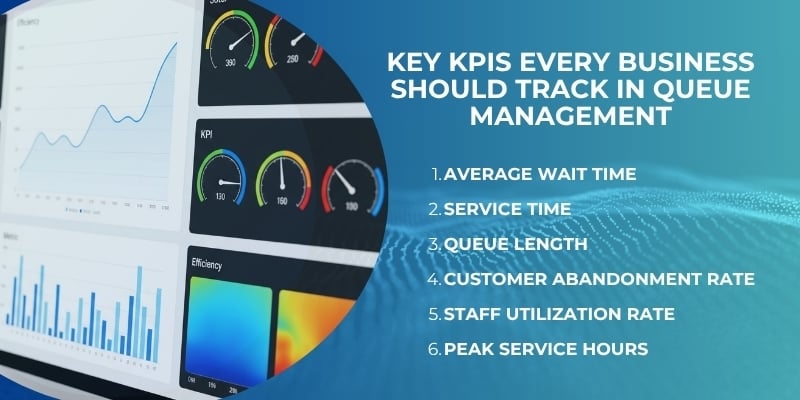
Effective queue management system analytics begins with tracking the right key performance indicators. These queue management metrics provide the foundation for understanding service operations and identifying improvement opportunities.
Average Wait Time
Average wait time measures how long customers wait before receiving service. This is often the most visible indicator of service quality and the metric most directly tied to customer satisfaction.
Tracking this KPI helps organizations understand whether service levels meet expectations and identify when wait times exceed acceptable thresholds. It should be monitored by time of day, day of week, and service type to reveal patterns that inform staffing decisions.
Service Time
Service time tracks how long staff take to serve each customer. This metric reflects staff efficiency, process complexity, and the nature of customer needs.
Analyzing service time helps organizations identify which transaction types take longest, which staff members may need additional training or support, and whether process improvements could reduce handling time.
When service time varies significantly between similar transactions, it often indicates opportunities for standardization.
Queue Length
Queue length measures how many customers are waiting at any given time. This operational metric directly correlates with wait time but provides additional insight into capacity utilization.
Monitoring queue length helps managers determine when to open additional service points, when to redirect staff from back-office duties, and whether physical queuing areas are adequately sized for peak demand periods.
Customer Abandonment Rate
Customer abandonment rate tracks how many customers leave before being served. This metric represents lost revenue and dissatisfied customers; people who needed service but left because wait times were too long or the queue appeared overwhelming.
High abandonment rates are clear indicators that service levels are failing to meet customer expectations. Analytics can help identify exactly when abandonment spikes occur and what wait time threshold triggers customers to leave.
Staff Utilization Rate
Staff utilization rate shows how efficiently employees handle service demand. This metric measures the percentage of time staff spend actively serving customers versus waiting for customers.
While high utilization might seem positive, utilization rates that consistently exceed 85-90 percent often indicate that staff are overworked, leading to burnout and potential service quality declines.
Conversely, low utilization suggests overstaffing or inefficient scheduling that increases operational costs without improving customer experience.
Peak Service Hours
Peak service hours identify times when customer traffic is highest. Understanding these patterns is fundamental to effective workforce scheduling.
By analyzing traffic patterns across days, weeks, and seasons, organizations can align staff availability with customer demand, ensuring adequate coverage during busy periods while avoiding unnecessary labor costs during slow times.
How Queue Analytics Improves Operational Efficiency
Queue analytics provides actionable insights that drive operational improvements across multiple dimensions.
- Optimizing staff allocation becomes possible when organizations understand exactly when and where staff are needed. Instead of guessing at staffing requirements or relying on historical averages that obscure variation, managers can use data to create schedules that match demand patterns precisely. This reduces both understaffing during busy periods and overstaffing during quiet periods.
- Identifying service bottlenecks is another critical capability. Analytics reveals where delays are occurring in the service process. For example, data might show that customers wait 10 minutes for service but only receive 2 minutes of staff attention. This pattern suggests that capacity constraints, not service complexity, are the primary issue. Alternatively, data might show that service time is the problem; perhaps a particular transaction type takes four times longer than standard, suggesting process inefficiencies or the need for specialized handling.
- Predicting peak traffic periods enables proactive preparation. When organizations know with confidence that demand will spike at certain times, they can schedule additional staff, prepare resources, and communicate wait expectations to customers before they arrive. This predictive capability transforms queue management from reactive firefighting to strategic planning.
- Improving resource utilization extends beyond staff to include physical resources as well. Analytics can reveal whether service counters, waiting areas, and self-service kiosks are being used efficiently. Underutilized resources can be redeployed or eliminated, while overutilized resources may need expansion or supplementation.
Using Real-Time Queue Data to Improve Customer Experience
Real-time analytics capabilities allow businesses to make dynamic adjustments that directly improve customer experience.
- Monitoring service performance in real time means managers can see developing issues before they become customer complaints. When wait times exceed targets or queue lengths reach capacity thresholds, dashboards provide immediate alerts. Managers can then take corrective action (opening additional service points, redirecting staff, or implementing overflow procedures) before customers become frustrated.
- Adjusting staffing levels dynamically based on current conditions is a significant advantage of real-time visibility. Instead of rigid schedules that may not match actual demand, organizations can flex staff deployment in response to current traffic. This might mean holding staff past scheduled shift ends when queues are unexpectedly long or releasing staff early when demand drops below forecasts.
- Communicating wait times to customers using real-time data improves transparency and reduces perceived wait. Digital signage displays showing current wait times, queue position updates sent via SMS, and mobile app notifications keep customers informed throughout their journey. This communication demonstrates respect for customers’ time and gives them control over how they spend their waiting moments.
Integrating Queue Analytics With Business Systems
The value of queue analytics multiplies when integrated with other business systems. Queue monitoring software becomes most powerful when it connects to the broader technology ecosystem.
- CRM platforms benefit from queue analytics integration by gaining visibility into service delivery. When CRM systems know how long customers waited and which staff served them, they provide a more complete picture of the customer relationship. This integration also enables personalized service; staff can see customer history and preferences as customers approach the service point.
- Appointment scheduling systems integrated with queue analytics create a unified view of planned and unplanned customer traffic. Organizations can balance scheduled appointments with walk-in customers, ensuring that neither group faces excessive waits. This integration also enables more accurate capacity planning, as organizations can predict total demand by combining scheduled appointments with historical walk-in patterns.
- Digital signage platforms powered by queue analytics display relevant, timely information to waiting customers. Instead of generic content, signage can show current wait times, next customer numbers, and service updates. This communication reduces perceived wait time by keeping customers informed and engaged.
- Customer journey management platforms bring together queue analytics with data from across the service experience. These platforms track customers from initial booking through service completion, providing comprehensive visibility into the factors that influence satisfaction and efficiency.
Industries That Benefit From Queue Management Analytics
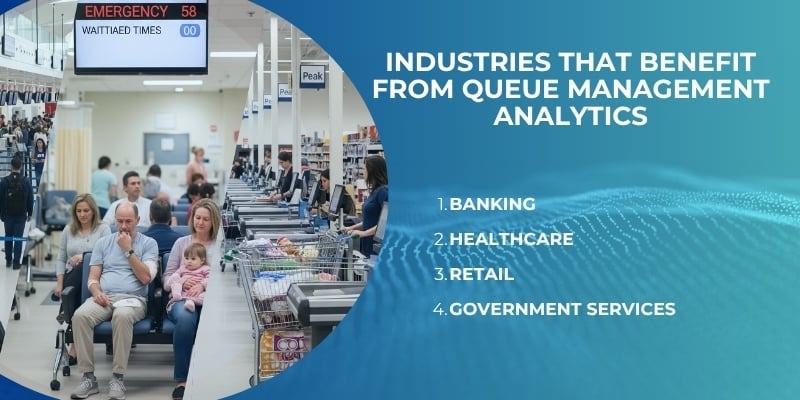
Queue analytics supports service optimization across diverse industries, each with unique requirements and challenges.
Banking
Financial institutions use analytics to track branch service efficiency and customer flow across their networks. With multiple transaction types (from simple deposits to complex loan applications) analytics helps banks allocate appropriate staff and service points to each category.
Branch managers can compare performance across locations, identify best practices, and implement improvements consistently. For more information, explore our banking industry solutions.
Healthcare
Hospitals and clinics monitor patient wait times across multiple touchpoints: registration, waiting rooms, examination rooms, and checkout.
Analytics helps healthcare providers identify where delays occur in patient flow, optimize scheduling, and improve the patient experience. Reducing wait times in healthcare is particularly critical given the stress patients already experience related to their health concerns.
Retail
Retailers use analytics to manage service desk queues, checkout lines, and consultation areas. During peak seasons, analytics helps retailers deploy staff efficiently and communicate wait expectations to customers.
For retailers, queue analytics often correlates directly with sales; customers who wait too long may abandon purchases entirely.
Government Services
Citizen service centers leverage queue analytics to improve service delivery across departments. With limited budgets and high public expectations, government agencies use analytics to maximize efficiency, reduce wait times, and demonstrate accountability for service levels.
Challenges Businesses Face Without Queue Analytics
Organizations that operate without queue analytics face persistent operational issues that impact both customers and employees.
- Lack of visibility into service performance leaves managers making decisions based on intuition rather than data. Without objective metrics, it is impossible to know whether service levels are improving, declining, or staying the same. This visibility gap prevents organizations from identifying problems early and evaluating the effectiveness of improvement efforts.
- Inefficient staffing decisions result from not understanding demand patterns. Without data showing when customers arrive and how long they take to serve, organizations cannot schedule staff effectively. The result is either understaffing that creates long waits and frustrated customers, or overstaffing that wastes labor costs and reduces profitability.
- Poor customer experience is the inevitable outcome of unmanaged queues. Customers who wait too long without communication or organization form negative impressions that affect loyalty and word-of-mouth recommendations. In competitive industries, poor queue management can drive customers to competitors who offer more efficient service.
- Inability to identify service bottlenecks means operational problems persist indefinitely. Without analytics, organizations cannot pinpoint where delays occur or why. A bottleneck might exist in the service process, in staffing allocation, or in physical layout, but without data, it remains invisible and unresolved.
Queue analytics solves these challenges by providing objective, actionable data that illuminates service operations and enables evidence-based decision-making.
Future of Queue Management Analytics
Emerging technologies are expanding the capabilities of queue analytics beyond traditional measurement and reporting.
- AI-driven service predictions will enable organizations to forecast demand with increasing accuracy. Machine learning algorithms trained on historical data can predict not just overall traffic volumes but also the mix of transaction types, service durations, and abandonment risks. These predictions will enable proactive staffing and resource allocation that was previously impossible.
- Predictive queue management takes forecasting a step further by recommending actions before problems develop. When AI predicts that wait times will exceed targets within the next hour, the system can automatically suggest or implement solutions; sending alerts to staff, adjusting digital signage messaging, or notifying managers to open additional service points.
- Advanced customer flow analytics will provide deeper insights into how customers move through service environments. Sensors, cameras, and location tracking technologies will map customer journeys with unprecedented detail, revealing not just how long customers wait but where they wait, how they move through spaces, and where friction points exist.
- Integrated customer journey analytics will connect queue data with other touchpoints to create comprehensive views of service experiences. Organizations will understand how queue experiences affect downstream outcomes like satisfaction scores, repeat visits, and overall loyalty.
- Real-time operational dashboards will become increasingly sophisticated, presenting complex data in accessible, actionable formats. These dashboards will provide at-a-glance visibility into performance across locations, with drill-down capabilities that enable detailed analysis when needed.
Frequently Asked Questions About Queue Management Analytics
What is queue management analytics?
Queue management analytics is the process of analyzing queue data such as wait times, service durations, and customer flow to improve operational performance. It provides insights that help organizations optimize service delivery and customer experience.
Why is queue analytics important for businesses?
Queue analytics helps businesses understand service performance, optimize staffing, reduce waiting times, and improve customer experiences. Without analytics, organizations lack visibility into operational issues and cannot measure the impact of improvement efforts.
What KPIs are important in queue management?
Important KPIs include wait time, service time, queue length, customer abandonment rate, and staff utilization. Tracking these metrics provides a comprehensive view of service operations and reveals opportunities for improvement.
How does queue analytics improve customer experience?
Queue analytics helps businesses identify service delays, optimize workflows, and communicate wait times effectively. By reducing actual wait times and managing perceived wait times through communication, analytics creates a more positive customer experience.
Conclusion
Queue management analytics plays a vital role in helping businesses monitor service performance and improve customer experiences.
By tracking key performance indicators such as wait times, service efficiency, and queue length, organizations gain valuable insights into their operations that drive meaningful improvements.
With real-time data and analytics dashboards, businesses can identify bottlenecks, optimize staffing, and deliver faster, more efficient services.
The ability to see what is happening across locations in real time transforms queue management from a reactive function into a strategic capability that directly impacts customer satisfaction and operational efficiency.
As customer expectations for speed and convenience continue to grow, queue management metrics will remain essential for organizations committed to service excellence.
The organizations that embrace data-driven queue management will be best positioned to meet rising expectations, optimize their operations, and deliver the seamless service experiences that customers demand.
BOOK A FREE DEMO