54% of all global transactions are now conducted digitally in 2026, with mobile payments reaching USD 8.1 trillion in 2024 (CoinLaw, 2026). Digital wallets are used by over 5.3 billion people, representing nearly two-thirds of the global population. The shift away from physical cash is no longer a future scenario | it is the current reality in most developed economies, and it is accelerating rapidly in emerging ones.
This article examines the genuine pros and cons of a cashless society, supported by 2025 and 2026 data, with country-level examples and practical implications for banks, retailers, and governments managing the transition.
What Is a Cashless Society?
A cashless society is an economic system in which financial transactions are conducted through digital means rather than physical currency. This includes card payments, mobile wallets, bank transfers, QR code payments, and contactless transactions. It does not require the complete elimination of cash | it describes a system where cash is no longer the dominant or default payment method.
Countries are at different stages of this transition. Sweden conducts approximately 90% of transactions digitally and is approaching full cashlessness. In contrast, many emerging economies still rely heavily on cash for daily commerce, though mobile money platforms are accelerating the shift. In the US, cash accounted for just 14% of all consumer payments in 2024 (Stripe).
How a Cashless Economy Works
At the core of a cashless economy is digital infrastructure—apps, cloud platforms, APIs, and secure networks that move money instantly.
Banks still play a big role. They handle digital accounts, link debit and credit cards, and often power the backend of many payment apps.
Fintech companies push the experience further. Think of apps like PayPal or Square—they make payments easier, faster, and more user-friendly.
Mobile wallets and banking apps are now everyday tools. Most people can pay bills, transfer money, or split dinner using just their phone.
On the government side, many countries now offer tax payments, fines, or even subsidies through digital methods.
For businesses, it’s all about speed and tracking. Digital payments help manage cash flow and improve reporting without waiting for manual entries.
Everyone—from big banks to tiny vendors—has a part in making the system run smoothly.
Together, these systems form the backbone of a cashless economy, enabling fast, secure, and traceable digital transactions across industries.
Pros of a Cashless Society
A cashless economy significantly benefits individuals, businesses, and governments by enhancing efficiency, security, and economic transparency.
Digital payments are becoming increasingly common, with seven out of ten consumers stating they can manage without cash, while half of all merchants expect to stop accepting cash by 2025.
Cashless systems enable faster payments, improved financial management, and streamlined business operations as more transactions shift online or to mobile platforms.
These advantages explain why many governments and businesses are moving toward a cashless economy, especially in urban and digitally connected regions.
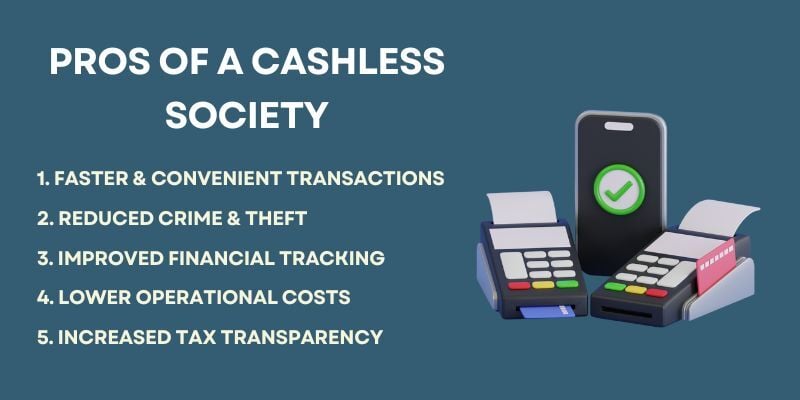
Below are some primary advantages of transitioning to a cashless society:
1. Faster and More Convenient Transactions
Cashless transactions eliminate the need to count cash, handle change, or wait in long queues. Whether tapping a card, scanning a QR code, or using mobile wallets, digital payments make purchases seamless and reduce wait times at checkout. According to (CoinLaw, 2026), Digital payments are faster than cash at the point of transaction. Contactless card and mobile wallet transactions complete in under a second. Mobile POS systems reduce average checkout time by 41%
This benefits high-traffic areas such as retail stores, public transportation, and online shopping, where businesses need to manage customer queues efficiently.
For example, most forms of public transportation in Sweden have gone cash-free, accepting only card or mobile payments. The country has adopted digital payment methods like Swish, a mobile payment app millions Swedes use.
Moreover, mobile payment platforms like Apple Pay, Google Pay, and PayPal further simplify transactions by allowing users to pay instantly with a smartphone.
The ease of digital payments encourages a smoother consumer experience, making everyday purchases quicker and hassle-free.
2. Reduced Crime and Theft
One of the biggest advantages of a cashless society is the lower risk of theft and crime. Without physical cash, businesses and individuals are less vulnerable to robberies, and employees handling money face fewer security threats.
For instance, the move toward digital payments in China has led to a noticeable decline in cash-related crimes, as fewer people carry cash.
Similarly, large-scale events like the Coachella Valley Music and Arts Festival use cashless payment systems with RFID wristbands.
These wristbands let attendees make purchases and access event areas without carrying cash or cards, reducing the risk of theft and fraud while improving transaction speed and security.
By removing cash from transactions, businesses and individuals can operate in a safer environment.
3. Improved Financial Tracking and Budgeting
Digital transactions create an automatic financial record, making it easier for individuals and businesses to track expenses, analyze spending habits, and budget effectively.
Unlike cash, which can be easily lost or spent without documentation, digital payments provide clear statements and transaction histories.
Budgeting apps like Mint, YNAB, and PocketGuard connect with bank accounts to provide real-time financial insights, helping users track spending, budget effectively, and manage their money.
For businesses, digital records simplify accounting processes, reducing errors and making tax reporting more efficient. Consumers and businesses can improve money management and financial planning with a digital financial footprint.
4. Lower Operational Costs for Businesses
Handling cash involves additional costs, including storage, transportation, and security. Businesses that transition to cashless transactions can significantly reduce these overhead expenses.
Cash management costs US businesses billions annually in labor and security measures, making digital payments a more cost-effective alternative.
Many retailers and service providers now prefer contactless payments because they eliminate the need for cash drawers, change counting, and frequent bank deposits.
5. Increased Tax Transparency
A cashless economy improves tax compliance by creating a digital trail for transactions.
Unlike cash payments, which can be easily underreported or hidden, digital payments leave records that financial authorities can audit. This helps governments reduce tax evasion and increase revenue collection.
Countries like India and Sweden have implemented policies encouraging cashless transactions to combat the shadow economy. India’s demonetization initiative in 2016 led to a surge in digital payments, reducing the use of untraceable cash in illicit activities.
With greater tax transparency, governments can allocate resources more effectively for public services and infrastructure development.
Cons of a Cashless Society
While digital transactions offer convenience, security, and efficiency, the impact of a cashless society also comes with significant challenges.
Specific populations, such as elderly individuals, low-income communities, and those in rural areas, may struggle with the shift away from physical cash.
Additionally, privacy, cybersecurity, and system reliability concerns highlight the risks of relying entirely on digital payments.
These disadvantages highlight the risks of a fully cashless economy, particularly for vulnerable populations and regions with limited digital infrastructure.
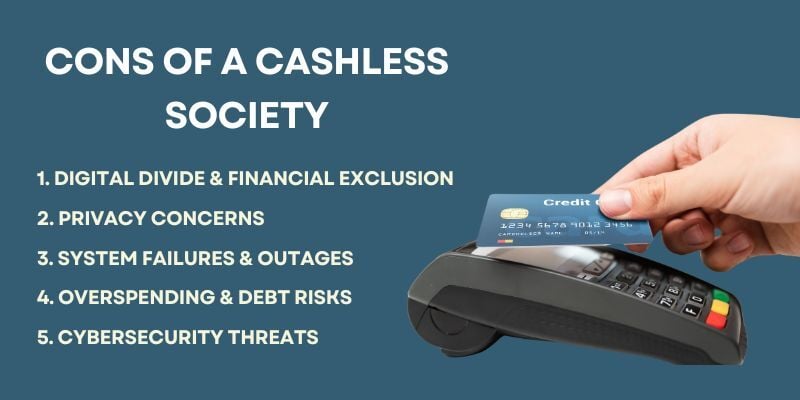
Below are some of the significant drawbacks of going cashless:
1. Digital Divide and Financial Exclusion
Not everyone can access smartphones, banking services, or reliable internet, making digital payments inaccessible for specific groups.
Unbanked and underbanked individuals, often from low-income or rural communities, may struggle to purchase if businesses stop accepting cash. Older people, who may be less familiar with digital payment methods, face challenges adapting to a cashless system.
For example, in India, the push toward digital payments following the 2016 demonetization policy left many rural communities struggling due to a lack of internet access and digital literacy.
Similarly, in the United States, an estimated 4.5% of households (around 5.9 million people) were unbanked in 2021, meaning they had no access to traditional banking services.
An utterly cashless economy could further widen financial inequality, making it difficult for vulnerable populations to participate fully in economic activities.
2. Privacy Concerns
Every digital transaction generates data. 82% of consumers express concern about data collection related to privacy and data security in digital payments (CoinLaw, 2026). A cashless society enables unprecedented surveillance of spending behaviour by payment processors, banks, governments, and advertisers. The EU’s GDPR sets a standard for managing this risk, but regulatory frameworks in many markets lag behind the data collection capabilities of payment platforms.
3. System Failures and Outages
Reliance on digital payments means transactions are vulnerable to technical failures, cyberattacks, or power outages.
A cashless society depends on stable internet connections, payment processing networks, and digital infrastructure. If these systems fail, individuals and businesses may be unable to complete essential transactions.
For example, in June 2018, Visa experienced a major outage across Europe that lasted for ten hours, affecting 5.2 million card transactions. In the UK alone, 2.4 million transactions failed, leaving people unable to pay for essentials during peak hours.
While the failure was due to a hardware issue rather than a cyberattack, it disrupted payments at restaurants, retail stores, and transportation services, highlighting the risks of digital dependence.
Similarly, power and internet disruptions can prevent people from accessing money during natural disasters or emergencies. The inability to use digital payments in these situations emphasizes the potential dangers of over-reliance on technology for financial transactions.
4. Overspending and Debt Risks
Digital payments make spending effortless, often leading to reduced financial awareness and increased debt risks.
Unlike cash, where individuals physically see money leaving their hands, tap-to-pay or mobile transactions create a disconnect between spending and financial consequences.
MIT researchers found that consumers tend to spend more when using credit cards than cash. This psychological effect is concerning for younger consumers, who may accumulate debt quickly due to the ease of digital transactions.
The rise of buy now, pay later (BNPL) services, such as Klarna and Afterpay, further encourages spending beyond one’s means, increasing financial instability.
5. Cybersecurity Threats
A fully digital payment system increases the risk of cybercrimes, including hacking, identity theft, and fraud. As digital payment platforms store sensitive financial data, they become prime targets for cybercriminals.
Phishing scams, data breaches, and unauthorized transactions are all growing concerns in a cashless world.
In 2024, data breaches reached record highs, exposing over 1 billion records and driving up cybersecurity costs. High-profile cyberattacks on companies like Equifax, Capital One, and T-Mobile highlight the vulnerability of digital financial systems.
Without robust cybersecurity measures, individuals and businesses face an increased risk of financial fraud and identity theft.
Pros and Cons of a Cashless Society at a Glance
Pros
-
Faster and more convenient payments
-
Reduced cash-related crime
-
Improved financial tracking
-
Lower operational costs for businesses
-
Greater tax transparency
Cons
-
Financial exclusion for unbanked populations
-
Privacy and surveillance concerns
-
Dependence on digital infrastructure
-
Cybersecurity risks
-
Overspending and debt exposure
What a Cashless Society Means for Banks
Banks are both drivers and subjects of the cashless transition. Falling cash transaction volumes reduce the revenue from ATM surcharges and cash handling fees, while rising digital payment volumes create new processing revenue and data assets. The branch network is being repositioned: cash-handling counters are being replaced by self-service kiosks, cash deposit machines, and advisory desks.
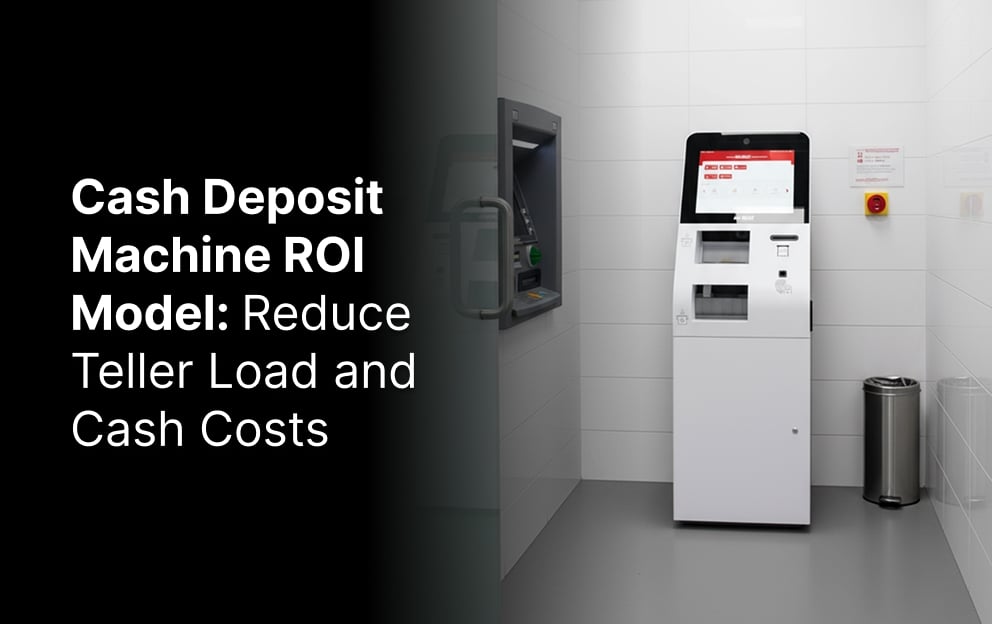
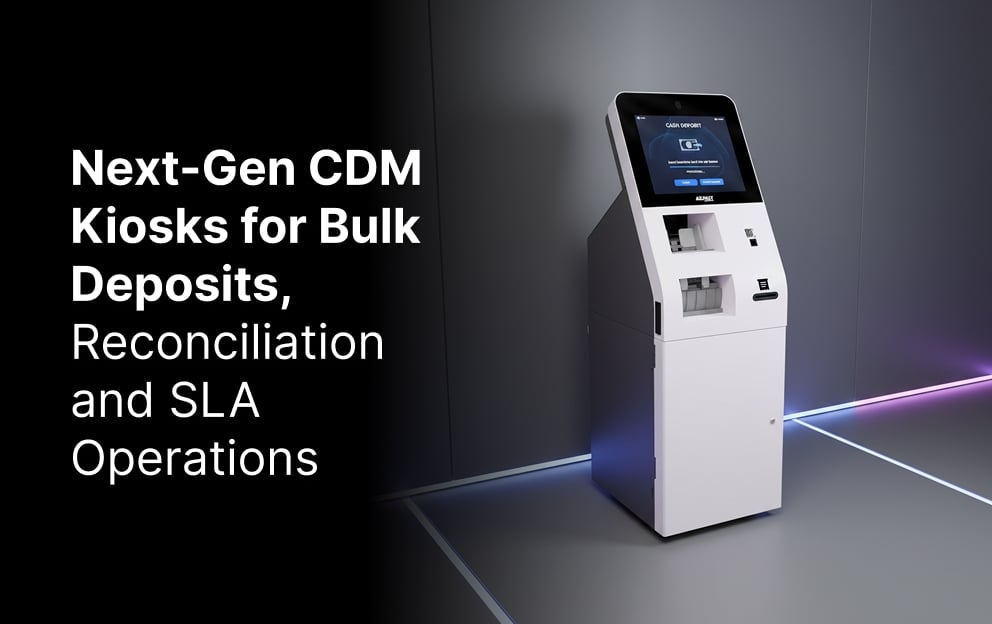
Wavetec’s cash deposit machines (CQuick CDMs) allow banks to maintain cash service availability 24/7 without teller involvement, reducing the operational cost of cash handling while meeting the needs of customers who still use cash. In parallel, Wavetec’s queue management and digital signage platforms support the transition of branch traffic from transactional to advisory interactions.
Who Gains and Who Loses in a Cashless Economy?
Transitioning to a cashless economy brings advantages and risks, creating clear winners and losers. While fintech firms, governments, and urban businesses benefit, vulnerable groups such as the elderly and unbanked populations face significant challenges.
Winners in a Cashless Economy
- Fintech Companies & Payment Processors: Digital payment firms like PayPal, Venmo, and Apple Pay gain a larger customer base as cash usage declines. Mobile payments are becoming increasingly trusted, with three-quarters of Americans considering them as reliable as cash or cards.
- Governments & Financial Regulators: Cashless transactions allow for greater transparency, reducing tax evasion and money laundering. Governments can track financial flows more efficiently, making economic policies more data-driven.
- Tech-Savvy Users & Urban Consumers: Digital payments offer convenience, speed, and security. Younger consumers, particularly in urban areas, prefer cashless transactions due to their efficiency and integration with other services, such as subscription models and e-commerce.
- Retail & Service Businesses: Businesses benefit from lower cash-handling costs, reduced theft risk, and faster checkout processes. Cashless systems also simplify accounting and tax filing, making operations more efficient.
Losers in a Cashless Economy
- Elderly & Technologically-Challenged Individuals: Many older adults struggle with digital payment systems and rely on cash for transactions. An entirely cashless economy could exclude them from essential services.
- Unbanked & Low-Income Populations: Approximately 4% of US households are unbanked, meaning they lack access to banking services. These individuals rely on cash for daily expenses and may face barriers when businesses refuse payments.
- Rural Communities: Areas with limited internet access or digital infrastructure may struggle with a cashless transition. Small businesses in rural regions might struggle to adopt and maintain cashless systems.
- Cash-Dependent Workers & Service Providers: Workers in industries that rely on tips, such as restaurant staff, taxi drivers, and street vendors, may affect their earnings if customers move away from cash.
As businesses continue to move toward digital payments, the advantages and risks of going cashless must be carefully considered to ensure financial inclusion for all.
Practical Solutions to Bridge the Cashless Gap
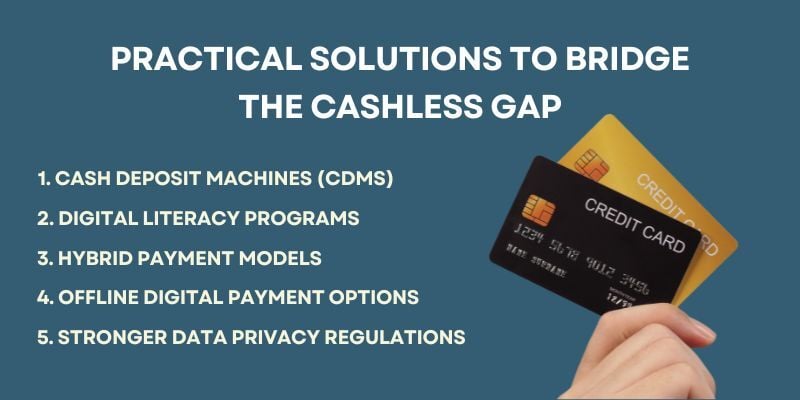
To address the disadvantages of a cashless society, governments and financial institutions must adopt inclusive and practical solutions.. As the future of cashless transactions becomes more specific, steps must be taken to ensure no one is left behind. A well-balanced approach can help address financial inclusion, digital accessibility, and security concerns.
1. Cash Deposit Machines (CDMs)
Cash Deposit Machines (CDMs) allow individuals to deposit physical cash into their digital bank accounts, connecting cash and digital payments. These machines are useful in rural areas where ATMs are available, but traditional banking services are limited.
By enabling cash deposits without requiring in-person visits to a bank, CDMs provide greater financial access, reduce dependency on cash transactions, and support the transition toward a more digital economy.
Unlike standard ATMs, which primarily dispense cash, CDMs allow users to deposit cash at an ATM, making digital banking more accessible to those who still rely on cash for daily transactions.
Many countries have expanded CDM networks to help unbanked populations participate in digital financial systems.
A notable example of CDM implementation is Bank Alfalah, one of the largest private banks in Pakistan. The bank deployed Wavetec’s CQuick Cash Deposit Machines to improve operational efficiency and provide self-service options for customers.
With over 200 CDMs installed across Pakistan, the solution helped address challenges such as high cash circulation, limited banking hours, and customer adaptation to digital banking.
These machines allow bulk cash deposits, reduce teller workload, and provide a seamless self-service experience. The initiative enhanced customer convenience while supporting Pakistan’s transition toward a more digital financial ecosystem.
By adopting CDMs, banks and financial institutions can offer accessible, efficient, and secure banking solutions, particularly in cash-dependent economies.
2. Digital Literacy Programs
Governments and NGOs help equip vulnerable populations, such as seniors and unbanked individuals, with the knowledge to use digital payment systems.
Training programs that teach people how to use digital wallets, mobile banking apps, and online transactions can make cashless transactions more accessible.
Initiatives like the European Commission’s Digital Skills & Jobs Platform and Singapore’s Seniors Go Digital program, which focus on improving overall digital literacy, also contribute to digital financial inclusion.
3. Hybrid Payment Models
An entirely cashless economy may not be feasible or inclusive for everyone. Governments and businesses should consider maintaining digital and cash payment options to accommodate all demographics.
For example, despite being among the most cashless, some Scandinavian countries still require essential services like public transport and government offices to accept cash.
4. Offline Digital Payment Options
Innovations in payment technology, such as QR code-based payments that work without an active internet connection, can support financial inclusion in remote areas.
For instance, China’s Alipay and India’s UPI Lite offer offline payment solutions that ensure transactions can be processed even during network outages.
5. Stronger Data Privacy Regulations
Stricter data protection laws and cybersecurity measures must be in place to build trust in cashless transactions. Governments should implement policies that prevent data misuse, while fintech companies must ensure transparency in handling customer information.
The European Union’s General Data Protection Regulation (GDPR) sets a standard for balancing convenience with privacy protection in digital finance.
Frequently Asked Questions
What is a cashless society?
A cashless society is an economic system where financial transactions are conducted through digital means rather than physical currency. This includes contactless cards, mobile wallets, bank transfers, and QR code payments. In 2026, Sweden conducts approximately 90% of transactions digitally, and 54% of all global transactions are now digital.
What are the main advantages of a cashless society?
The main advantages include faster transactions, lower cash handling costs for businesses and banks, improved AML compliance through transaction transparency, greater consumer convenience, and the enablement of new financial services such as micro-credit and real-time expense tracking.
What are the main disadvantages of a cashless society?
The main disadvantages are financial exclusion of unbanked and underbanked populations, increased cybersecurity and fraud risk, privacy concerns from digital transaction data collection, system dependency risk during outages, and the risk of a two-tier economy where digital payment access is unequal.
Which countries are closest to becoming cashless?
Sweden, where approximately 90% of transactions are cashless, and South Korea, where 98% of citizens use digital wallets, are the leading examples. Norway, Finland, and the UK are also highly advanced. India is advancing rapidly through UPI, which processed 21.7 billion transactions in January 2026 alone.
Conclusion
A cashless society brings undeniable benefits like speed, convenience, and greater financial transparency. The pros and cons of digital payments highlight both opportunities and challenges.
Digital transactions streamline payments, reduce crime linked to physical cash, and create more efficient financial ecosystems.
However, vulnerable groups such as older adults, low-income populations, and those without digital banking access may face exclusion. Financial systems must remain flexible and secure to ensure inclusivity.
Solutions like cash deposit machines, hybrid payment options, and strong privacy regulations can bridge the gap between digital and traditional finance.
Governments and businesses must work together to enhance financial access without eliminating choice. A balanced approach ensures digital payments remain secure, equitable, and accessible for all.
BOOK A FREE DEMO