A university and school queue management system is a digital platform that organises student flow across high-volume campus service points; including admissions, registration, bursary, and counselling offices. It uses virtual ticketing, appointment scheduling, and real-time displays to reduce wait times, prevent hallway congestion, and improve the student services experience.
University service offices face unique pressure points throughout the academic year. Registration periods, semester starts, and financial aid deadlines create massive surges in student traffic.
- A registrar office that handles 30 students per day in a normal week may see 300 during registration week.
- Admissions offices are overwhelmed during application seasons.
- Bursar (financial administrator) counters are packed at fee payment deadlines.
- Student counselling and IT helpdesks see spikes at predictable but intense intervals.
The result is long queues stretching down hallways, frustrated students missing classes, and overwhelmed staff struggling to keep up.
An Inside Higher Ed survey found that over one in four college undergraduates said a class they needed to graduate was either unavailable or full before they could register. This points to a broader pattern of administrative friction that damages the student experience and directly impacts retention.
A 2022 study by EDUCAUSE found that 68% of students cited long wait times at campus offices as a significant source of frustration.
A university and school queue management system addresses these challenges by digitising student flow across campus service points. It replaces chaotic physical lines with virtual ticketing, appointment scheduling, and real-time displays.
The results are measurable: institutions that implement digital queue solutions see an average 40% reduction in student wait times within the first semester.
Wavetec’s queue management system is purpose-built for higher education environments, helping universities transform student services from a source of frustration into a competitive differentiator.
The Queue Problem on University Campuses
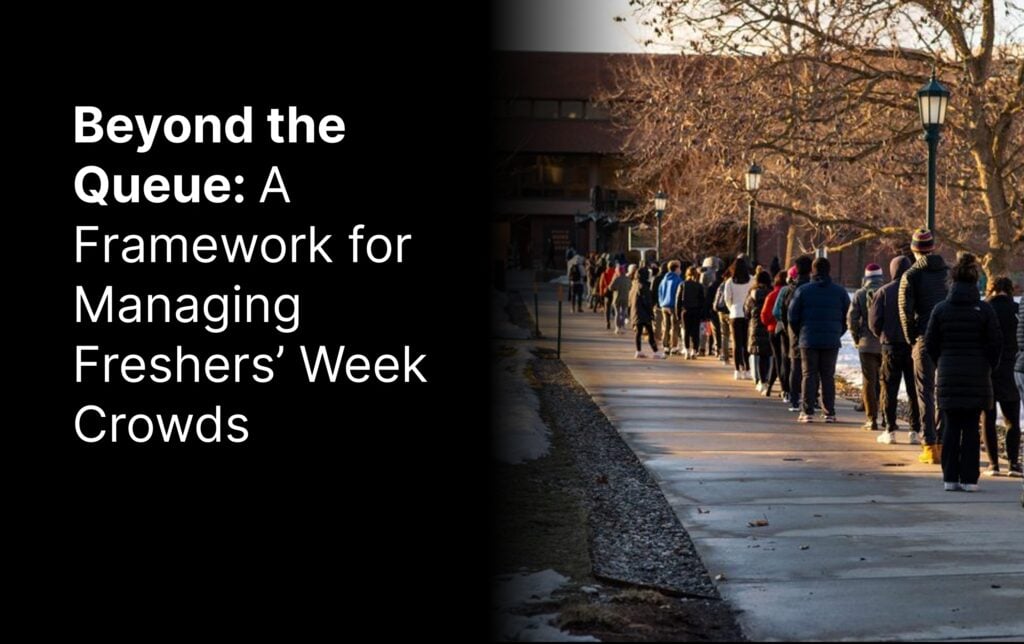
Peak-period congestion is the most visible symptom of inadequate queue management. Registration week, the start of each semester, and financial aid deadlines create predictable but severe spikes in demand.
Students line up at registrar offices, bursar counters, financial aid windows, and admissions offices simultaneously.
- Hallways become crowded.
- Staff become overwhelmed.
- Students miss classes because they are stuck in queues.
The consequences extend beyond inconvenience.
- A student who spends an hour waiting at the bursar office may miss a lecture.
- A student who cannot get through to the registrar may delay course registration, losing access to required classes.
- A student who experiences long waits repeatedly may develop a negative perception of the institution, affecting retention and word-of-mouth reputation.
Staff are also affected. Manual queue management creates stress, errors, and overtime. Without visibility into queue lengths and wait times, administrators cannot allocate staff effectively. The result is a system that fails students and staff alike.
How a University Queue Management System Works
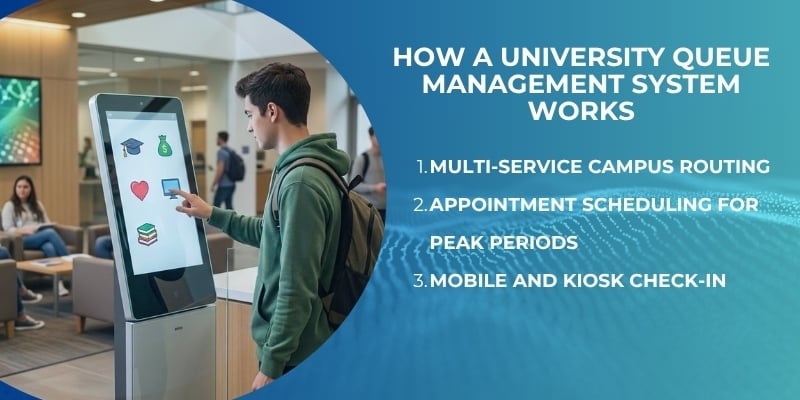
A university queue management system digitizes the student service journey from arrival to service completion. The system manages walk-ins, appointments, and virtual queues through a unified platform.
Multi-Service Campus Routing
A single system routes students to different departments from a centralized platform. A student checking in at a campus kiosk selects their destination: admissions, bursary, registrar, counselling, or IT helpdesk.
The system adds them to the appropriate queue and provides an estimated wait time. This eliminates the confusion of students joining the wrong line and prevents cross-service congestion.
Appointment Scheduling for Peak Periods
Pre-booking prevents registration-week surges by distributing student arrivals across time slots. Students can book appointments online for specific services.
The system spreads demand across the day, eliminating the traditional morning rush. Appointment holders receive priority in the queue, while walk-ins are served in the remaining capacity.
Mobile and Kiosk Check-In
Students join queues via campus kiosks, mobile browsers, or SMS. No physical line is required.
A student can check in from anywhere on campus and receive SMS updates about their queue position and estimated wait time. When their turn approaches, they receive a notification and return to the service counter.
Key Departments That Benefit Most from Campus Queue Management
Different campus departments face different queue challenges, but all benefit from digital queue management.
- Admissions Office: Application seasons bring surges of prospective students and families. Queue management handles walk-in enquiries alongside scheduled campus tours and interviews.
- Registration and Registrar: Course registration periods are the highest-pressure times on campus. Queue systems manage the surge, provide wait time visibility, and reduce congestion.
- Bursar and Financial Aid: Fee payment deadlines and financial aid processing create intense demand. Queue management prevents hallway congestion and ensures students are served efficiently.
- Student Counselling: Mental health services require careful scheduling. Queue systems manage appointments while providing walk-in options for urgent needs.
- Library: High-traffic periods at the start of each semester create queues at circulation desks. Virtual queuing allows students to wait anywhere in the library.
- IT Helpdesk: Technology issues often arise at predictable times. Queue management helps IT staff prioritise urgent issues while managing walk-in traffic.
How Campus Digital Signage Supports Student Flow Management
Digital signage is an essential complement to queue management systems. Screens placed in hallways, lobbies, and common areas display queue status, reducing anxiety and directing students to the right offices.
When students can see their position in the queue and estimated wait time, they feel more in control. The unknown is far more stressful than a known wait. Digital signage replaces uncertainty with clarity.
Signage also eliminates the “how much longer?” interruptions that plague staff. When students can see their status on a screen, they do not need to approach the counter to ask. This reduces staff workload and improves service efficiency.
Large LED screens can be installed at reception counters, displaying estimated wait times and directing students to the appropriate service points.
Reducing Registration-Week Chaos with Smart Queue Management
Registration week is the most challenging period for university service offices. Hundreds of students arrive simultaneously, creating chaos that affects the entire campus.
Smart queue management addresses this through several mechanisms.
- Pre-booking spreads demand across the week.
- Students select specific time slots for registration, preventing the traditional morning rush.
- Virtual queuing allows students to check in remotely and wait anywhere, reducing physical congestion.
- Real-time queue data allows administrators to see which service points are backed up and reallocate staff accordingly.
Features to Look for in a University Queue Management Platform
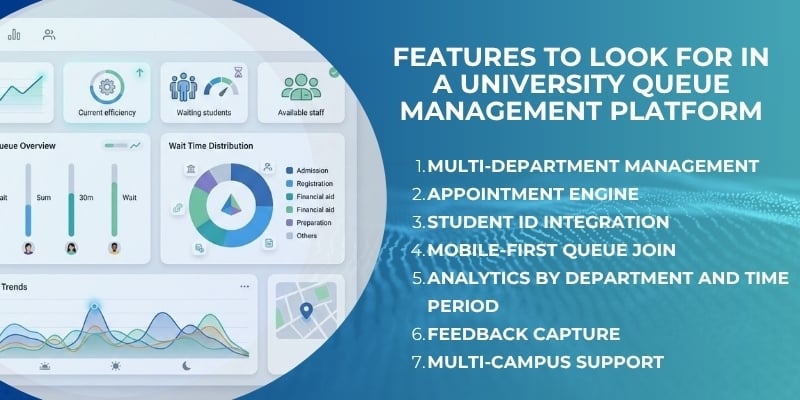
When selecting a queue management platform for a campus environment, several features are essential.
- Multi-department management: A single platform should manage queues across admissions, registrar, bursary, IT, library, and counselling from one dashboard.
- Appointment engine: Students should be able to book, reschedule, and cancel appointments online. The system should integrate appointments with walk-in queues.
- Student ID integration: The system should recognise students by their ID numbers, pre-populating information and speeding up service.
- Mobile-first queue join: Students should be able to join queues from their phones via web browser, QR code, or SMS.
- Analytics by department and time period: Administrators should see queue length, wait time, and service duration by department, hour, and day. This data supports staffing decisions and process improvements.
- Feedback capture: Post-service feedback should be collected automatically, providing real-time insight into student satisfaction.
- Multi-campus support: For universities with multiple campuses, the platform should manage all locations from a single dashboard.
Case Study – University of Sharjah Modernizes Student Services with Smart Queue Management
Managing student services becomes increasingly challenging during registration periods, admissions cycles, and fee payment deadlines when thousands of students require assistance simultaneously.
Without structured queue management, long lines, crowded service areas, and manual verification processes create unnecessary delays for both students and staff.
University of Sharjah Digitizes Student Services Across Multiple Departments
The University of Sharjah partnered with Wavetec to replace its fragmented queue management process with an integrated digital solution designed to streamline student services across multiple departments.
- Students now begin their journey at self-service kiosks where they select the required service and are instantly verified through the university’s student database.
- Once registered, they receive both a queue ticket and SMS updates, while Donatello digital signage and Counter Display Units provide real-time guidance throughout the service journey.
- Staff and administrators monitor queue performance, waiting times, and student flow through centralized dashboards, enabling better resource allocation during peak registration periods.
The deployment significantly improved student flow, reduced congestion across service areas, accelerated verification through database integration, and enhanced communication with real-time notifications.
Students reported a smoother and less stressful experience, while university staff benefited from improved operational visibility and faster service delivery.
The project demonstrates how an integrated university queue management system can transform registration, admissions, and student services into a more efficient and student-centered experience.
FAQs
What is a university queue management system?
A university queue management system is a digital platform that organises student flow across campus service points including admissions, registration, bursary, and counselling offices.
It uses virtual ticketing, appointment scheduling, and real-time displays to reduce wait times and improve the student experience.
How does digital queuing improve the student services experience?
Digital queuing eliminates physical lines, provides real-time wait time visibility, and allows students to wait anywhere on campus.
SMS notifications keep students informed, and appointment scheduling spreads demand across the day. The result is shorter waits, less stress, and more productive use of student time.
Which campus departments benefit most from queue management software?
Admissions, registrar, bursary/financial aid, student counselling, library services, and IT helpdesks all benefit significantly.
Any department that experiences high-volume walk-in traffic during peak periods can improve efficiency and student satisfaction with queue management.
Can a queue system handle both walk-in students and pre-booked appointments?
Yes. A well-designed queue system blends appointments and walk-ins in a single, prioritised flow. Appointment holders receive priority, while walk-ins are served in the same queue. This ensures appointment students are seen on time while walk-ins are still served efficiently.
How does campus digital signage integrate with a queue management system?
Digital signage connects to the queue management system via API, displaying real-time queue status, ticket numbers, and estimated wait times.
When a student checks in, the signage updates automatically. When service is completed, the next ticket is called. The integration ensures that what students see on screens matches what staff see on their terminals.
Author Bio: This article was written by the education solutions team at Wavetec, a global provider of queue management, digital signage, and customer journey platforms. Wavetec has helped universities and schools worldwide reduce wait times, improve student satisfaction, and optimize campus operations.
Conclusion
A university queue management system transforms student services from a source of frustration to a competitive differentiator for institutional experience.
Registration-week chaos, hallway congestion, and frustrated students are not inevitable. They are symptoms of inadequate systems.
Digital queue management replaces chaos with order, uncertainty with transparency, and frustration with efficiency.
The results are measurable: wait time reductions of 40% or more, increased service capacity, and improved student satisfaction. For universities competing for students in an increasingly competitive environment, the student services experience matters.
Wavetec offers education-sector queue management solutions designed for the unique demands of campus environments.
BOOK A FREE DEMO