In a world with limited attention, organizations must communicate clearly and effectively in physical spaces.
Traditional posters, printed flyers, and fixed signboards are being replaced by digital signage solutions, communication systems that use LED, LCD, or projection technology to display images, text, and video in real time.
This transition from static materials to digital channels changes how information reaches people. Instead of content that remains unchanged for long periods, organizations can publish timely messages, update information instantly, and respond to situational needs as they arise.
Market data highlights how widespread this adoption has become. According to IMARC Group, the global digital signage market reached approximately $28.5 billion in 2024, indicating strong investment across multiple industries worldwide.
Today, digital signage supports clearer communication, better visibility of information, and more direct interaction between organizations and their audiences.
10 Industries That Gain the Most from Digital Signage
Here’s a list of industries using digital signage:
1. Banking & Financial Services

Banks and financial institutions manage large volumes of information that customers need to access quickly and accurately.
Retail banks, investment firms, insurance providers, and ATM networks depend on clear communication to support everyday banking activities and service discovery.
Within branches and service areas, digital signage is commonly delivered via interactive digital displays, self-service kiosks, and digital boards that display market data, currency exchange rates, and financial services information.
These systems make essential content visible at key touchpoints where customers seek guidance or updates.
By making financial information readily accessible, digital signage helps customers understand available products and services without direct staff involvement.
Banks benefit from better-informed clients, higher engagement within physical locations, smoother customer flow, and improved decision-making supported by up-to-date information.
2. Retail
Retail businesses include physical and online stores, supermarkets, shopping malls, and fashion outlets that aim to attract attention and guide shoppers throughout the buying process.
In retail spaces, digital signage is deployed through interactive displays, digital billboards, screens, video walls, and menu boards to present promotions, product highlights, and wayfinding information.
Independent industry research cited by Deloitte indicates that 47% of shoppers report that digital screens enhance their in-store shopping experience, highlighting how visual communication influences retail decision-making.
Retailers use these systems to deliver dynamic advertising, timely promotions, detailed product information, and directional cues.
These capabilities enhance the customer experience by improving clarity and relevance throughout the shopping journey, while also allowing greater operational efficiency through centralized updates and reduced reliance on printed materials.
Together, these outcomes help retailers strengthen brand visibility, improve shopper engagement, and support more informed purchasing decisions.
3. Healthcare
Healthcare facilities, such as hospitals, clinics, doctors’ offices, and medical centers, serve patients and visitors who often require clear guidance and timely updates throughout their visits.
From check-in to interdepartmental movement, access to accurate information is essential for smoother service delivery.
Digital signage in healthcare settings includes patient information boards, waiting room displays, and centralized information systems that communicate appointment status, wait times, health education content, and safety notices.
Larger facilities also depend on wayfinding and navigation solutions to help patients and visitors locate departments and service areas without confusion.
Visible updates and clear directions reduce uncertainty and limit repeated staff inquiries, supporting better coordination between administrative and clinical teams and helping patients feel more informed throughout their visits.
One example is the Chapidze Heart Center in Tbilisi, where Wavetec’s patient flow management system was implemented to streamline registration and screening. Prior to implementation, the hospital could serve up to 70 patients per day.
After integrating digital displays with queue management and self-service kiosks, daily patient throughput increased to more than 200 patients.
The use of clear on-screen guidance and visible queue information helped manage higher patient volumes while maintaining consistent communication across service points.
This change allowed staff to handle increased demand more effectively and provided patients with clearer directions throughout their visit.
4. Transportation

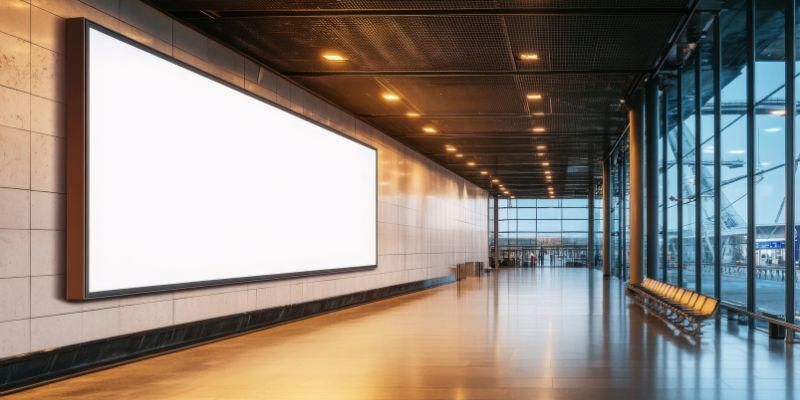
Transportation hubs such as airports, train stations, bus terminals, metro stations, and public transit systems depend on precise coordination to keep people moving safely and on time. Travelers and commuters rely on timely updates to make decisions during arrivals, departures, and transfers.
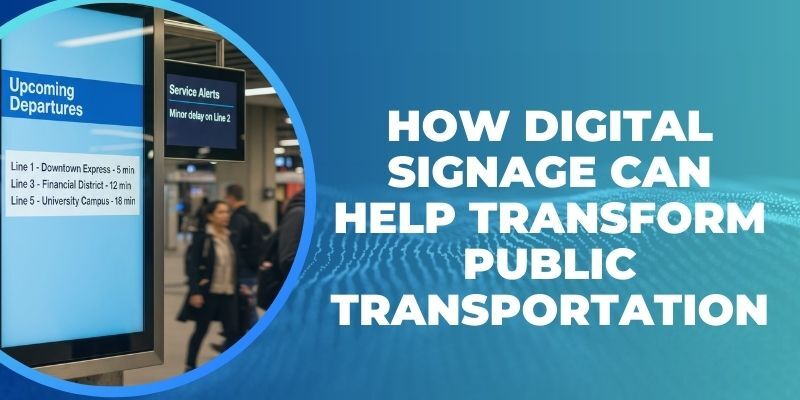
In these locations, digital signage is deployed through display boards, ticketing kiosks, interactive maps, and real-time scheduling screens that function as digital communication platforms.
These systems provide real-time arrival and departure information, platform or gate changes, service disruptions, and directional guidance across large, often crowded facilities.
When schedules, directions, and delay notices are visible at multiple touchpoints, uncertainty is reduced, and movement becomes more predictable. Travelers spend less time searching for updates and adjust their routes or timing with greater confidence.
At the same time, transit operators reduce reliance on repeated announcements and manual coordination. This supports smoother passenger flow during peak periods and service disruptions, contributing to a more organized travel experience for daily commuters and occasional travelers.
5. Education
Educational institutions, like schools, universities, colleges, and training centers, manage ongoing information exchange among students, faculty, and staff.
Schedules, events, safety notices, and academic updates need to reach large audiences quickly and consistently throughout the day.
In educational settings, digital signage appears as digital bulletin boards, interactive kiosks, and announcement displays that support real-time content updates across campuses.
These systems allow institutions to publish announcements, event schedules, and alerts simultaneously in multiple locations, ensuring that information remains current and accessible.
By reducing reliance on printed notices and fragmented communication channels, digital signage helps institutions maintain more consistent messaging.
Students and staff receive updates as they move through campus, while administrators coordinate events and activities with fewer manual interventions.
This approach supports improved communication, stronger awareness of campus initiatives, smoother event management, and increased participation in academic and extracurricular programs.
6. Hospitality
Hospitality businesses such as hotels, resorts, restaurants, and event venues rely on timely information to support guest services, dining experiences, and on-site activities.
Guests and customers interact with signage at multiple points during their stay or visit, from check-in areas to restaurants and event spaces.
Digital signage in this sector includes digital menu boards, interactive displays, guest information systems, and screens showing schedules and promotions.
Properties use these systems to share menus, highlight services, communicate event details, and update information without manual intervention.
Market research indicates that the global hospitality digital signage market reached approximately $2.48 billion in 2024, reflecting continued adoption across hotels and food service operations.
Menu boards and guest information displays reduce wait times by answering common questions upfront and supporting self-directed decision-making. For operators, using signage in hotels helps coordinate services across departments while keeping messaging consistent.
These capabilities support smoother service delivery, more responsive guest communication, and improved operational flow, while also creating additional opportunities to promote services and offers throughout the guest journey.
7. Manufacturing
Factories, warehouses, and assembly lines rely on continuous coordination between people, systems, and equipment to maintain steady output and safe operations.
Workers, supervisors, and managers depend on shared visibility into performance and safety conditions to keep production on track.
Digital signage in these facilities is used through internal dashboards, safety alert screens, and displays showing production metrics and operational data.
These screens present shift targets, equipment status, process instructions, and safety notices in areas where employees are actively working, reducing dependence on manual updates or printed materials.
With operational data and alerts visible across the floor, teams can respond faster to issues, track performance trends, and address safety concerns as they arise.
In deployments where solutions from providers such as Wavetec are used, digital signage helps maintain consistent communication across shifts and work zones. This contributes to safer workplaces, fewer interruptions, improved coordination between teams, and reduced downtime.
8. Entertainment
Cinemas, theaters, concert halls, amusement parks, and sporting arenas host audiences who look for timely information and engaging touchpoints throughout their visit.
Attendees rely on visible updates for showtimes, event details, venue navigation, and promotions before, during, and after events.
Event schedules, interactive displays, ticket kiosks, and promotional screens are used to communicate programming details, highlight upcoming shows, and surface venue services.
These displays support both informational and experiential needs, allowing visitors to access relevant content without depending on staff assistance.
When schedules, promotions, and interactive elements are placed where visitors naturally pause or gather, engagement increases and confusion is reduced. Visitors spend less time searching for information and more time interacting with the venue’s offerings.
This supports smoother event operations, stronger audience engagement, and improved brand visibility across entertainment venues.
9. Automotive
Automotive interactions often occur at decision points or moments of anticipation, whether a customer is exploring a vehicle in a showroom or waiting for a service update.
Uncertainty around pricing, features, or service progress can slow conversations and increase dependence on staff explanations.
Screens across showrooms, service reception areas, and waiting lounges present vehicle specifications, service status, appointment queues, and promotional information.
Instead of relying on printed brochures or repeated verbal updates, information remains visible and up-to-date as customers move through the space.
This changes how visits unfold. Customers approach discussions with greater context, while service teams handle fewer routine status inquiries.
Digital signage solutions implemented by Wavetec help keep customer-facing information aligned with sales and service workflows.
As a result, interactions become more structured, waiting periods feel more predictable, and the overall experience across automotive touchpoints is easier to manage.
10. Real Estate
Property discovery often begins before direct contact with an agent. Buyers and renters look for visuals, context, and comparisons that help narrow options and determine which properties are worth exploring further.
Digital property listings, virtual tours, and interactive displays allow agencies and developers to present multiple properties in a single location.
Screens placed in office windows, showrooms, or development sites make it possible to update availability, pricing, and visuals instantly, turning passive viewing into active exploration.
This approach influences early engagement. Visitors spend more time independently reviewing listings, arrive at conversations with clearer preferences, and move more efficiently from interest to inquiry.
By presenting property information in a visual, self-directed format, agencies can increase listing visibility while improving the overall experience for buyers and renters.
Frequently Asked Questions (FAQs)
What sectors utilize digital signage technology?
Digital signage is used across sectors such as banking, retail, healthcare, transportation, education, hospitality, manufacturing, entertainment, and real estate.
Organizations in these industries use digital displays to share timely information, guide visitors, and support communication in physical locations.
How can digital signage be customized for different industries?
Digital signage can be configured by adjusting content formats, display placement, scheduling, and data connections to suit different industry needs.
Real-time updates, interactive elements, and system integrations help ensure information aligns with specific workflows and audience expectations.
Conclusion
Digital signage has become a reliable communication layer across industries where information needs to be visible, timely, and easy to manage.
Whether guiding visitors, supporting staff coordination, or presenting updates at scale, digital displays help organizations replace static communication with flexible, on-screen messaging that adapts to changing needs.
Across sectors with very different audiences and operational demands, solutions delivered by providers such as Wavetec show how digital signage can support structured information delivery without adding complexity.
When implemented with purpose, digital signage strengthens information flow, reduces friction in day-to-day interactions, and supports more efficient engagement between organizations and the people they serve.
BOOK A FREE DEMO