A queue management system for immigration and licensing offices is a digital platform that organizes citizen flow through virtual ticketing, appointment scheduling, multi-service counter routing, and real-time displays. It reduces overcrowding, shortens processing wait times, and provides agencies with the analytics needed to allocate resources efficiently.
Immigration, visa, and licensing offices sit at a difficult intersection. They serve citizens who are often anxious, time-pressed, and dealing with high-stakes paperwork.
A missed appointment or a long wait can mean a missed legal deadline, a lapsed licence, or a delayed visa that disrupts travel or employment. The volume is immense.
The stakes are high. The pressure on staff is relentless.
Deloitte’s survey of government officials across more than 70 countries found that 70% of managers at government organizations believe their citizen experience is on par with the private sector, while citizens themselves rank government last among ten service sectors.
This gap between perception and reality is significant. Long queues, confusing processes, and unclear wait times are major contributors.
A queue management system for immigration addresses these challenges directly. It digitizes the citizen journey, reduces overcrowding, and provides agencies with the data they need to allocate resources efficiently.
Wavetec’s queue management system is purpose-built for government environments, with multilingual support, multi-stage routing, and the capacity to handle peak volumes.
Why Immigration and Licensing Offices Face Unique Queue Challenges
Immigration and licensing offices face service delivery challenges that are more complex than those in retail or banking.
The multi-stage nature of immigration processing creates multiple queue pressure points.
A typical immigration application might involve intake, document verification, biometrics collection, an interview, and a final decision. Each stage requires a separate interaction with a different staff member or counter. If any stage is delayed, the entire process backs up.
Seasonal peaks compound the problem. Visa cycles, licence renewal deadlines, and new year application surges create predictable but intense demand periods.
An office that handles 200 applicants per day in a normal week might see 500 per day during peak periods. Without a system to manage the surge, queues spill into hallways, staff become overwhelmed, and wait times balloon.
The consequences of poor service in these environments extend beyond frustration.
- Citizens may miss legal deadlines.
- They may lose employment opportunities.
- They may face penalties for late renewals.
- Staff experience burnout from constant pressure.
Politically, long queues become visible symbols of government inefficiency, eroding public trust.
Citizens do not see the back-office improvements. They see the queue. A queue management system makes that queue visible, manageable, and fair so there is no doubt that modern technology is improving the immigration process.
How a Queue Management System Works in an Immigration Office
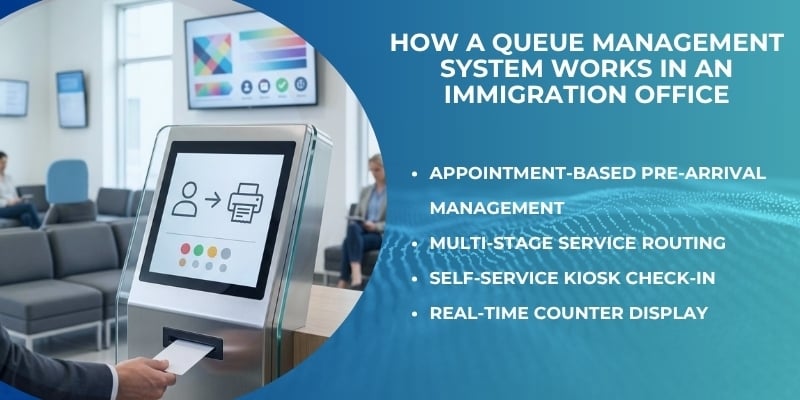
A queue management system transforms the citizen journey from chaotic to orderly. The process covers every stage, from pre-arrival planning to service completion.
Appointment-Based Pre-Arrival Management
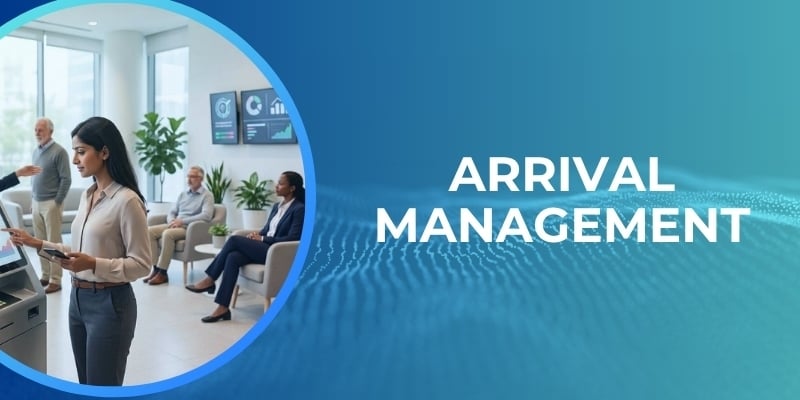
Citizens book specific service slots online, reducing day-of congestion at counters. The appointment system shows available times, service types, and estimated visit duration.
Citizens choose a time that works for them. The system sends confirmation via email or SMS with instructions and document requirements. This pre-visit step spreads arrivals across the day, eliminating the traditional morning rush.
Multi-Stage Service Routing
The system assigns separate queues for intake, document verification, biometrics, and decision stages.
A citizen checking in at a kiosk selects their service type. The system adds them to the appropriate queue and provides an estimated wait time. When they complete one stage, the system routes them to the next.
This prevents a single bottleneck from blocking the entire process.
Self-Service Kiosk Check-In
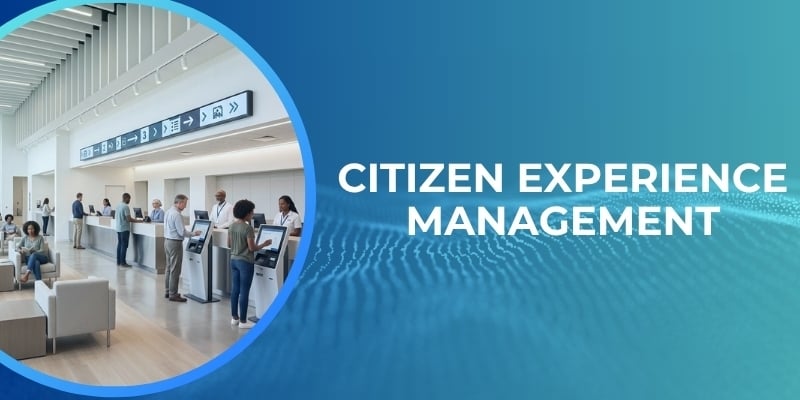
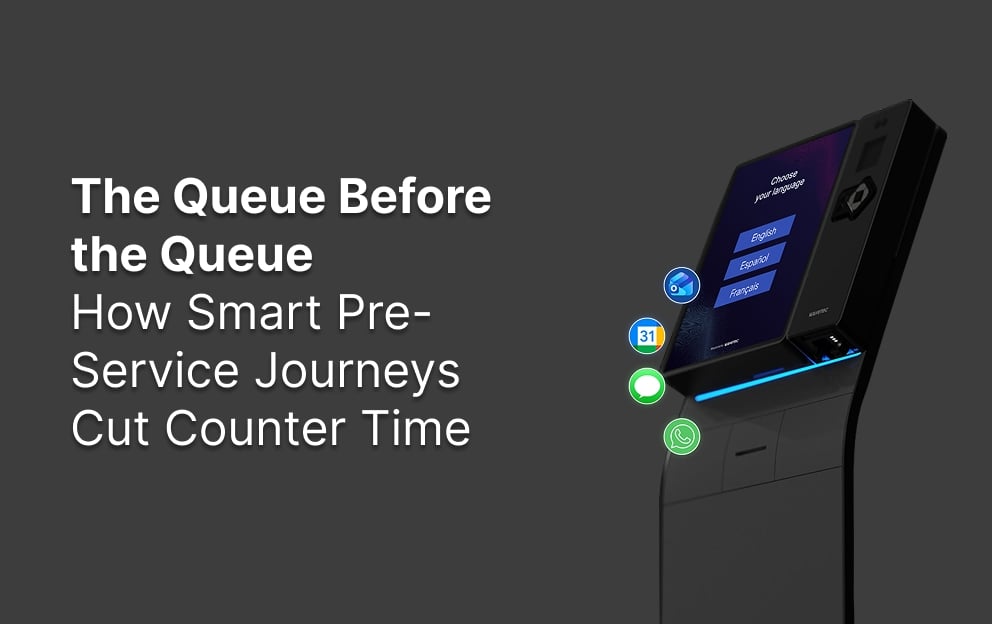
Citizens confirm arrival and receive a virtual ticket without queuing at a reception desk.
The kiosk asks for their appointment confirmation number or, if they are a walk-in, guides them through service selection.
The system issues a ticket and adds them to the queue.
This eliminates the first line and frees staff for service.
Real-Time Counter Display
Digital screens show ticket numbers, estimated wait times, and counter assignments in multiple languages. Citizens can see their position in the queue without approaching the counter. This visibility reduces anxiety and eliminates the “how much longer?” interruptions that plague staff.
Key Features Needed in a Government-Grade Queue Management System
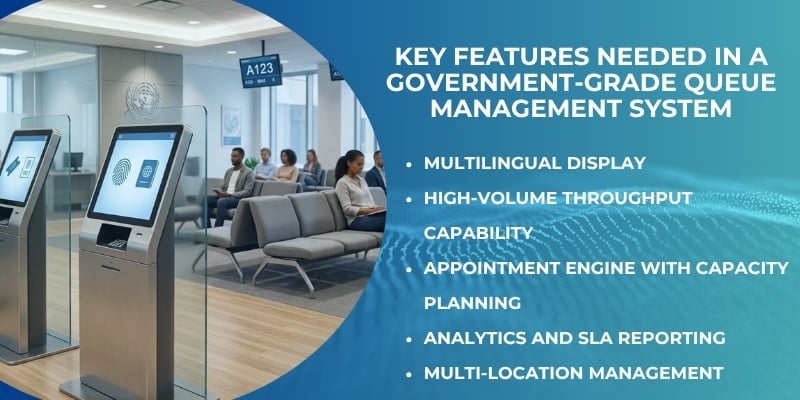
Government environments demand specific features that go beyond standard queue management.
- Multilingual display support serves diverse citizen populations. Screens can rotate between languages, showing information in the languages most common in the community. This ensures that all citizens can navigate the process, regardless of language preference.
- High-volume throughput capability is designed for peak periods. The system must handle surges without crashing or slowing down. Scalable cloud infrastructure is essential.
- Multi-stage routing tracks a citizen through several counters in a single visit. The system knows which stages they have completed and which remain. This prevents citizens from being sent to the wrong counter or asked to repeat steps.
- Appointment engine with capacity planning allows agencies to manage peak-day demand. The system can limit appointments during known high-volume periods or open additional slots when capacity permits.
- Analytics and SLA reporting by service type, counter, and time period provides visibility into performance. Managers can see which services have the longest waits, which counters are underutilised, and which staff need additional training.
- Multi-location management supports agencies operating across cities or regions. A central dashboard provides visibility into all locations, enabling resource sharing and consistent service standards.
Deloitte’s Government Trends research identified more than 200 global cases in which government agencies delivered improvements including up to tenfold cost reductions and 90% cycle-time cuts by implementing digital service delivery and process modernization, demonstrating that the ROI of government digital transformation is measurable and substantial.
Queue management is a foundational element of this transformation.
Wavetec’s self-service kiosks include all these government-grade features, making them suitable for large-scale immigration and licensing deployments.
Digital Signage in Immigration and Licensing Environments
Digital signage is an essential complement to queue management in government environments.
Multilingual overhead displays reduce anxiety and communicate process steps without requiring staff intervention.
When citizens can see their position in the queue and estimated wait time, they feel more in control. The unknown is far more stressful than a known wait.
Directional signage is critical in complex multi-floor or multi-wing government buildings. Screens at entrances, lift lobbies, and corridor junctions guide citizens to the correct department.
Interactive wayfinding kiosks allow citizens to search for their destination and receive step-by-step directions.
Displays can also communicate document requirements and preparation steps while citizens wait. A screen in a waiting area might show a checklist of required documents, reducing the chance that a citizen reaches the counter with incomplete paperwork.
Wavetec’s digital signage solutions integrate with the queue management system, providing real-time, accurate information to waiting citizens.
Appointment Scheduling for Licensing and Visa Services
Pre-booked appointment systems reduce walk-in surges and enable capacity planning. When citizens book appointments online, the agency knows exactly how many people to expect each hour. Staffing can be aligned with demand.
A blended appointment and walk-in system ensures that both visitor types are served without one disadvantaging the other.
- Appointment holders receive priority in the queue.
- Walk-ins are served in the same queue but with lower priority.
The system ensures that appointment holders are not delayed while still serving walk-ins efficiently.
Citizens can receive preparation checklists with their appointment confirmation to reduce incomplete submissions.
A citizen booking a visa appointment might receive a list of required documents, fee amounts, and preparation steps. This reduces the chance that they arrive without everything they need, reducing service time and frustration.
Analytics and Reporting for Government Service Managers
Real-time dashboards show queue depth, average service time, SLA compliance, and peak hour patterns. Managers can see which counters are busiest and reallocate staff. When a queue exceeds a threshold, the system sends an alert.
Historical data drives smarter staffing decisions and counter allocation. A manager can see that Tuesday mornings consistently have the longest waits and adjust staffing accordingly. They can see which service types cause the most delays and explore process improvements.
Multi-location reports allow central government oversight across all service points. A regional director can compare performance across offices and identify best practices. This visibility supports consistent service standards and accountability.
Case Study – UAE Federal Authority for Identity and Citizenship Modernizes Citizen Services
The UAE Federal Authority for Identity and Citizenship (ICA) deployed Wavetec’s enterprise queue management platform across 55 service centres to improve the citizen experience for identity, passport, visa, and residency services.
The solution combined online appointment scheduling, electronic queue management, digital signage, SMS and WhatsApp notifications, and centralized analytics into a single platform.
Managers gained real-time visibility into branch performance through live dashboards, demand forecasting, and staff allocation tools, allowing resources to be adjusted as visitor volumes changed.
The deployment also integrated with the Prime Minister’s Office Happiness Meter, enabling ICA to collect customer feedback while monitoring service quality.
As a result, ICA reduced waiting and service times, improved staff productivity, optimized branch operations, and delivered a more consistent and efficient citizen experience across its nationwide service network.
FAQs
What is a queue management system for immigration offices?
A queue management system for immigration offices is a digital platform that organizes citizen flow through virtual ticketing, appointment scheduling, multi-stage routing, and real-time displays.
It reduces wait times, eliminates overcrowding, and provides data for resource allocation.
How does appointment scheduling help immigration offices?
Appointment scheduling spreads citizen arrivals across the day, reducing peak-hour congestion. It enables capacity planning, allows staff to prepare for specific service types, and reduces no-show rates through automated reminders.
Can queue systems handle multilingual government environments?
Yes. Government-grade queue systems support multilingual displays and interfaces. Screens can rotate between languages, and kiosks can offer language selection. This ensures all citizens can navigate the process regardless of language preference.
What is the ROI of installing a queue system in a licensing office?
ROI comes from reduced staff overtime, fewer citizen complaints, higher throughput, and improved compliance with service level agreements. Deloitte’s research shows government digital transformation can deliver up to tenfold cost reductions and 90% cycle-time cuts.
How does digital signage support immigration office operations?
Digital signage displays queue status, estimated wait times, and counter assignments in multiple languages. It reduces citizen anxiety, eliminates “how much longer?” interruptions to staff, and can communicate document requirements and preparation steps.
Conclusion
The queue management system for immigration is transforming offices from bottlenecks into efficient, dignified service environments.
By replacing chaotic physical lines with organized digital flow, these systems reduce wait times, eliminate overcrowding, and provide data for continuous improvement.
The stakes are higher in government service than in retail. Citizens who wait too long may miss legal deadlines or lose opportunities. Staff who are overwhelmed may make errors or burn out. Digital queue management addresses these risks directly.
Wavetec offers government-grade queue management solutions with multilingual support, multi-stage routing, and the capacity to handle peak volumes.
BOOK A FREE DEMO