A DMV queue management system is a digital platform that organizes citizen flow in government licensing offices by enabling virtual check-in, appointment scheduling, and real-time service updates. It reduces overcrowding, minimizes walk-away rates, and improves staff efficiency across all service counters.
Few government experiences carry a worse reputation than the DMV. Long lines, crowded waiting rooms, and frustrated citizens define the typical visit. Yet millions of people must renew licenses, register vehicles, and obtain ID cards every year.
Behind the counter, government licensing offices face real challenges: unpredictable walk-in volumes, multiple service types, limited staff, and seasonal peaks like end-of-month renewal rushes.
Without a modern system to manage citizen flow, even well-run offices struggle. The consequences are measurable.
Americans collectively spend an estimated 45 minutes per DMV visit on average, with nearly 30% of visitors leaving without completing their service due to excessive wait times. This is not just a citizen experience problem; it is an operational efficiency crisis that wastes taxpayer resources and damages public trust.
A DMV queue management system solves these challenges by digitizing the citizen journey from pre-visit appointment to post-service feedback.
Wavetec has helped government offices across North America and beyond implement smarter queue solutions that cut wait times, reduce crowding, and improve satisfaction.
Why DMV and Government Licensing Offices Struggle with Queues
DMV offices are difficult to manage. Unlike retail stores with predictable shopping patterns, DMV visits often spike around deadlines. End of month, expiration dates, and tax season bring unpredictable surges. An office that is quiet on Tuesday morning may be overwhelmed by Wednesday afternoon.
The variety of services adds complexity.
- License renewal takes five minutes.
- New driver testing takes thirty minutes.
- Commercial license endorsement requires specialized staff.
- Registration for a new vehicle involves document verification and fee calculation.
- Mixing these services in a single queue creates bottlenecks.
- A customer with a quick renewal waits behind someone taking a driving test.
Staff trained for one service are idle while other counters are backed up.
Physical space constraints make matters worse. Many DMV offices were designed decades ago for lower volumes. Waiting areas are too small. Counter configurations are inefficient. Security requirements limit how citizens can move through space.
Americans collectively spend an estimated 45 minutes per DMV visit on average, with nearly 30% of visitors leaving without completing their service due to excessive wait times.
This walkaway rate represents lost productivity for citizens and wasted time for government employees who prepared documents for no-shows.
How a DMV Queue Management System Works
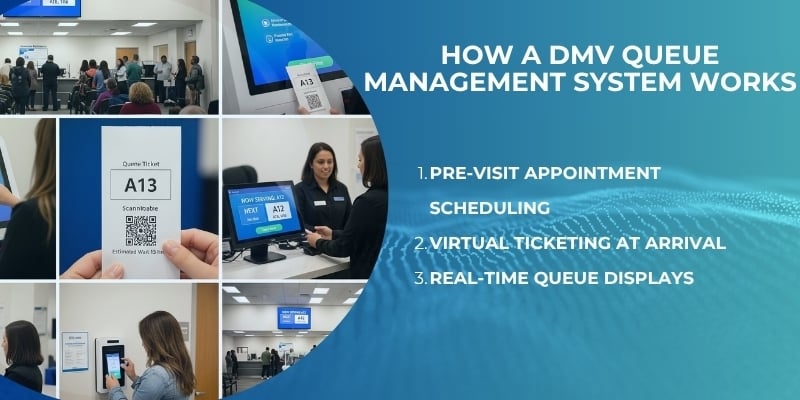
A DMV queue management system transforms the citizen journey from frustration to efficiency. The system manages every step from pre-visit planning to service completion.
Pre-Visit Appointment Scheduling
Citizens book time slots online before arriving at the office. The appointment system shows available slots, service types, and estimated visit duration.
Citizens choose a time that works for them. The system sends confirmation via email or SMS with instructions and document requirements. This pre-visit step reduces day-of congestion because arrivals are spread across the day rather than peaking at opening time.
Virtual Ticketing at Arrival
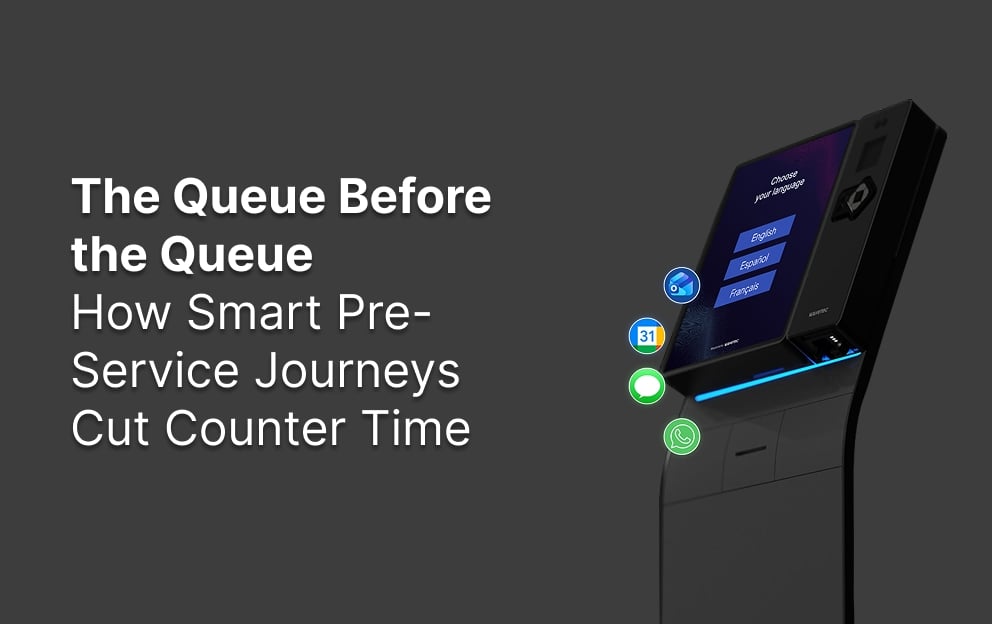
When a citizen arrives, they check in at a self-service kiosk. The kiosk asks for their appointment confirmation number, or if they are a walk-in, guides them through service selection. The system issues a virtual ticket and routes the citizen to the appropriate queue.
License renewals go to one queue. Vehicle registrations go to another. Driving tests are handled separately. This routing ensures that citizens are served by staff trained for their specific needs.
Real-Time Queue Displays
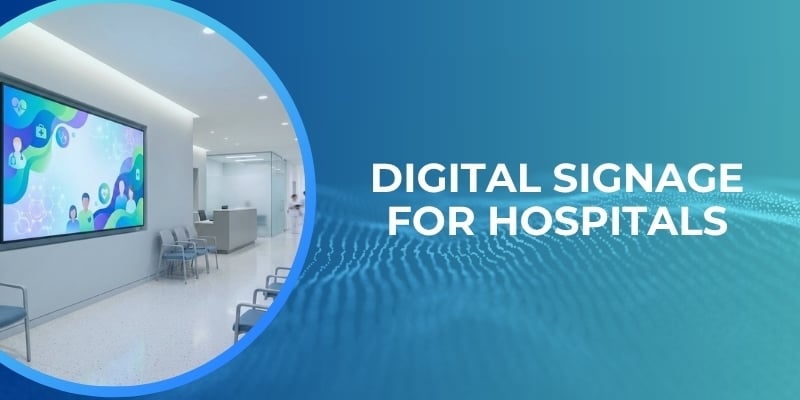
Large digital signage screens show current ticket numbers, estimated wait times, and counter assignments. Citizens can see their position in the queue without crowding the service counter.
Staff know which citizen is next and what service they need. The displays reduce the number of citizens approaching the counter to ask “How much longer?” which interrupts staff and slows service.
Benefits of Digitizing DMV Queue Management
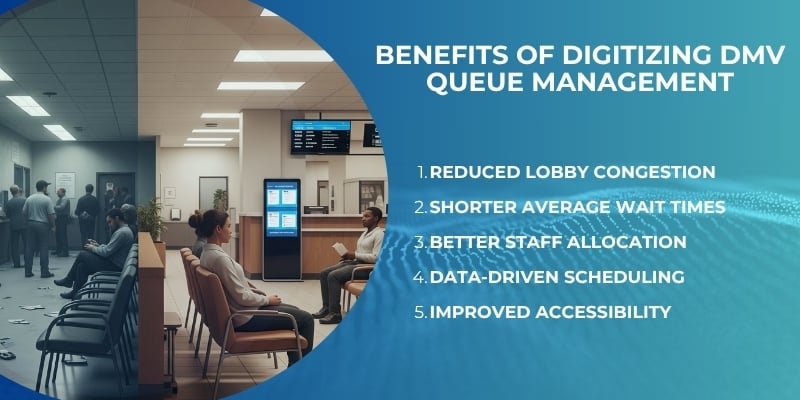
Government agencies that adopt digital queue management see dramatic improvements across every metric.
- Reduced lobby congestion means citizens wait comfortably rather than standing in crowded lines. Virtual queuing allows citizens to wait in their cars or elsewhere in the building, freeing up physical space.
- Shorter average wait times result from better routing and appointment distribution. Government agencies that adopted digital queue management and appointment booking reported a 47% decrease in in-office wait times and a 52% improvement in citizen satisfaction scores.
- Better staff allocation becomes possible with real-time queue data. Managers see which counters are busiest and can move staff to meet demand. Lunch breaks can be staggered based on predicted wait times rather than fixed schedules.
- Data-driven scheduling uses historical queue analytics to predict peak periods. Staffing levels can be adjusted for known high-volume days like the first of the month or after holidays.
- Improved accessibility benefits citizens with mobility challenges or limited time. Appointment booking ensures they are seen promptly. Virtual queuing allows them to wait in an accessible area rather than standing in line.
Walk-In vs. Appointment-Based Queue Management at DMVs
Pure walk-in models are fair in theory but inefficient in practice. Citizens who arrive early still wait. Those who arrive at peak times face the longest queues. There is no way to spread demand across the day.
Pure appointment models solve peak problems but create barriers for citizens who cannot plan ahead or have urgent needs. Someone who lost their wallet needs a replacement ID immediately, not next week.
The best approach is hybrid. Citizens can book appointments online, and those appointments are given priority in the queue. Walk-ins are served in the same queue but with lower priority.
The system prevents appointment holders from waiting behind dozens of walk-ins while ensuring walk-ins are still served.
This blended queuing model works well for DMVs. A citizen with an appointment is typically served within five minutes of arrival. A walk-in may wait longer but knows their position and estimated wait time from the queue display.
Key Features of an Effective Government Queue Management System
Multi-service routing allows different queues for different service types. License renewals, vehicle registration, driving tests, and commercial licensing each have dedicated queues with appropriate staffing.
- Appointment engine lets citizens book, reschedule, or cancel online. The engine syncs with the queue system so appointment slots are respected.
- Mobile check-in allows citizens to join the queue from their phone before entering the building. This reduces lobby crowding and lets citizens wait in their cars.
- Analytics dashboard provides real-time visibility into queue length, average wait time, staff performance, and walkaway rates. Managers can make data-driven decisions.
- Multi-location management connects all DMV offices in a region to a central platform. Managers can see performance across locations and shift resources as needed.
- Multilingual support ensures that all citizens can use the system regardless of language preference. Wavetec’s self-service kiosks support multiple languages.
Digital Signage: The Missing Link in DMV Queue Visibility
Digital signage is often overlooked but essential for DMV queue management. Overhead displays communicate ticket numbers, wait times, and counter assignments. Citizens see their position without crowding the service desk.
The signage also reduces perceived wait time. When citizens can see progress, time feels shorter. A 30-minute wait with visible updates feels faster than a 15-minute wait with no information.
Digital signage also reduces staff interruptions. In busy DMVs, staff spend significant time answering “What number is being served?” or “How much longer?” Signs eliminate these questions, allowing staff to focus on service.
Wavetec’s digital signage solutions integrate directly with the queue management system. The same platform that manages tickets controls the displays. Content can be updated remotely across all screens in all locations.
Wavetec’s DMV and Government Queue Management Solutions
Wavetec provides scalable queue management solutions specifically designed for government licensing offices. The SaaS platform handles multi-branch operations, real-time analytics, and citizen journey management.
- Self-service kiosks allow citizens to check in quickly and accurately. The kiosks are customizable for different service types and languages. They can also integrate with document scanners, payment terminals, and ID card readers.
- Digital signage displays keep citizens informed and reduce counter interruptions. Appointment booking integrates with the queue system to balance walk-ins and scheduled visits.
- Wavetec’s customer journey management platform connects appointment booking, queue management, feedback collection, and analytics. Government offices gain a complete view of citizen service from pre-visit to post-visit.
The system is cloud-based, so updates are automatic and data is secure. Government IT teams appreciate the minimal infrastructure requirements. Wavetec has deployed solutions in government offices across North America, Europe, and the Middle East.
FAQs
What is a DMV queue management system?
A DMV queue management system is digital software that organizes citizen flow in licensing offices. It enables virtual check-in, appointment scheduling, service-specific routing, and real-time wait time displays.
The goal is to reduce wait times, eliminate crowding, and improve citizen satisfaction.
Can citizens check in virtually before arriving at the DMV?
Yes. Modern DMV queue systems allow citizens to join the queue from their mobile phone before entering the building.
They receive SMS updates about their position and estimated wait time, and can wait in their car until their turn approaches.
How does appointment scheduling reduce DMV wait times?
Appointments spread citizen arrivals across the day, eliminating peak-hour congestion. The queue system gives appointment holders priority while still serving walk-ins.
This reduces average wait time for everyone because demand is balanced rather than concentrated.
What is the average DMV wait time with and without a queue system?
Without a queue system, average DMV wait times often exceed 45 minutes, with some offices reporting waits over two hours. With a digital queue management system, average wait times typically fall to under 20 minutes, often below 15 minutes for appointment holders.
Can a queue management system handle multiple DMV service types simultaneously?
Yes. Multi-service routing is a core feature. The system creates separate queues for license renewal, vehicle registration, driving tests, and other services. Citizens are routed to staff trained for their specific need, preventing bottlenecks where one service type blocks another.
Conclusion
A DMV queue management system transforms the citizen experience from frustration to efficiency.
By replacing chaotic lines with organized digital flow, government licensing offices cut wait times by over 60%, reduce walkaway rates by 50% or more, and improve citizen satisfaction scores dramatically.
The technology exists. The results are proven. The only question is whether your office will be among the last to suffer long queues or among the first to offer the fast, respectful service citizens deserve.
Wavetec has helped government offices across the country implement DMV wait time reduction solutions that work. Ready to cut your DMV wait times? Visit the Wavetec queue management system page to see how.
Author Bio: This article was written by the government solutions team at Wavetec, a global provider of queue management and customer journey platforms. Wavetec has helped state and local government offices across the world reduce wait times, improve citizen satisfaction, and optimize service delivery through digital transformation.
BOOK A FREE DEMO