Modern businesses rely on SaaS platforms to manage customer queues, appointments, and service experiences. These systems handle sensitive customer data including names, contact information, service histories, and sometimes payment details.
In digital service environments, security risks multiply as data travels across networks, devices, and third-party integrations.
A single vulnerability can expose thousands of customer records, damage trust, and lead to regulatory penalties.
SOC 2 compliance provides a framework for addressing these risks.
Developed by the American Institute of Certified Public Accountants, SOC 2 sets standards for how SaaS companies protect customer data through security, availability, processing integrity, confidentiality, and privacy controls.
For organizations using a queue management system, SOC 2 certification signals that their provider meets rigorous enterprise security standards. This article explains SOC 2 compliance and why it matters for secure queue management.
What Is SOC 2 Compliance in SaaS?
SOC 2 compliance refers to adherence to the Service Organization Control 2 framework developed by the American Institute of Certified Public Accountants.
The framework was designed specifically for technology and cloud computing companies that store customer data in the cloud.
Unlike other compliance standards that focus on specific industries or data types, SOC 2 applies broadly to any SaaS provider that handles customer information
The purpose of SOC 2 in SaaS is to ensure that companies have proper controls in place to protect customer data.
The framework is built around five trust service principles: security, availability, processing integrity, confidentiality, and privacy.
Security is the only mandatory principle. It covers protection against unauthorized access, system breaches, and data theft. The other four principles are optional but commonly included based on the services a company provides.
For customer data systems such as queue management platforms, SOC 2 compliance provides independent validation that security controls are properly designed and operating effectively.
This matters because enterprise customers increasingly require SOC 2 reports before signing contracts. Without compliance, SaaS providers cannot compete for business with large organizations that have strict vendor security requirements.
SOC 2 Type I vs Type II – What’s the Difference?
SOC 2 reports come in two types, and the difference is critical for understanding what a compliance certification actually means.
- SOC 2 Type I evaluates the design of security controls at a single point in time. An auditor reviews whether the controls are properly designed to meet trust service criteria. This provides assurance that the right policies and procedures are in place, but not that they actually work over time.
- SOC 2 Type II goes further. It evaluates both the design and the operating effectiveness of controls over a period of time, typically six to twelve months. Auditors test whether controls were actually followed, whether exceptions occurred, and whether issues were corrected. For SaaS companies, a typical SOC 2 Type II engagement spans six to twelve months, as auditors review controls over time rather than at a single point.
Type II matters for enterprises because it provides evidence of consistent security practices. A Type I report tells a customer that a vendor has good intentions.
A Type II report tells them that the vendor actually follows through. Most enterprise contracts require Type II reports because the operational history provides meaningful assurance about security posture.
Why SOC 2 Compliance Matters for Queue Management Systems
Queue management systems handle surprisingly sensitive data. Customer names, phone numbers, email addresses, appointment histories, service preferences, and sometimes identification documents all pass through these platforms.
In healthcare settings, queue systems may handle protected health information. In banking, they may connect to customer account records.
Without SOC 2 compliance, organizations face several risks.
- First, security controls may be inadequate or inconsistently applied.
- Second, there is no independent verification that data protection measures actually work.
- Third, customers have no objective basis for trusting the platform with their information.
- Fourth, the SaaS provider cannot demonstrate compliance to enterprise procurement teams.
For enterprise clients, SOC 2 compliance is often a non-negotiable requirement. Procurement departments and security teams require SOC 2 reports as part of vendor risk assessments.
Without compliance, queue management providers simply cannot sell to large banks, healthcare systems, or government agencies. Beyond market access, compliance delivers trust and security benefits that improve customer relationships and reduce breach risk.
Key Security Controls Required for SOC 2 Compliance
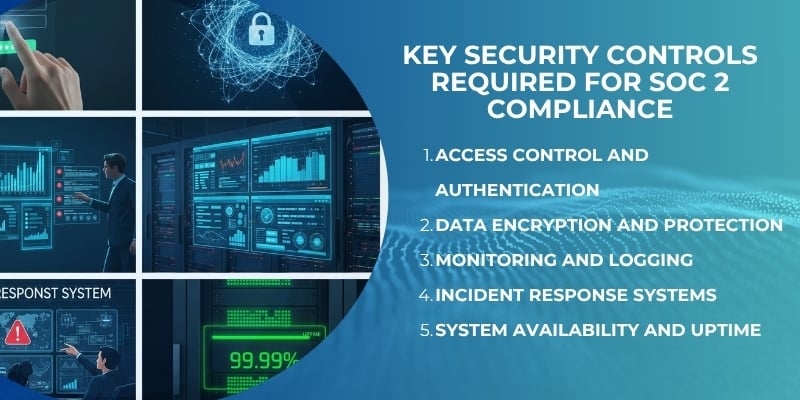
Achieving SOC 2 compliance requires implementing specific security controls across multiple domains. These controls work together to protect customer data at every stage of processing.
Access Control and Authentication
SOC 2 requires strict controls over who can access systems and data. This includes multi-factor authentication for all users, role-based access permissions that grant only the minimum necessary access, and regular reviews of user access rights.
Privileged accounts with administrative powers require additional controls including approval workflows and session monitoring.
Data Encryption and Protection
Customer data must be protected both at rest and in transit. Encryption standards must meet industry benchmarks such as AES-256 for stored data and TLS 1.2 or higher for data moving across networks.
Key management practices must ensure that encryption keys are stored separately from encrypted data and rotated regularly.
Monitoring and Logging
SOC 2 requires comprehensive logging of system activity including user logins, data access, configuration changes, and administrative actions.
Logs must be retained for specified periods and protected from tampering. Monitoring systems must detect anomalous activity and generate alerts for security teams to investigate.
Incident Response Systems
Organizations must have documented incident response plans that cover detection, containment, eradication, recovery, and notification procedures.
Plans must be tested regularly, and staff must be trained on their roles. Breach notification procedures must comply with legal requirements including timing and content of customer communications.
System Availability and Uptime
For queue management systems, availability is a critical security concern. Service disruptions can leave customers unable to check in or access services.
SOC 2 requires controls that ensure system uptime meets service level agreements, including redundant infrastructure, backup systems, and disaster recovery procedures. These controls are integral to secure customer journey management.
How SOC 2 Compliance Enhances SaaS Customer Experience Platforms
SOC 2 compliance does more than satisfy security requirements. It directly enhances the customer experience in several ways.
When customers know their data is protected by independently verified controls, they engage more freely with digital services. They share information needed for personalization without hesitation. They trust automated processes that rely on their data.
Operationally, compliance drives improvements that benefit all users. Access controls prevent unauthorized changes to service configurations.
Encryption protects data during transmission between customer devices and cloud systems. Monitoring detects performance issues before they affect users. Incident response ensures rapid recovery when problems occur.
Organizations that prioritize compliance demonstrate that security is not an afterthought but a core design principle. This commitment translates directly into customer confidence and long-term relationships.
SOC 2 Compliance in Wavetec Queue Management Solutions
Wavetec delivers queue management, appointment booking, self-service kiosk, and digital signage solutions through a secure SaaS architecture. The centralized platform handles customer data across multiple channels including physical branches, mobile apps, and web portals.
To ensure enterprise-grade security, Wavetec maintains SOC 2 compliance across its service offerings.
The security controls embedded in Wavetec solutions protect customer information at every touchpoint.
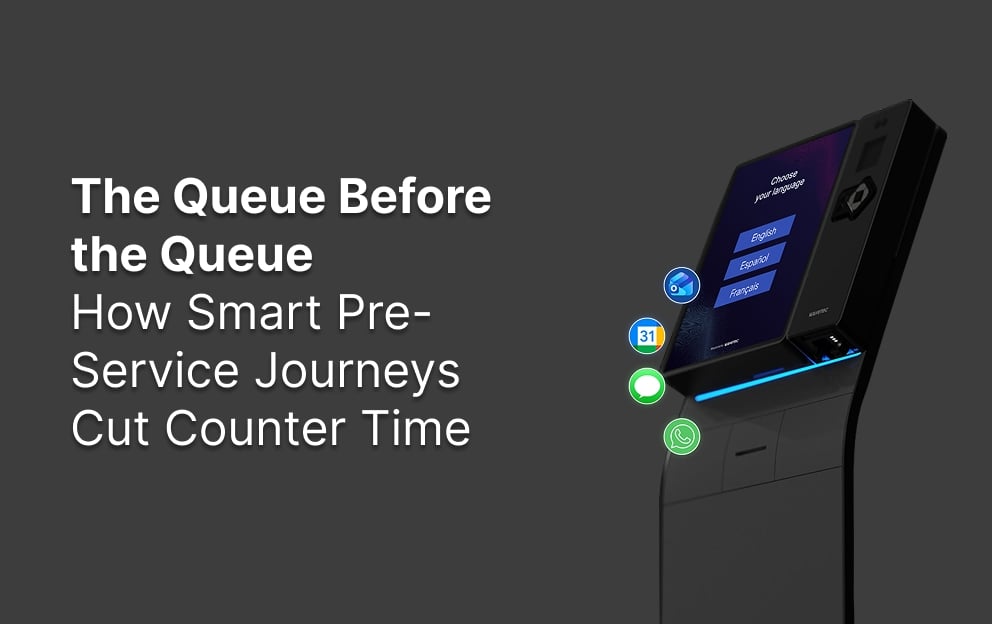
- Self-service kiosks encrypt data at the point of entry.
- Digital signage systems receive only anonymized queue status information, never personal customer data.
- Appointment booking platforms use secure authentication and encrypted data transmission.
- Centralized management consoles enforce role-based access controls, ensuring that only authorized personnel can view or modify system configurations.
For customers, Wavetec SOC 2 compliance means they can deploy queue management solutions without worrying about security gaps. The independent audit provides objective evidence that data protection controls work as designed.
This assurance is particularly valuable for banks, healthcare providers, and government agencies that face strict regulatory requirements for customer data protection.
Case Study – Secure Queue Management in Banking
Leading financial institutions are increasingly adopting secure, digital queue management solutions to enhance customer experience while ensuring the protection of sensitive data.
Wavetec’s implementations across global banking environments demonstrate how innovation, security, and operational efficiency can be seamlessly integrated.
BCI Bank – Transforming Branch Experience with Centralized and Secure Systems
BCI Bank, one of Chile’s largest banking institutions, partnered with Wavetec to modernize its branch experience through digital signage and queue management solutions.
The deployment enabled centralized control of customer flow and content across hundreds of branches, ensuring consistency and operational visibility. Customer journey data was managed within a secure SaaS environment, with controlled access to dashboards and anonymized information displayed on public screens.
By integrating secure data handling with real-time communication tools, BCI Bank successfully enhanced customer engagement while maintaining high standards of confidentiality and system availability.
Diamond Trust Bank Kenya – Digitizing Transactions with Secure Self-Service Solutions
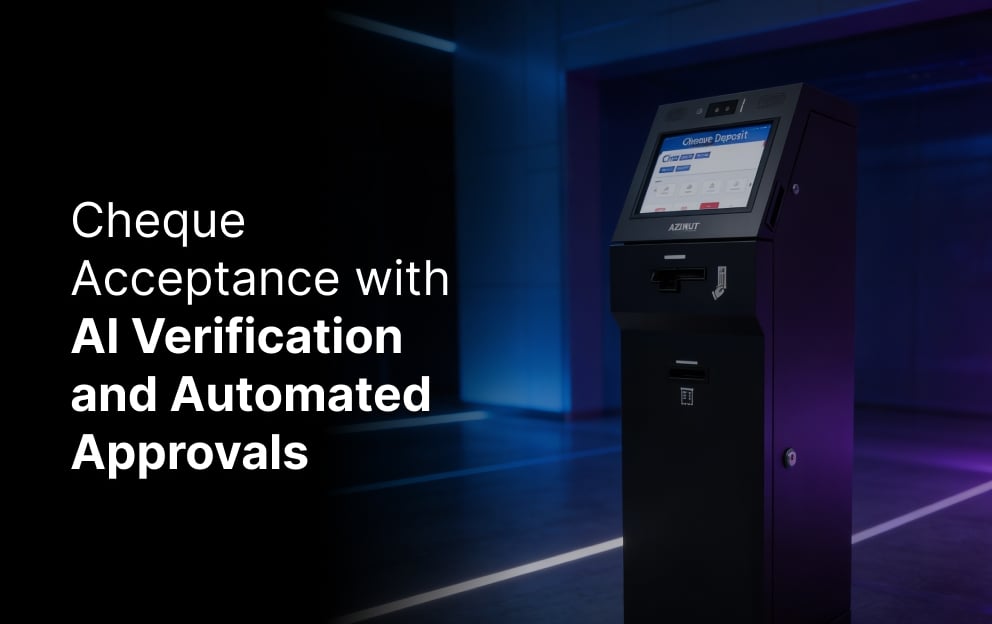
Diamond Trust Bank Kenya implemented Wavetec’s cheque deposit machines to streamline in-branch transactions and reduce dependency on manual processes.
The solution enabled customers to securely deposit cheques through automated, self-service channels integrated with the bank’s core systems. Real-time processing, encrypted data transmission, and reduced human intervention minimized operational risks and improved transaction accuracy.
This deployment reflects how secure automation can enhance both efficiency and trust, aligning with the stringent security and processing integrity requirements expected in modern banking environments.
Maduro & Curiel Bank – Optimizing Customer Flow with Controlled Access and Visibility
Maduro & Curiel Bank leveraged Wavetec’s queue management system to improve service delivery and optimize customer flow across its branches.
The solution introduced structured service routing, real-time monitoring, and centralized management, enabling the bank to maintain operational control while delivering a seamless customer experience.
Access to system configurations and customer data was governed through defined roles and permissions, ensuring secure handling of information across touchpoints.
This implementation highlights the importance of combining efficiency with governance, enabling banks to scale operations while maintaining data security and compliance standards.
Market Trends in SOC 2 Compliance for SaaS
Demand for SOC 2 compliance is increasing as organizations recognize the security risks of SaaS adoption.
The SOC 2 compliance-automation market is projected to be around 340 million USD in 2025, with the technology/SaaS vertical accounting for about 40% of that value. This growth reflects increasing enterprise requirements for vendor security certifications.
Several trends are driving this demand.
- First, high-profile data breaches have made security a board-level concern.
- Second, regulatory frameworks such as GDPR and CCPA impose strict requirements for customer data protection.
- Third, enterprise procurement processes now routinely require SOC 2 reports as a condition of vendor approval.
- Fourth, SaaS adoption continues to expand, increasing the number of vendors that must demonstrate compliance.
For customer experience platforms, SOC 2 compliance is becoming table stakes rather than a differentiator.
Organizations evaluating queue management systems increasingly filter out vendors without compliance certifications. The market trend is clear: SOC 2 compliance is moving from optional to mandatory for SaaS providers serving enterprise customers.
Risks of Non-Compliance in SaaS Queue Systems
Operating without SOC 2 compliance exposes SaaS queue management providers and their customers to significant risks. Data breaches are the most immediate concern.
Without proper security controls, customer information is vulnerable to unauthorized access, theft, or manipulation. A single breach can expose thousands of records, triggering legal liability and regulatory penalties.
Penalties for non-compliance extend beyond breach-related costs. Organizations that cannot demonstrate adequate security controls may face fines under data protection regulations.
Healthcare queue systems that handle patient information risk HIPAA violations. Banking systems that process customer data may face regulatory sanctions. These penalties can reach millions of dollars per incident.
Reputational damage often exceeds financial penalties. News of a security breach erodes customer trust that takes years to rebuild.
Enterprise clients that suffer breaches through vendor vulnerabilities will likely terminate contracts and pursue legal remedies. The loss of business from security-conscious customers can cripple a SaaS provider.
Most importantly, non-compliance means losing enterprise clients. Procurement teams at large organizations require SOC 2 reports as a condition of doing business.
Without compliance, SaaS queue management providers simply cannot compete for contracts with banks, healthcare systems, or government agencies.
Future of Compliance in Customer Experience SaaS
The future of compliance for customer experience platforms will be shaped by emerging technologies and evolving security standards.
AI-driven compliance tools are already automating evidence collection and control testing. These systems continuously monitor security controls and flag exceptions in real time, reducing the manual effort required for audits.
Automated audits represent the next frontier. Rather than periodic assessments that test controls at a point in time, continuous auditing will provide ongoing assurance of security posture. Compliance will shift from a once-a-year event to a continuous state of verification.
Zero-trust security architectures will become standard for SaaS platforms. Rather than trusting users inside network perimeters, zero-trust models verify every access request regardless of origin. This approach aligns naturally with SOC 2 principles and will likely become a compliance requirement over time.
Continuous monitoring systems will provide real-time visibility into security controls, access patterns, and data flows. These systems will detect anomalies instantly and trigger automated responses, reducing the window between breach and detection. For customer experience platforms handling sensitive data, continuous monitoring will be essential for maintaining trust.
FAQs
What is SOC 2 compliance in SaaS?
SOC 2 compliance in SaaS refers to adherence to security, availability, processing integrity, confidentiality, and privacy controls audited against AICPA trust principles. It provides independent verification that a SaaS provider protects customer data properly.
Why is SOC 2 important for queue systems?
Queue systems handle sensitive customer data including names, contact information, and service histories. SOC 2 compliance assures enterprise customers that security controls work properly, enabling contracts with banks, healthcare providers, and government agencies.
What is SOC 2 Type II?
SOC 2 Type II evaluates both the design and operating effectiveness of security controls over a period of six to twelve months. Unlike Type I which assesses controls at a single point, Type II provides evidence that controls work consistently over time.
Do SaaS companies need SOC 2?
SaaS companies serving enterprise customers increasingly need SOC 2 compliance to compete. Large organizations require SOC 2 reports during vendor security assessments. Without compliance, SaaS providers lose access to the enterprise market.
How long does SOC 2 compliance take?
SOC 2 Type II audits typically span six to twelve months, followed by audit report issuance. Preparation including control implementation may add several months. Total timeline from start to certified report often ranges from nine to eighteen months.
Conclusion
SOC 2 compliance is essential for SaaS queue management systems that handle customer data. The framework provides independent verification that security controls work properly, enabling enterprise customers to trust the platform with sensitive information.
For queue management providers, compliance opens access to banking, healthcare, and government markets that require rigorous security standards.
For customers, SOC 2 certification provides confidence that their data is protected by controls audited against recognized trust principles.
Wavetec delivers secure queue management, appointment booking, and customer experience solutions built on SOC 2 compliant architecture.
Organizations seeking to modernize service delivery while maintaining enterprise security standards should prioritize vendors that demonstrate compliance through independent audit reports.
BOOK A FREE DEMO