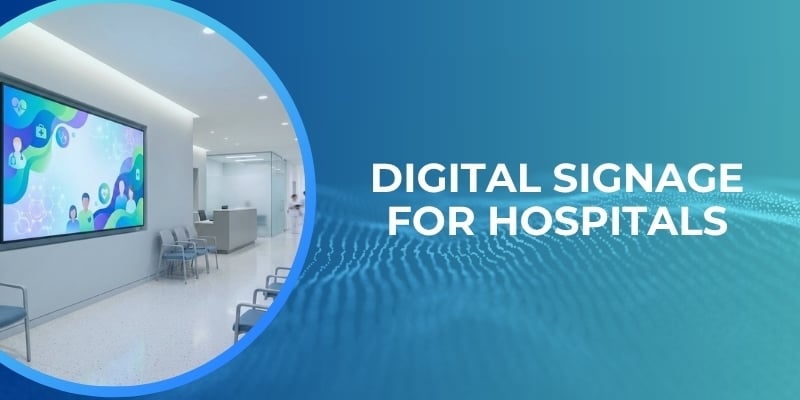
Digital signage for queue management uses strategically placed display screens to show real-time queue status, ticket numbers, estimated wait times, and service counter assignments. It reduces customer wait anxiety, minimizes staff interruptions, and enhances the overall waiting experience in banks, hospitals, government offices, and retail stores.
Waiting is an inevitable part of service delivery. But the way customers experience that wait can be managed. The worst waiting experience is one filled with uncertainty.
Customers who do not know how long they will wait, whether they have been forgotten, or when their turn will come grow anxious and frustrated. This anxiety amplifies the perceived length of the wait, often making a 10-minute delay feel like 30 minutes.
Service environments that leave customers in the dark pay a price: lower satisfaction scores, negative reviews, and lost business.
Digital signage for queue management solves this problem by making waiting visible. Strategically placed screens show real-time queue status, current ticket numbers, estimated wait times, and counter assignments.
Customers see that the system is working, that their turn is approaching, and that their time is respected.
Wavetec’s digital signage solutions integrate seamlessly with queue management platforms, transforming waiting areas from zones of frustration to spaces of calm information.
What Is Digital Signage for Queue Management?
Digital signage for queue management refers to the use of electronic display screens to communicate queue-related information to waiting customers.
These screens are connected to the queue management system and show live data including the current ticket number being served, the next ticket numbers, estimated wait times, and the specific counter or service point where customers should go.
Unlike static signs or printed notices, digital signage updates automatically in real time.
When a staff member calls the next customer, the screen changes instantly. When wait times fluctuate due to changing service volumes, the estimated time updates. This information keeps customers informed without requiring them to approach the counter and interrupt staff.
Digital signage for queue management includes several types of displays: large overhead screens visible from across the waiting area, smaller counter-specific displays showing which ticket is being served at that station, and even corridor screens guiding customers to the correct service zone.
The common thread is real-time, visual communication that reduces uncertainty and improves the waiting experience.
How Digital Signage Reduces Perceived Wait Time
The psychology of waiting is well understood. Uncertainty magnifies the perception of time. A customer who does not know how long they will wait feels every second. A customer who sees their position in the queue and an estimated wait time can relax, even if the actual wait is unchanged.
Studies in waiting behavior demonstrate that customers who can see clear queue status information on digital displays perceive their wait as up to 35% shorter than customers waiting without any visual information. This finding has significant implications for service businesses.
Reducing perceived wait time does not require speeding up service. It requires transparency which is provided by digital signage.
A customer who sees “Now serving: 42. You are 47. Estimated wait: 6 minutes” knows exactly where they stand. They are not constantly glancing at the counter wondering if they missed their call. They are not approaching staff to ask “how much longer?”
The result is a calmer waiting area, reduced staff interruptions, and higher customer satisfaction.
Types of Queue Management Displays
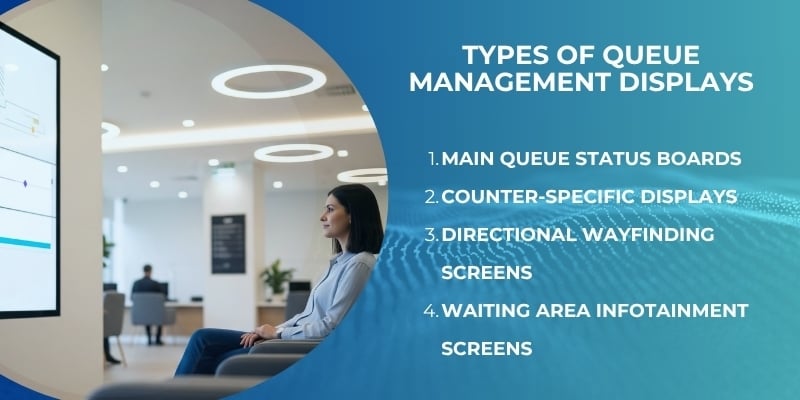
Different display types serve different purposes in the customer journey. A complete digital signage strategy includes several varieties.
Main Queue Status Boards
These are large overhead displays mounted in central waiting areas. They show current ticket numbers being served, a list of upcoming numbers, estimated wait times, and counter assignments.
These screens are visible from across the room, allowing customers to monitor progress without crowding the service desk.
Counter-Specific Displays
Small screens placed at each service counter show which ticket number is currently being served at that location.
These displays help customers confirm they are at the correct counter, especially in multi-counter environments where different services are offered at different stations.
Directional Wayfinding Screens
Located in corridors, lobbies, or near entrances, these screens guide customers to the right service zone. They might show a map, a list of departments, or direct customers to the queue check-in kiosk.
Waiting Area Infotainment Screens
These dual-purpose screens combine queue status information with branded content, promotions, health messages, or entertainment.
During the wait, customers see both where they stand in the queue and information about services, products, or public health announcements. This hybrid approach reduces perceived wait time while delivering marketing value.
Digital Signage Features That Enhance the Queue Experience
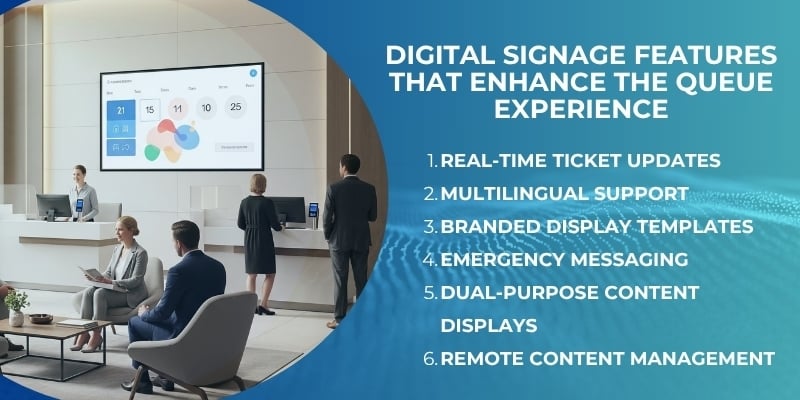
Effective queue management displays include several essential features.
- Real-time ticket updates ensure that what customers see on the screen matches exactly what staff see on their terminals. There is no lag or discrepancy.
- Multilingual support allows screens to rotate between languages, serving diverse customer populations. A screen might show information in English, then Spanish, then Mandarin.
- Branded display templates maintain visual consistency with the organization’s identity. Colors, logos, and fonts align with other customer communications.
- Emergency messaging capability allows the signage network to instantly override queue information with safety alerts, evacuation instructions, or urgent announcements.
- Dual-purpose content displays queue status alongside promotions, health tips, or public service announcements. This turns waiting time into a communication opportunity.
- Remote content management allows administrators to update display content, schedules, and templates from any location. A regional manager can push a new promotion to all branch screens simultaneously.
The global digital signage market is projected to reach $52.1 billion by 2030, with in-branch and queue management applications representing one of the highest-growth vertical segments globally. This growth reflects the proven ROI of digital signage in reducing wait time complaints and improving customer experience.
Wavetec’s digital signage solutions include all these features, with cloud-based management and seamless integration with queue management platforms.
Integrating Digital Signage with Your Queue Management System
Digital signage does not work in isolation. It must connect to the queue management system that tracks tickets, service times, and counter assignments. The integration is typically achieved through APIs or direct software links.
The queue management system maintains the master database: which tickets have been issued, which are waiting, which are being served, and which are complete. The digital signage software queries this database at regular intervals (often every few seconds) and updates the displays accordingly.
Cloud-based integration allows multi-branch management. A single signage platform can control displays across dozens of locations, each pulling data from its local queue system. Centralized templates, remote updates, and consolidated reporting simplify administration.
Wavetec’s queue management system includes built-in digital signage integration, ensuring that displays always show accurate, real-time information without custom development.
Digital Signage in Key Verticals
Different industries apply queue management displays to their specific service environments.
- Banking: Overhead screens show ticket numbers and counter assignments. Customers see which teller is available. Some banks also display wait time estimates for different service types (teller, loans, safe deposit).
- Healthcare: Clinic waiting rooms use digital signage to show patient ticket numbers and estimated consultation times. Some systems integrate with electronic health records to display patient names (with privacy controls).
- Government and DMV: Licensing offices use numbered ticket systems with large overhead displays. Customers see their number and the current serving number. Estimated wait times help citizens decide whether to wait or return later.
- Retail: Service desks, return counters, and fitting rooms use queue displays. Customers see their position and can shop while waiting. Some retailers also display promotions on the same screens.
Digital Signage and Self-Service Kiosks: A Powerful Queue Duo
Digital signage and self-service kiosks work together as a complete queue management system. The kiosk handles check-in. The signage handles status communication.
When a customer arrives, they check in at a self-service kiosk. The kiosk issues a ticket (printed or digital) and adds them to the queue. The digital signage immediately updates to show the new ticket in the waiting list.
As service progresses, staff call tickets from their terminals. The signage updates in real time, showing which numbers are now being served. Customers see their number approaching and prepare to approach the counter.
This duo eliminates the need for staff to manage the queue manually. No one needs to ask “who is next?” The system handles it. Staff focus on service, not logistics.
Wavetec’s self-service kiosks integrate directly with the digital signage platform, creating a seamless check-in-to-service flow.
Case Study – Telecom Retailer Improves Customer Experience with Queue Digital Signage
Telecom service centers often experience unpredictable customer traffic, long consultation times, and multiple service categories ranging from SIM activation and bill payments to technical support and device troubleshooting. During peak hours, physical waiting lines quickly become crowded and difficult to manage.
One of the biggest pain points in telecom environments is uncertainty. Customers do not know how long they will wait, which counter will serve them, or whether the queue is moving fairly. This uncertainty increases perceived wait time and creates frustration even when actual service times remain reasonable.
Digital signage solves this problem by creating visibility throughout the customer journey.
Real-time queue displays show active ticket numbers, counter assignments, and live queue progression, allowing customers to clearly understand where they stand in the service process.
Instead of repeatedly approaching staff for updates, customers can monitor queue movement directly from waiting area screens.
When integrated with a queue management system, digital signage also improves operational efficiency. Staff can call customers automatically, manage multiple service categories more effectively, and maintain a structured flow during high-footfall periods.
The result is a calmer waiting environment, reduced perceived wait time, and a more organized customer experience.
Case Study – Zain Telecom Improves Queue Visibility with Digital Signage
Zain Telecom in Saudi Arabia implemented Wavetec’s Queue Management System integrated with digital signage and customer display units across its flagship retail and customer service centers.
The deployment included overhead waiting area displays, customized LCD screens, counter display units (CDUs), multilingual announcements, and centralized queue management across multiple locations.
Customers could view live ticket numbers, counter assignments, and queue progression in real time while waiting comfortably inside the service center.
One of the most important outcomes of the deployment was the reduction in perceived waiting time. Zain’s CDU-Status Display Units helped customers clearly see that service was being handled fairly according to ticket sequence. This transparency reduced customer anxiety and minimized the frustration commonly associated with crowded telecom branches.
The digital signage system also improved customer flow visibility across the entire branch environment. Customers were guided step-by-step through the service journey using synchronized displays and audio announcements, reducing confusion and helping branches maintain organized service delivery during busy hours.
In addition, Wavetec’s centralized reporting and queue orchestration enabled Zain’s management teams to monitor service performance across locations in real time.
The deployment created a more structured, visually engaging, and customer-focused telecom service environment while supporting scalable branch operations across Saudi Arabia.
FAQs
What is digital signage for queue management?
Digital signage for queue management uses electronic displays to show real-time queue information including ticket numbers, estimated wait times, and counter assignments.
It integrates with queue management software to keep customers informed and reduce wait anxiety.
How does digital signage reduce wait time frustration?
Digital signage reduces frustration by eliminating uncertainty. Customers see their position in the queue and how long they will wait.
This transparency prevents the anxiety that comes from not knowing, making the actual wait feel shorter.
Can digital signage work as a standalone queue solution?
No. Digital signage displays queue information but does not manage the queue itself. It must be integrated with a queue management system that tracks tickets, service times, and counter assignments. The two work together as a complete solution.
What content can be shown on queue management displays?
Queue displays typically show current ticket number, next ticket numbers, estimated wait time, and counter assignment.
Many systems also display branded content, promotions, health messages, or public service announcements in a secondary area of the screen.
How does digital signage integrate with a queue management system?
Integration happens through APIs or direct software links. The queue system maintains the master database of ticket status. The signage software queries this database regularly and updates displays in real time. Cloud-based platforms simplify multi-branch deployment.
Author Bio: This article was written by the digital signage team at Wavetec, a global provider of queue management and customer experience technology. Wavetec has deployed digital signage solutions in thousands of banks, hospitals, government offices, and retail stores worldwide.
Conclusion
Digital signage for queue management transforms the waiting experience from a source of frustration into a moment of clear communication.
By making queue status visible, wait times transparent, and counter assignments obvious, digital displays reduce perceived wait time by up to 35% and significantly improve customer satisfaction.
They also reduce staff interruptions, allowing service teams to focus on serving rather than answering “how much longer?”
For banks, healthcare providers, government offices, and retailers, investing in digital signage is one of the highest-ROI improvements to the customer experience.
Wavetec offers complete digital signage and queue management solutions designed to work together seamlessly.
BOOK A FREE DEMO