In today’s on-demand economy, long customer wait times can quickly damage satisfaction, loyalty, and brand perception. Customers expect fast, seamless service, and even short delays can feel frustrating when expectations are not met.
Research shows that prolonged waiting time in customer service directly impacts customer behavior, with many customers abandoning purchases or switching to competitors after negative wait experiences. This makes reducing customer wait times a critical priority for businesses across retail, healthcare, banking, and service industries.
52% of customers will stop purchasing from a company after experiencing long wait time, and as per one report when customers wait longer than expected, dissatisfaction increases by as much as 262%.
By implementing the right mix of staffing strategies, queue management systems, self-service solutions, and real-time monitoring, organizations can significantly reduce waiting times without compromising service quality.
This guide outlines eight effective strategies to reduce customer wait times, improve operational efficiency, and create a more positive customer experience while keeping customers informed, engaged, and satisfied throughout their journey.
What Causes Long Wait Times in Customer Service?
Long customer wait times typically occur when customer demand exceeds available service capacity. Poor workforce planning, inadequate staffing during peak hours, and a lack of cross-training often lead to service bottlenecks and growing queues.
Outdated systems also contribute to delays. Manual check-ins, disconnected service tools, and inefficient workflows slow down service delivery and increase average wait time. Even minor inefficiencies at a single touchpoint can ripple across the entire queue.
According to Statista, Outdated systems contribute to waits; telecom leads with over 2 minutes average live chat delay per Statista industry data.
Unexpected surges in customer traffic, such as seasonal demand, promotions, or system outages,s further intensify wait times. Without predictive planning or real-time monitoring, businesses struggle to respond quickly.
Finally, poor communication increases perceived wait time. When customers are unsure how long they will wait or are unaware of self-service options, frustration grows even if the actual wait is short.
8 Best Strategies to Reduce Customer Wait Times

To reduce customer wait times effectively, businesses must combine smart technology, efficient staffing, and proactive communication. The following strategies help manage customer flow, shorten queues, and improve service efficiency while maintaining a positive customer experience.
Let us now look at strategies that can help you decrease customer wait times and enhance operational efficiency and customer feedback.
1. Implement Smart Queue Management Systems
Modern queue management systems play a crucial role in reducing customer wait times during peak hours. Businesses can use linear, virtual, mobile, or WhatsApp queuing solutions to distribute customer flow efficiently and eliminate physical crowding.
Virtual queuing allows customers to wait remotely while receiving real-time updates, significantly reducing perceived wait time and improving satisfaction. Advanced queue systems also provide performance metrics, staff utilization insights, and centralized control to optimize operations and customer journeys.
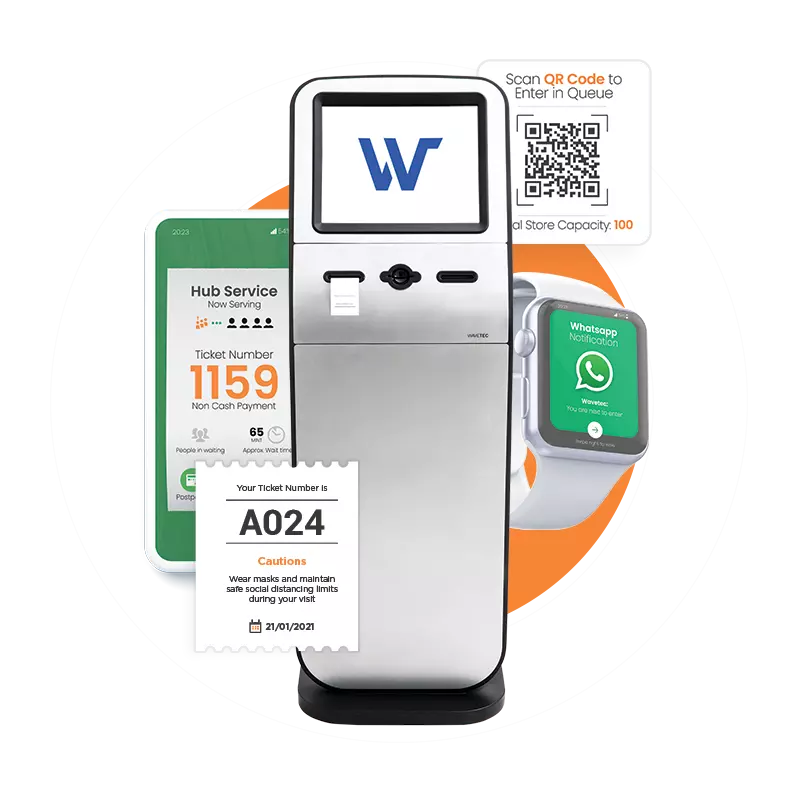
Average Wait Time Reduced by 40%
Our Queue Management System ensures that customers wait less in queues, resulting in improved satisfaction levels.
Click here to explore how our solutions can deliver shorter wait times and happier customers firsthand.
Explore Wavetec's Queuing Solutions2. Pre-Arrival Appointment Scheduling
Appointment scheduling systems help reduce waiting time in customer service by allowing customers to book service slots in advance. Customers receive confirmations and reminders, arrive on time, and are served without standing in long queues.
This approach enables better staff preparation, smoother customer flow, and improved service predictability, resulting in reduced congestion and higher customer satisfaction.
3. Self-Service Kiosks Reduces Long Queues
Self-service kiosks allow customers to complete routine tasks independently, reducing dependency on staff and shortening queues. These solutions operate contactlessly, support multiple languages, and remain available 24/7.
By shifting simple transactions to self-service, businesses reduce average wait time while giving customers greater control over their experience. Self-service kiosks also help staff focus on complex requests that require human assistance.
4. Optimize Staff Allocation
Optimizing staff allocation is essential for managing customer wait times effectively. Businesses should schedule employees based on peak demand patterns and cross-train teams to handle multiple service roles.
Proper workforce optimization ensures the right staff are available at the right time, reducing service delays, improving efficiency, and delivering a smoother customer experience.
5. Utilize Predictive Analytics
Predictive analytics enables businesses to forecast demand and identify patterns in customer wait times. By analyzing historical data, organizations can anticipate busy periods and proactively adjust staffing and service capacity.
This data-driven approach reduces bottlenecks, improves service efficiency, and minimizes wait times before issues escalate.

6. Enhance Communication During Wait Times
Clear communication significantly reduces perceived wait time. Digital signage, mobile notifications, and real-time updates keep customers informed about their position in the queue and expected service time.
Informative or engaging content during waiting periods also improves customer experience by making waits feel shorter and more manageable.

7. Streamline Service Processes
Streamlining internal processes is key to reducing customer waiting times. By eliminating workflow bottlenecks, automating repetitive tasks, and simplifying procedures, businesses can speed up service delivery.
Efficient processes lead to faster resolution, higher productivity, and improved customer satisfaction across service touchpoints.
8. Monitor and Manage Customer Flow in Real-Time
Real-time customer flow monitoring allows businesses to respond immediately to demand fluctuations. Using live dashboards and analytics, managers can reallocate staff, open additional service points, or redirect customers as needed.
This proactive approach helps maintain optimal service levels and prevents queues from escalating during peak periods.
Real-time Insights and Analytics
Gain valuable insights into customer flow and queue patterns, enabling you to make data-driven decisions for better operational efficiency.
Book a free demo today and witness the transformation firsthand.
Book A Free DemoOther Ways to Guarantee Happier Customers in the Queue

Beyond operational improvements, creating a comfortable waiting environment helps improve customer perception of wait times. Providing seating, reading materials, children’s play areas, and visually engaging décor can make waiting more pleasant.
Clearly communicating queue-reduction efforts on your website also reassures customers that their time is valued, shaping positive expectations before they arrive.
What Metrics Should You Track to Manage Wait Times?
Measuring customer wait times requires tracking the right performance metrics. These indicators help identify delays, improve staffing decisions, and optimize service delivery.
1. Average Wait Time
Shows how long customers usually wait before being served. It’s the core metric to spot delays and measure improvements.
2. Service Time
Tracks how long staff take to complete each request. Longer service times often point to workflow gaps or training needs.
3. Abandonment Rate
Measures how many customers leave before getting help. A high rate means wait times or communication need fixing.
4. Peak Hour Traffic
Highlights the busiest times of the day or week. This helps plan staff schedules and avoid bottlenecks during rush periods.
5. Customer Satisfaction Scores
Links customer feedback directly to wait experiences. It shows whether your improvements are actually making people happier.
Customer Wait Times – FAQs
How can businesses reduce customer wait times?
Businesses can reduce customer wait times by optimizing staff allocation, using queue management systems, offering self-service options, and leveraging predictive analytics.
What tools help manage customer wait times?
Tools such as virtual queuing systems, appointment scheduling software, and real-time customer flow monitoring platforms are highly effective.
Why is reducing customer waiting time important?
Reducing waiting time improves customer satisfaction, increases loyalty, and reduces abandonment rates.
How should businesses respond to long wait times?
Businesses should acknowledge delays, communicate transparently, and offer alternatives such as self-service or rescheduling options.
How will Your Customers Feel About this?
The best and most trusted valuation of a successful customer begins and ends with the opinion of their customers. This is the difference between how they feel they have been treated and how they expected to have been treated and served. If the difference is negligible, congratulations! The goal ultimately is to enable them to:
- Feel valued.
- I look forward to personable and streamlined care.
- Be likely to visit again and more frequently.
- Suggest and recommend your products and services to people they know.
- Self-sufficient with self-service, appointments, notifications, and feedback solutions
Queues cannot be eliminated. The demand for services and products will outweigh the supply the majority of the time. But what can be managed, monitored, and maneuvered is the perceived wait times and customer experience. After all, as Richard Larson says, “Often the psychology of queuing is more important than the actual wait time.”
Conclusion
Reducing customer wait times is essential for delivering exceptional service and staying competitive in today’s fast-paced market. By combining smart staffing strategies, predictive analytics, queue management systems, and real-time monitoring, businesses can significantly improve service efficiency and customer satisfaction.
A proactive, customer-centric approach to managing wait times builds trust, enhances loyalty, and drives long-term business success. When customers feel respected and informed, even unavoidable waits become more tolerable—creating better experiences and stronger relationships.
BOOK A FREE DEMO