Retailers today face growing pressure to operate more sustainably without compromising efficiency or customer experience.
Reducing waste, managing energy consumption, and streamlining operations have become essential priorities as environmental responsibility increasingly influences business decisions and consumer expectations.
As retailers adopt digital solutions to address these challenges, self-service kiosks are promoting sustainability in retail by replacing paper-based and manual processes with efficient, low-waste digital workflows.
From minimizing printed materials to optimizing in-store operations, kiosks provide a practical way to reduce environmental impact while maintaining smooth service delivery.
As digital systems become more common in modern retail environments, self-service kiosks stand out as a scalable solution that supports both operational efficiency and sustainability.
This blog explores how kiosks contribute to greener retail operations, the technologies that enable their eco-conscious design, and how retailers can implement them effectively to meet sustainability goals.
What are Self-Service Kiosks and Their Role in Retail Sustainability?
Self-service kiosks are interactive touchscreen systems that allow customers to complete routine retail tasks independently, such as self-checkout, placing orders, booking appointments, or accessing product and service information.
By shifting these interactions to digital interfaces, kiosks reduce dependence on staff-led processes and printed materials commonly used in stores.
Self-service kiosks support more sustainable retail operations by replacing paper-based steps such as printed receipts, order slips, and informational signage with digital alternatives.
This change simplifies daily workflows and reduces the materials required to manage customer interactions across retail locations.
Customer adoption of paperless experiences continues to grow. In 2025, 71% of grocery shoppers in the UK reported choosing digital receipts when available, reflecting strong acceptance of digital-first interactions.
As digital behavior becomes standard, kiosks align naturally with evolving customer expectations while reducing resource use.
By integrating digital processes directly into store environments, self-service kiosks help retailers incorporate sustainability into everyday operations while maintaining consistent service quality and operational efficiency.
3 Key Environmental Benefits of Self-Service Kiosks
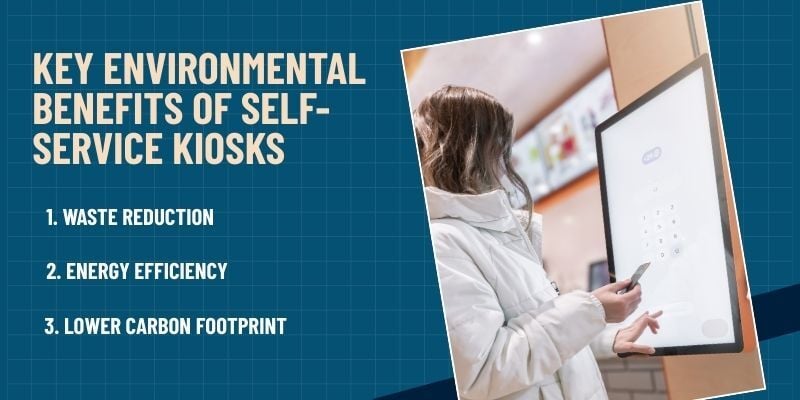
In retail, where paper use, energy consumption, and waste are part of daily operations, self-service kiosks help reduce the resources required to support customer interactions.
The following benefits focus on how kiosks affect material use, energy demand, and long-term waste management across stores:
1. Waste Reduction
Self-service kiosks replace many paper-based and disposable processes traditionally used in retail. Using kiosk technology to reduce waste, retailers can change to digital receipts, electronic tickets, and on-screen confirmations from thermal paper rolls, printed order slips, and paper-based queue tickets.
Product information, menus, and promotional content can also be displayed digitally, which limits reliance on printed signage and brochures.
Reducing these materials lowers landfill contributions and decreases demand for paper and plastic supplies across store networks.
Solutions like Wavetec’s self-service kiosks allow businesses to digitize customer interactions efficiently while cutting operational waste.
At Chilexpress, a leading courier company in Chile, Wavetec installed self-service kiosks across 35 high-traffic branches. Customers entered their details digitally and received appointment numbers directly at the kiosk instead of using paper slips.
This approach significantly reduced paper usage while improving service speed, with each customer processed in 15 seconds to one minute.
2. Energy Efficiency
Modern self-service kiosks are designed with energy-conscious hardware, including LED screens, low-power processors, and automatic standby modes during idle periods.
These components consume less electricity than traditional checkout counters, printers, and permanently powered service stations.
Wavetec’s kiosks incorporate hardware optimized for power-saving operation, allowing retailers to reduce in-store energy consumption while maintaining consistent service performance during peak hours.
3. Lower Carbon Footprint
By cutting paper use and reducing energy demand, self-service kiosks help lower the overall carbon footprint of retail operations.
Digital transactions reduce emissions associated with paper production, transportation, and disposal, while energy-efficient hardware limits ongoing electricity consumption.
Many kiosk systems are built with durable, modular components that extend hardware lifespan and reduce replacement frequency.
This approach helps retailers manage electronic waste more effectively and maintain long-term environmental gains through regular maintenance and software updates.
How Self-Service Kiosks Improve Operational Efficiency in Retail?
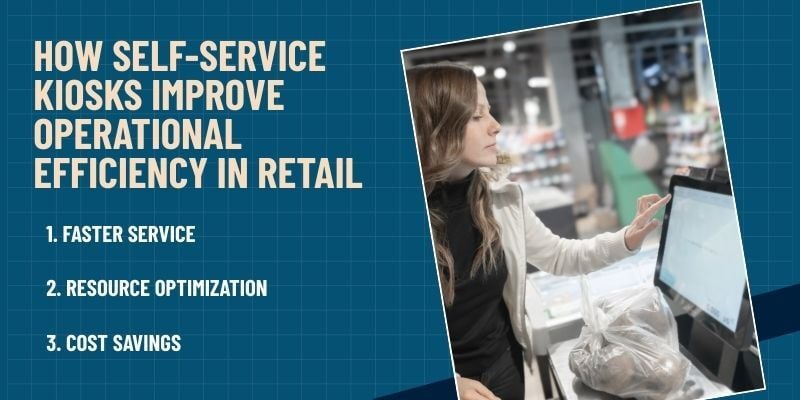
Self-service kiosks improve retail efficiency by automating routine customer interactions that traditionally require staff involvement. This shift reduces service bottlenecks, balances workloads across teams, and improves day-to-day store performance.
1. Faster Service
Self-service kiosks allow customers to complete tasks such as checkouts, service requests, or order placement independently, reducing queue lengths and wait times during peak hours.
At Samsung retail outlets, Wavetec kiosks were deployed at service points to manage customer interactions directly. This reduced waiting times and simplified in-store workflows, allowing staff to focus on higher-value customer needs rather than routine processing.
2. Resource Optimization
By moving repetitive manual tasks to kiosks, retailers reduce the operational load on frontline staff. This approach improves task allocation across teams, ensuring employees spend more time on customer assistance, issue resolution, and sales support instead of transactional work.
Digitally managing high-volume interactions also improves consistency and reduces errors, contributing to smoother daily operations across store locations.
3. Cost Savings
Improved efficiency through kiosks helps retailers control labor costs by reducing the need for additional staffing during busy periods.
Automated workflows also limit unnecessary use of supporting equipment such as printers and service counters, helping businesses allocate operational budgets more effectively.
At scale, these efficiencies support predictable staffing models and improved cost control without compromising service quality.
4 Key Technologies Driving Sustainability in Self-Service Kiosks
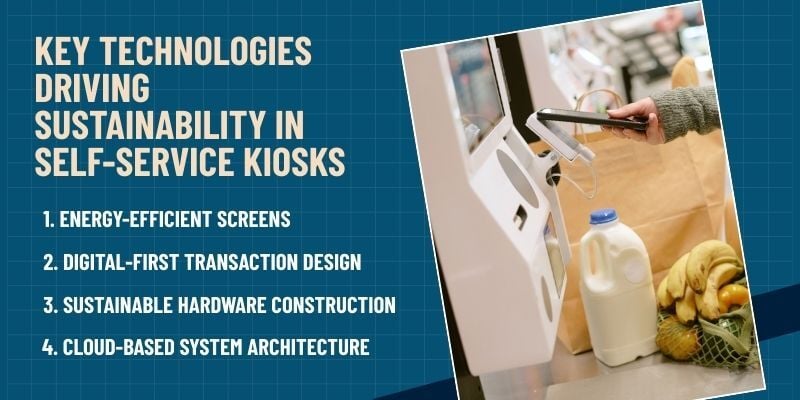
The sustainability impact of self-service kiosks depends on the technologies used in their hardware, software, and system architecture.
Decisions related to display design, materials, transaction flows, and system management influence how efficiently kiosks operate over time and how long they remain in service across retail locations.
1. Energy-Efficient Screens
Modern self-service kiosks use display technologies designed for lower power consumption. LED and LCD screens deliver consistent brightness and responsiveness while using less electricity than legacy display systems.
Features such as automatic dimming and standby settings reduce power draw during periods of inactivity. These capabilities allow kiosks to operate for extended hours without significantly increasing overall energy demand.
2. Digital-First Transaction Design
Self-service kiosks are built around digital transaction flows that eliminate printed outputs across multiple stages of the customer journey.
Interface design prioritizes on-screen confirmations, digital receipts, and dynamic content delivery, allowing retailers to maintain fully digital interactions without relying on paper-based processes.
This approach accommodates high transaction volumes while keeping physical resource requirements low.
3. Sustainable Hardware Construction
Many kiosk manufacturers use recyclable plastics, modular components, and standardized parts during production. Modular construction allows individual components to be replaced or upgraded without removing the entire unit, extending hardware lifespan and reducing electronic waste.
More than 45% of kiosk models introduced in 2023 incorporated recyclable materials or energy-conscious design features, demonstrating a clear focus on durability and resource efficiency.
4. Cloud-Based System Architecture
Cloud-based system architecture reduces the need for high-capacity, on-site computing infrastructure. Centralized software management allows kiosks to receive updates, perform diagnostics, and process data remotely, lowering hardware requirements at the store level.
This system design improves operational efficiency and simplifies maintenance across multi-location retail networks.
How Self-Service Kiosks Help Retailers Meet Sustainability Goals?
Many retailers set sustainability goals focused on waste reduction, energy management, and responsible operations.
Self-service kiosks help retailers achieve these objectives by providing reliable data, ensuring compliance, and reinforcing sustainability commitments through daily store operations.
1. Sustainability Reporting
Self-service kiosks generate operational data related to paper reduction, transaction volumes, and system usage. Metrics such as the number of digital receipts issued, avoided printing, and kiosk utilization rates help retailers track progress toward sustainability targets.
Centralized kiosk platforms also simplify data analysis across multiple locations, helping teams identify trends, assess performance, and report environmental outcomes with greater consistency.
2. Green Certifications
Retailers pursuing certifications such as LEED or Green Business Certification benefit from digital processes that limit paper use and reduce reliance on energy-intensive infrastructure.
Paperless transactions, reduced printing, and efficient system architecture align with certification criteria focused on operational efficiency and responsible resource use.
Consistent kiosk deployment across stores reinforces the role of sustainability within standard retail processes rather than isolated initiatives.
3. Positive Brand Image
Sustainability performance influences purchasing decisions. A 2023 survey found that 70% of shoppers prefer buying from brands that prioritize environmental responsibility.
Visible digital interactions, paperless receipts, and modern service experiences shape how customers perceive a brand at the point of interaction.
By incorporating kiosks into store workflows, retailers strengthen customer trust while delivering a retail experience aligned with sustainability-focused expectations.
4 Best Practices for Implementing Self-Service Kiosks in Retail
Successful kiosk deployment depends on planning, execution, and long-term management. Applying best practices helps integrate sustainable kiosks in retail store operations while maintaining efficiency, consistency, and defined sustainability objectives.
1. Choosing the Right Technology: Retailers should select kiosk systems designed for long-term use, modular upgrades, and digital-first transactions. Evaluating hardware durability, software flexibility, and system compatibility helps ensure kiosks remain effective as store needs evolve. Paperless workflows and efficient system design reduce reliance on additional equipment and manual processes from the start.
2. Employee Training: Staff training is essential to ensure kiosks operate smoothly as part of daily store workflows. Employees should understand how kiosks fit into service processes, how to assist customers when needed, and how to manage exceptions without disrupting operations. Clear training reduces friction during rollout and helps teams maintain consistent service standards.
3. Maintenance and Upkeep: Regular maintenance keeps kiosk systems operating reliably over time. Scheduled inspections, software updates, and component checks prevent downtime and extend system lifespan. Proactive upkeep also reduces the likelihood of unnecessary hardware replacements and service interruptions.
4. Customer Education: Clear communication helps customers adopt self-service kiosks with confidence. On-screen guidance, in-store prompts, and simple instructions clarify how kiosks work and what to expect during interactions. Well-informed customers complete transactions more efficiently, improving overall store flow and service consistency.
4 Challenges in Adopting Self-Service Kiosks for Sustainability
While self-service kiosks align well with sustainability initiatives, retailers may face practical challenges during planning, deployment, and long-term operation.
Addressing these challenges early helps ensure kiosks remain effective and aligned with business and sustainability objectives.
1. Upfront Investment: Deploying self-service kiosks requires initial spending on hardware, software licensing, integration, and installation. For some retailers, these costs can delay adoption. Budget planning should account for phased rollouts and long-term operational savings rather than short-term expenses alone.
2. Technology Integration: Integrating kiosks with existing POS systems, inventory platforms, and customer databases can present technical complexity. Inconsistent data flow or system misalignment may lead to operational inefficiencies if not addressed during implementation. Careful system planning and compatibility testing help reduce reliance on manual workarounds.
3. Consumer Adoption: Some customers remain hesitant to use self-service kiosks, particularly those accustomed to traditional checkout or assisted service models. Adoption improves when kiosks feature intuitive interfaces, simple instructions, and visible staff assistance during early rollout phases. Gradual introduction helps ease the transition without disrupting service flow.
4. Maintenance Costs: Regular maintenance is required to keep kiosks operating reliably over time. Software updates, hardware inspections, and component replacements help prevent downtime and extend system lifespan. Planning for ongoing maintenance costs ensures kiosk performance remains consistent and avoids premature equipment replacement.
Frequently Asked Questions (FAQs)
How do self-service kiosks help reduce waste in retail?
Self-service kiosks replace paper receipts, printed menus, and promotional materials with digital alternatives, lowering both paper and plastic waste and streamlining store operations.
Are there any environmental certifications for kiosks?
Retailers using energy-efficient kiosks and paperless workflows can pursue certifications such as LEED or Green Business Certification, which recognize environmentally responsible store practices.
How much energy can be saved by using self-service kiosks?
Kiosks with LED displays, low-power processors, and standby modes consume far less electricity than traditional checkout counters and printers, helping reduce overall energy usage in stores.
Can kiosks be customized to meet specific sustainability goals?
Yes. Retailers can choose kiosks with paperless workflows, energy-saving components, and recyclable materials to align with their environmental objectives.
Conclusion
Self-service kiosks have become an established part of modern retail strategies focused on efficiency and sustainability. By standardizing digital interactions across stores, kiosks allow retailers to operate with greater consistency and control.
When implemented thoughtfully, smart kiosks for retail efficiency improve service speed, balance staffing demands, and align daily operations with sustainability objectives.
This approach strengthens operational performance while maintaining a responsible operating model.
As sustainability continues to influence retail decision-making, self-service kiosks offer a practical way to embed responsible practices into everyday store operations while maintaining reliability and long-term value.
BOOK A FREE DEMO