Every day, millions of digital transactions occur across banking and e-commerce platforms, creating opportunities for fraud.
Accounts are hijacked, synthetic identities are used to open fake accounts, and unauthorized purchases can go unnoticed, causing financial losses and damaging customer trust.
The challenge for organizations is not just detecting fraud, but doing so quickly and accurately without disrupting the customer experience.
This is where digital identity in fraud detection becomes essential. By verifying identities in real time, monitoring behavioral patterns, and detecting unusual activity across digital interactions, businesses can prevent fraudulent activity before it affects customers or operations.
In this blog, we will examine how digital identity powers integrated fraud detection. We will discuss its benefits, best practices for implementation, and strategies that help organizations stay ahead of modern fraud threats.
What is Digital Identity?
Digital identity refers to the collection of information used to identify and verify an individual in online environments. It allows organizations to confirm that a person is who they claim to be, ensuring secure access to services, accounts, and transactions.
Effective digital identity authentication is essential for maintaining trust and safety in digital interactions.
A digital identity can include various types of data. This may involve biometrics, such as fingerprints or facial recognition, government-issued IDs, email addresses, phone numbers, and device fingerprints.
Behavioral data, like login patterns or transaction history, can also form part of an individual’s digital identity. By combining these elements, organizations can create a comprehensive profile to authenticate users accurately.
The connection between digital identity and fraud detection is direct. Strong digital identity systems help identify suspicious activity, prevent unauthorized access, and reduce the risk of identity theft.
Regulatory frameworks, such as GDPR and KYC (Know Your Customer), guide how organizations must collect, store, and use this information, making compliance critical for financial institutions.
The Role of Digital Identity in Fraud Prevention
Digital identity strengthens fraud prevention by giving organizations a reliable way to verify users throughout their digital journey.
Instead of relying on static credentials, businesses use layered identity checks that validate who is accessing a service and whether their behavior aligns with past activity. This makes identity verification in fraud prevention more accurate and harder for attackers to bypass.
Recent industry data reflects how urgent this need has become. TransUnion reported that suspected digital fraud attempts reached 5.4% globally in 2024, showing how frequently attackers test vulnerabilities across financial services, e-commerce, and digital platforms.
A major advantage of digital identity is its ability to create secure yet low-friction onboarding experiences. Automated verification replaces slow manual steps, helping legitimate customers get started quickly while blocking high-risk profiles before they enter the system.
Fraud prevention is further enhanced through technologies such as multi-factor authentication, biometric verification, and device fingerprinting. These methods establish ongoing trust by continuously assessing the legitimacy of each session.
When combined with real-time monitoring, digital identity systems can flag unusual patterns the moment they appear, allowing organizations to intervene before a threat escalates.
6 Key Benefits of Digital Identity for Fraud Detection
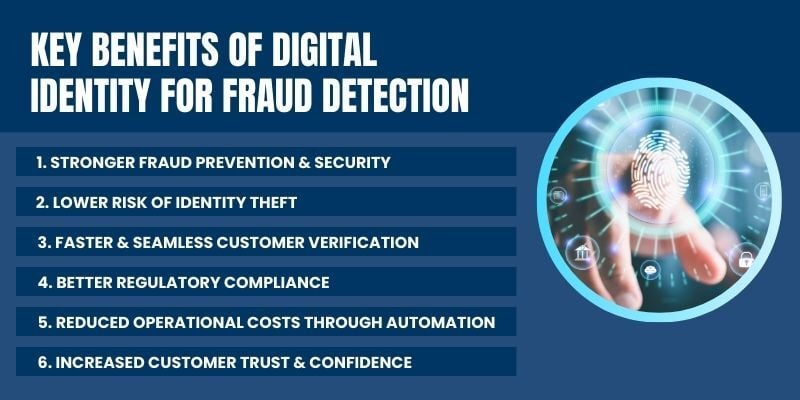
Digital identity systems do more than confirm who a user is. They help organizations detect unusual behavior, reduce fraud risks, and support regulatory requirements. They also simplify customer verification, creating a secure, smooth digital experience.
The benefits below explain how these solutions support safer operations and build user confidence:
1. Stronger Fraud Prevention and Security
Digital identity solutions help organizations spot suspicious activity in real time and block unauthorized access early.
Recent data from Veriff shows that 1 in every 20 identity-verification attempts in 2024 was fraudulent, showing how active fraud attempts remain across digital platforms.
By examining behavior patterns and detecting anomalies, businesses can stop fraudulent activity before it causes harm.
2. Lower Risk of Identity Theft
With biometric checks, device fingerprinting, and behavioral analysis working together, digital identity systems make impersonation far more difficult. This layered approach reduces the chance of identity theft and helps organizations act quickly when something looks unusual.
3. Faster and Seamless Customer Verification
Automated verification speeds up onboarding and approvals, letting genuine users access services without unnecessary obstacles. This keeps experiences smooth while maintaining strong security controls.
4. Better Regulatory Compliance
Digital identity systems support compliance with KYC, AML, and GDPR by providing consistent, auditable verification processes. Automation reduces manual work and helps businesses avoid regulatory issues and delays.
For organizations looking to strengthen compliance without adding friction, solutions like Wavetec’s KYC/AML platform offer automated identity checks, document verification, and biometric screening within a unified workflow. This helps teams quickly identify risky activity while streamlining verification processes.
Platforms of this kind bring regulatory adherence, fraud detection, and customer experience together, creating a secure and efficient end-to-end verification process.
5. Reduced Operational Costs Through Automation
Integrating fraud detection with AI and digital identity reduces the need for manual reviews and investigations.
By combining automated identity verification with AI-driven monitoring, organizations can quickly identify unusual activity and respond in real time, keeping operational costs under control while maintaining strong security standards.
6. Increased Customer Trust and Confidence
A secure, predictable, and user-friendly verification process reassures customers that their information is safe. When people feel protected, they are more likely to continue using digital services and remain loyal over time.
6 Best Practices for Integrating Digital Identity with Fraud Detection Systems
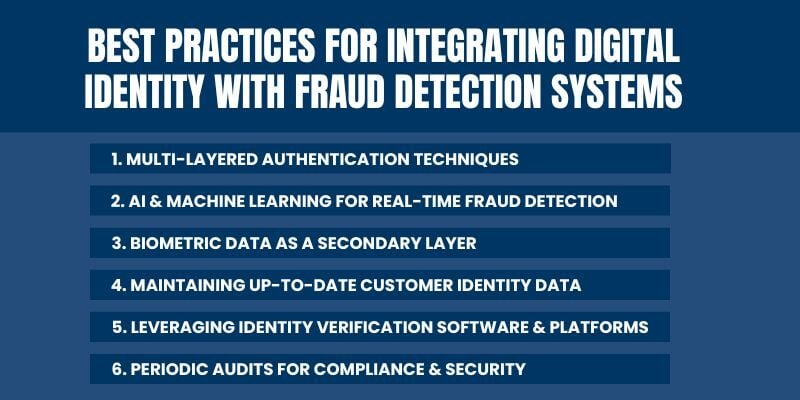
Integrating digital identity verification into an organization’s fraud detection system creates a unified approach that enhances security while maintaining a smooth customer experience.
A well-designed integration ensures that all digital interactions are monitored, suspicious activity is flagged, and legitimate users can access services without unnecessary friction.
1. Multi-Layered Authentication Techniques
Using multiple authentication methods, such as passwords, device verification, and biometrics, adds several checkpoints that make fraud more difficult to execute.
Layered authentication strengthens security by making it harder for attackers to bypass a single checkpoint. At the same time, it allows genuine users to move through verification steps quickly and without unnecessary interruptions.
2. AI and Machine Learning for Real-Time Fraud Detection
AI and machine learning track user behavior and transactions in real time, spotting subtle anomalies that humans may overlook. This ensures organizations can respond quickly to potential threats without waiting for manual reviews.
It is important to note that 76% of fraud occurs during ongoing account use, not just at onboarding, making ongoing transaction assessment essential instead of relying on one-time checks.
3. Biometric Data as a Secondary Layer
Implementing biometric verification, such as fingerprints or facial recognition, adds an extra layer of security for high-risk transactions.
Biometric data complements other identity verification methods, making impersonation or account takeover significantly harder. This ensures security remains strong without introducing friction for verified customers.
4. Maintaining Up-to-Date Customer Identity Data
Regularly updating customer information ensures that identity verification remains accurate and effective. Outdated or incomplete data increases false positives and may allow fraudulent activity to slip through.
Keeping information up to date strengthens real-time fraud detection, supports reliable decision-making, and addresses the fact that most fraud occurs during ongoing account activity.
5. Leveraging Identity Verification Software and Platforms
Using comprehensive platforms helps organizations unify fraud detection and identity management across all digital touchpoints.
Centralized dashboards provide real-time insights into user activity, risk scoring, and anomaly detection, allowing teams to respond quickly to suspicious behavior.
Wavetec’s KYC/AML solution, for example, supports seamless workflow integration by combining monitoring, alerting, and reporting features into a single platform.
This approach allows organizations to maintain strong security, reduce operational overhead, and ensure smooth business operations without repeating manual checks or slowing down processes.
6. Periodic Audits for Compliance and Security
Conducting regular audits ensures that digital identity systems comply with the latest regulations and fraud prevention protocols.
Audits identify gaps, maintain process effectiveness, and help organizations uphold customer trust while avoiding penalties, supporting a secure and user-friendly digital environment.
Challenges of Implementing Digital Identity for Fraud Prevention
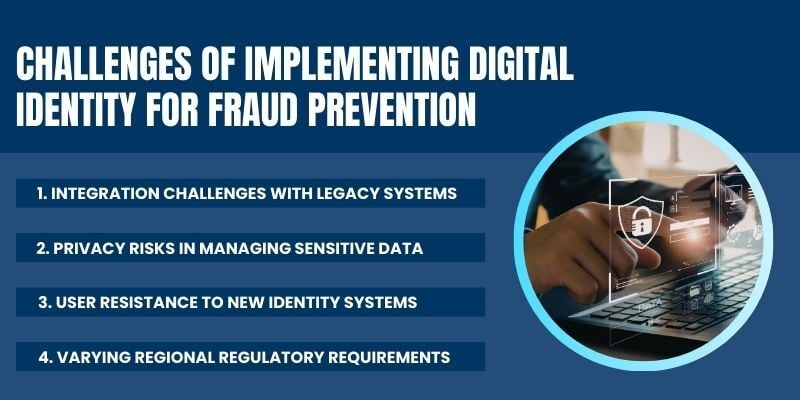
Implementing digital identity solutions for fraud detection comes with several challenges. Organizations may face difficulties integrating new systems with legacy infrastructure to ensure smooth operation across all platforms.
Privacy concerns are also significant, as sensitive personal data must be stored and managed securely. In 2024, more than 1.7 billion individuals worldwide had their personal data compromised by data breaches, showing the stakes involved.
Resistance from customers or employees unfamiliar with digital identity systems can slow adoption, while regulatory and compliance requirements vary across regions, adding complexity to implementation.
To address these challenges, organizations should ensure transparency in data usage and collaborate with trusted third-party providers.
They can also implement unified identity and fraud platforms that provide secure verification while simplifying workflows, protecting users, and maintaining operational efficiency.
Frequently Asked Questions (FAQs)
How does digital identity help in fraud prevention?
Digital identity reduces fraud by confirming user authenticity and continuously monitoring digital interactions. It allows businesses to detect suspicious behavior early, minimizing the impact of unauthorized access or account takeover.
What are the key components of digital identity for fraud detection?
Key components include verified personal information, device identifiers, biometrics, and behavioral data. These elements work together to create a unique digital profile for each user.
What technologies are used for digital identity verification?
Technologies include biometric scanners, document authentication tools, device fingerprinting, and AI-powered behavioral analysis. These tools validate identities while keeping verification processes efficient.
How can businesses integrate digital identity into their fraud detection systems?
Businesses can integrate digital identity by combining AI-driven monitoring, multi-factor authentication, and identity verification platforms. This unified system enables real-time anomaly detection while simplifying user verification.
What are the challenges of using digital identity for fraud prevention?
Challenges include maintaining up-to-date data, ensuring privacy compliance, overcoming resistance to new systems, and integrating with legacy infrastructure. Addressing these requires clear policies, trusted solutions, and ongoing monitoring.
Conclusion
Digital identity is essential for modern fraud detection, providing organizations with a reliable way to verify users, detect unusual activity, and reduce fraud risk.
Layered authentication, biometric verification, and AI-driven monitoring within integrated fraud detection systems help organizations reduce fraud, comply with regulations, and protect customer data.
By keeping identity information accurate and continuously assessing user behavior, businesses can stay ahead of evolving threats while maintaining efficient operations.
Investing in digital identity solutions and integrated fraud detection systems allows organizations to strengthen security, streamline verification processes, and build trust with their customers.
BOOK A FREE DEMO