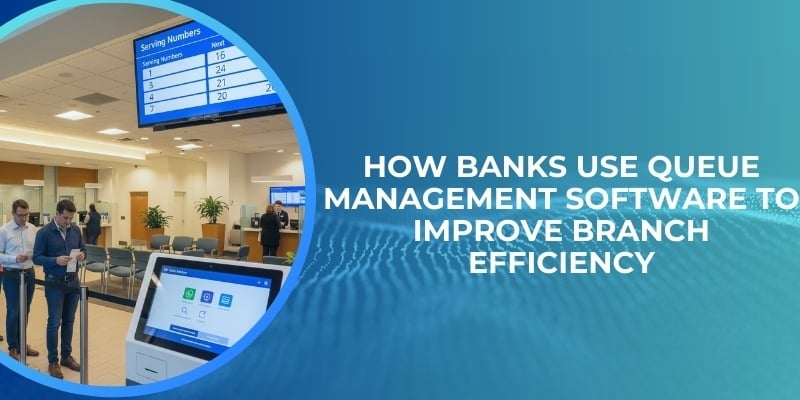
Modern bank branches are evolving from traditional transaction centers into customer experience hubs where communication, engagement, and service efficiency are critical.
Today’s banking customers expect seamless, personalized interactions whether they are banking online or walking into a physical branch.
Banks must quickly communicate information such as service updates, financial products, queue status, and announcements to customers inside branches, but traditional static signage often fails to capture attention or deliver timely information.
Digital signage solutions for banks offer a powerful alternative, enabling real-time content delivery through networked digital displays across branch networks.
These systems help banks improve customer engagement, promote financial services, and enhance in-branch communication while supporting broader branch transformation strategies.
“Digital signage solutions for banks are dynamic display systems used inside bank branches to communicate real-time information, promotions, queue updates, and service announcements. These systems enhance customer engagement, reduce perceived wait times, and support modern branch transformation strategies through centralized digital content management.”
What Are Digital Signage Solutions for Banks?
Digital signage solutions for banks consist of networked digital screens installed across bank branches to deliver real-time information and marketing messages.
These systems include hardware components such as LCD/LED displays, video walls, interactive kiosks, and media players, combined with content management software that allows centralized control over what appears on every screen.
The role of digital signage in banking extends far beyond simple announcements. Modern systems support:
- Promoting financial products: Display targeted offers for loans, credit cards, mortgages, and investment products based on customer segments
- Sharing educational banking content: Provide financial literacy information, cybersecurity tips, and guidance on using digital banking tools
- Displaying queue updates: Show real-time queue numbers and estimated wait times to reduce customer anxiety
- Guiding customers to services: Offer wayfinding assistance directing customers to specific service areas, ATMs, or consultation rooms
These systems help banks modernize the branch environment and improve communication by replacing static posters and printed rate boards with dynamic, easily updated digital content that captures attention and delivers timely information.
For financial institutions seeking to transform their branch experience, exploring comprehensive digital signage solutions provides a foundation for modern customer engagement.
Approximately 60% of banks are now actively using digital signage as a primary tool to enhance in-branch customer experiences, highlighting its growing role in modern branch transformation strategies.
Why Banks Are Adopting Digital Signage Technology
Financial institutions are investing heavily in banking digital signage solutions for several compelling reasons that align with broader industry trends and customer expectations.
Improving customer engagement stands as the primary driver. Studies show that 72% of banking customers prefer personalized, digital-first experiences, and digital signage delivers exactly that by providing relevant, timely information that speaks directly to customer needs.
Digital displays achieve a 40% conversion rate of foot traffic to active viewers, compared to only 4% for traditional static signage, making them far more effective at capturing customer attention inside bank branches.
Modernizing physical branches has become essential as banks reposition their physical locations from transaction centers to advisory hubs. With routine transactions moving to mobile and online channels, branches must offer value that digital channels cannot replicate.
Digital signage creates an atmosphere of innovation and sophistication that reinforces the bank’s brand as modern and customer-focused.
Delivering targeted marketing messages becomes significantly more effective with digital signage.
Banks can segment content by branch location, time of day, or customer demographics, ensuring that the right message reaches the right audience at the optimal moment. This targeted approach increases cross-selling opportunities and improves marketing ROI.
Reducing perceived waiting times delivers immediate customer satisfaction benefits.
Research indicates that digital displays showing queue information and engaging content can reduce perceived wait times by up to 35%, even when actual wait times remain unchanged. Customers who are engaged with relevant content feel their time is valued rather than wasted.
Supporting digital banking transformation requires that physical branches align with the digital experience customers receive online.
Digital signage bridges this gap by creating a consistent omnichannel experience that reinforces the bank’s digital capabilities while maintaining the human touch that branches uniquely provide.
Key Features of Digital Signage Solutions for Banks
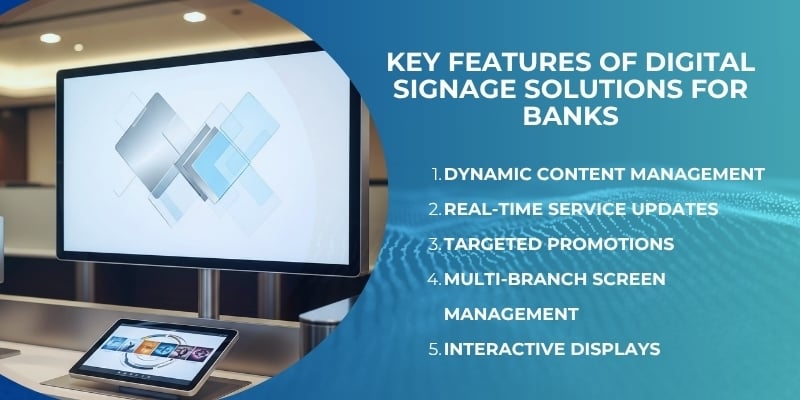
Modern bank digital display systems offer sophisticated capabilities that extend far beyond simple content playback. Understanding these features helps banks select solutions that meet their specific needs.
Dynamic Content Management
Banking digital signage software provides centralized platforms where marketing teams can create, schedule, and publish content across entire branch networks from a single interface.
This eliminates the logistical nightmare of distributing printed materials to dozens or hundreds of locations.
Content managers can update messages instantly, ensuring that all branches display current information simultaneously.
Various platforms allow teams to pull approved assets directly from repositories such as Microsoft SharePoint or digital asset management solutions, automating playlist updates and ensuring consistent storytelling without extra manual effort.
Real-Time Service Updates
Integration with backend systems enables displays to show live queue numbers, current wait times, and service availability.
Customers can see exactly when their turn will arrive, reducing anxiety and eliminating the need to hover near service counters. This transparency improves the overall service experience and helps manage customer expectations.
Targeted Promotions
Advanced systems allow banks to display different content based on branch location, time of day, or even customer demographics captured through integrated sensors.
A branch in a business district might show commercial lending products during weekday hours, while a suburban branch displays mortgage and education savings content during evening hours when families visit.
Multi-Branch Screen Management
For regional or national banks, managing displays across hundreds of locations becomes simple through centralized dashboards.
IT teams can monitor screen health, push firmware updates, troubleshoot issues remotely, and ensure consistent content delivery across the entire network. This scalability makes digital signage viable for institutions of any size.
Interactive Displays
Touch-enabled screens allow customers to explore banking services independently, checking interest rates, learning about loan options, or even completing simple transactions without waiting for a teller.
The ČSOB bank in the Czech Republic implemented AI-driven Kate Kiosks that assist customers with cards, accounts, payments, loans, and insurance through intuitive touch interfaces.
These interactive elements reduce staff workload while empowering customers who prefer self-service options.
For seamless customer flow management, many banks integrate their digital signage with specialized queue management systems that synchronize service updates with display content.
How Digital Signage Enhances In-Branch Customer Experience
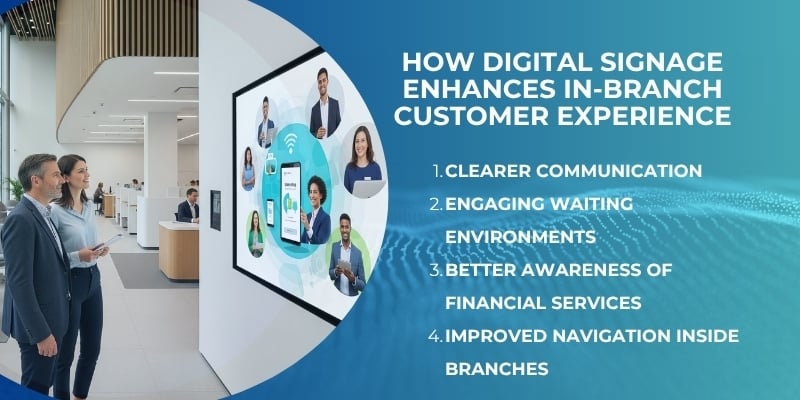
The customer experience inside bank branches directly impacts satisfaction, loyalty, and ultimately, business results. Financial services digital signage transforms this experience in multiple ways.
Clearer Communication
Clearer communication means customers always have access to accurate, up-to-date information.
Digital rate boards display current interest rates with automatic updates, eliminating the errors and delays associated with manual rate changes. Required compliance disclaimers appear automatically, ensuring regulatory requirements are consistently met.
This transparency builds trust, with 31% of customers who visit branches with digital signage reporting they feel they have a trusted relationship with their bank, compared to just 20% at branches without digital signage.
Engaging Waiting Environments
Engaging waiting environments turn what was once dead time into valuable engagement opportunities.
Instead of staring blankly at walls or watching the clock, customers view educational content about financial wellness, learn about community initiatives their bank supports, or see testimonials from satisfied customers.
This engagement reduces perceived wait times and leaves customers with a more positive impression of their visit.
Better Awareness of Financial Services
Better awareness of financial services naturally increases cross-selling success. When customers see information about products they may need displayed prominently while they wait, they become more likely to ask about those services.
A regional bank implementing branch signage reported a 23% increase in credit card applications from existing customers, attributed to awareness campaigns on waiting area displays.
Improved Navigation Inside Branches
Improved navigation inside branches helps customers find exactly what they need without confusion.
Wayfinding displays direct visitors to specific departments, ATMs, or consultation rooms, reducing frustration and ensuring they connect with the right staff member efficiently.
Luzerner Kantonalbank in Switzerland demonstrates how thoughtful signage transforms the entire customer journey. Window displays visible from outside in all lighting conditions catch the attention of passersby, encouraging them to enter.
Once inside, sleek video walls and standalone signage create an engaging atmosphere that positions the bank as trendy and innovative.
For a holistic approach to branch optimization, many financial institutions implement integrated customer journey management platforms that coordinate signage with other service touchpoints.
Use Cases of Digital Signage in Bank Branches
Real-world applications of bank branch digital displays demonstrate the versatility and value of this technology across diverse banking environments.
Displaying Queue Numbers and Service Updates
Displaying queue numbers and service updates remains one of the most common and valued use cases.
When integrated with queue management systems, digital screens show currently serving numbers, estimated wait times, and direct customers to specific windows or offices. This system eliminates the chaos of customers crowding service areas and provides a calm, organized environment.
TBC Bank in Georgia successfully integrated Qmatic with their digital signage network to display customer order numbers on synchronized screens across all branches.
Promoting Banking Products and Offers
Promoting banking products and offers transforms waiting areas into marketing opportunities.
Screens strategically placed in lobbies, teller lines, and waiting areas showcase credit cards, loans, savings plans, and investment services with compelling visuals and clear calls to action.
Content can be tailored to specific branches based on local demographics or seasonal priorities.
Providing Financial Education Content
Providing financial education content builds customer trust and positions the bank as a helpful advisor rather than just a service provider.
Topics might include saving for retirement, understanding credit scores, protecting against fraud, or budgeting tips for different life stages. This educational approach creates value beyond transactions and strengthens customer relationships.
Guiding Customers Toward Self-Service Channels
Guiding customers toward self-service channels reduces teller line congestion and encourages adoption of digital tools.
Screens can demonstrate how to use mobile banking apps, highlight the convenience of ATMs for common transactions, or provide QR codes linking to online account opening.
Avidia Bank successfully integrated QR codes into their digital signage, allowing customers to access online banking services, open accounts, or explore social media content directly from their phones.
Displaying Branch Announcements
Displaying branch announcements keeps customers informed about holiday hours, service changes, community events, or special promotions.
Unlike printed signs that require manual posting and removal, digital announcements appear instantly across all branches and disappear automatically when no longer relevant.
Many banks combine digital signage with virtual queue management systems to offer customers the flexibility of waiting remotely while staying informed of their place in line.
Integrating Digital Signage With Banking Technologies
The true power of digital signage platforms for banks emerges when these systems connect with other banking technologies to create seamless, responsive service environments.
- Queue management system integration enables screens to display real-time queue information, including currently serving numbers, estimated wait times, and service point assignments. This integration transforms the waiting experience from uncertainty to clarity, reducing customer anxiety and improving perceived service quality. Customers can relax in seating areas rather than hovering near counters, knowing they will be notified when their turn arrives.
- Appointment booking system integration allows digital signage to acknowledge pre-scheduled customers upon arrival and direct them to appropriate service points. When customers check in for appointments, screens can display personalized welcome messages and estimated wait times for their specific advisor, creating a VIP experience.
- Self-service kiosk integration creates a cohesive ecosystem where customers can complete transactions at kiosks, receive confirmation on nearby screens, and seamlessly transition to assisted service when needed. HSBC’s flagship Jumeirah branch demonstrates this approach, with interactive kiosks handling everyday transactions while digital signage throughout the branch provides consistent information and branding.
- Mobile banking application integration extends the digital experience beyond the branch. Customers who check in via mobile app before arriving can see their queue position and estimated wait time on their phones, while branch screens display relevant information based on the purpose of their visit.
- Analytics platform integration provides valuable insights into customer behavior and content effectiveness. Advanced systems can track which content captures attention, how long customers view screens, and whether displayed promotions generate interest. Avidia Bank uses Beabloo video analysis to measure campaign success with real-time insights, enabling data-driven refinements to their content strategy.
For banks implementing comprehensive technology strategies, integrating self-service kiosks and online appointment scheduling software with digital signage creates a unified service ecosystem.
Benefits of Digital Signage Solutions for Banks
The advantages of implementing digital signage for bank branches extend across customer experience, operational efficiency, and business performance.
- Improved customer engagement stands as the most visible benefit. Dynamic, visually appealing content captures attention in ways static posters cannot, keeping customers informed and entertained during their branch visits. Engaged customers perceive wait times as shorter and leave with more positive impressions of their banking experience.
- Stronger brand communication ensures consistent messaging across all branch locations. Whether a customer visits a flagship urban branch or a small suburban location, they encounter the same professional branding, the same promotional messages, and the same commitment to clear communication. This consistency builds brand trust and recognition over time.
- Increased product awareness naturally drives cross-selling success. When customers see information about relevant products displayed prominently while they wait, they become more likely to inquire about those services.
- Reduced perceived waiting times improves customer satisfaction without requiring faster service. Research consistently shows that engaging waiting environments feel shorter than empty ones, meaning customers leave happier even when actual wait times remain unchanged.
- Centralized content management delivers significant operational efficiencies. Marketing teams can update messages across hundreds of branches instantly, eliminating printing costs, distribution logistics, and the labor of manual sign changes.
Enhanced compliance ensures that all customer-facing communications meet regulatory requirements.
Digital signage systems can automatically include required disclosures, ensure rate displays include proper APY calculations, and maintain audit trails of all displayed content for regulatory examination.
Digital Signage and Bank Branch Transformation
Interactive digital signage for banks plays a central role in the broader movement toward smart banking branches that combine digital convenience with human expertise.
- The traditional branch model focused on transaction processing is giving way to experience-centric environments where customers receive advice, build relationships, and engage with the bank’s full range of services. Digital signage supports this transformation by creating atmospheres that feel modern, professional, and customer-focused.
- Interactive customer experiences allow branches to offer self-service options for routine needs while freeing staff for higher-value interactions. China Construction Bank reports that its “smart branches,” equipped with AI kiosks, handle more than 90% of standard service tasks today. Customers who want quick transactions use kiosks, while those seeking advice or dealing with complex needs receive dedicated attention from knowledgeable staff.
- Personalized financial messaging becomes possible when digital signage integrates with customer data systems. Screens can display content relevant to the time of day, branch location, or even detected customer demographics. AI-powered systems with gaze detection can even adjust content based on how customers respond, showing more detailed information to engaged viewers or lighter content to those showing signs of overwhelm.
- Data-driven branch engagement enables continuous improvement of the customer experience. Analytics from digital signage systems reveal which content resonates, when branches are busiest, and how customers move through the space. This information guides staffing decisions, content strategy, and even branch layout improvements.
- Digital-first service environments reflect the expectations of modern consumers who interact with their banks primarily through digital channels. When these customers visit physical branches, they expect the same level of technological sophistication they experience online. Digital signage delivers this consistency, creating seamless omnichannel experiences that reinforce the bank’s digital capabilities.
For banks reimagining their physical spaces, thoughtful service area design ensures that digital signage integrates seamlessly with the overall branch aesthetic and functional layout.
Challenges Banks Face Without Digital Signage
Financial institutions relying on traditional communication methods encounter significant challenges that digital signage directly addresses.
- Outdated marketing materials become inevitable when branches depend on printed posters and brochures. By the time materials are printed and distributed, rates may have changed, promotions may have expired, or new products may have launched. Customers seeing outdated information question whether the bank is attentive to details.
- Ineffective in-branch communication means important messages go unnoticed. Static posters blend into the background, and customers waiting for service have nothing engaging to capture their attention. Opportunities to inform, educate, and cross-sell are lost.
- Limited customer engagement during waiting periods leaves customers bored and focused entirely on how long they are waiting. Without engaging content, every minute feels longer, and negative impressions accumulate.
- Inconsistent messaging across branches creates confusion and dilutes brand impact. When different branches display different rates, promote different products, or use different branding elements, customers receive mixed signals about what the bank stands for and offers.
- Labor-intensive updates consume staff time that could be better spent serving customers. Changing rate boards, posting new signs, and removing outdated materials requires ongoing effort that digital signage eliminates entirely.
Compliance risks increase when manual processes govern customer communications. Forgotten rate changes, missing disclosures, or inconsistent disclaimers across branches can lead to regulatory violations and associated penalties.
Future of Digital Signage in Banking
The evolution of digital signage solutions for banks continues as new technologies enable even more sophisticated applications.
- AI-driven content personalization will transform how banks communicate with customers in branches. AI systems can analyze customer demographics, behavior patterns, and even real-time engagement to deliver highly relevant content. Edge-based AI running directly on digital signage players delivers personalization without the latency or security concerns of cloud-dependent solutions.
- Customer analytics integration will provide deeper insights into how customers interact with branch environments. Advanced sensors and analytics software will track which content captures attention, how customers move through spaces, and what messages drive action. These insights will continuously refine content strategies for maximum impact.
- Smart interactive displays will become more intuitive and responsive. Gesture recognition, voice activation, and seamless mobile integration will create experiences that feel natural and effortless. Customers will interact with branch technology as easily as they do with their smartphones.
- Omnichannel communication platforms will ensure that messaging remains consistent across every touchpoint. Whether customers engage via mobile app, website, or in-branch display, they will receive coordinated information that reflects their relationship with the bank and their current needs.
- Data-driven customer engagement will enable banks to anticipate needs rather than simply react to them. When customers enter branches, systems might recognize them from previous visits, understand their likely purpose, and display relevant information before they even speak with a staff member.
Frequently Asked Questions About Digital Signage in Banks
What is digital signage in banking?
Digital signage in banking refers to digital display screens used inside bank branches to communicate promotions, service updates, financial education content, and queue information.
These systems are powered by centralized content management software that allows banks to update messaging across multiple locations instantly.
How does digital signage improve customer experience in banks?
Digital displays provide real-time information, keep customers engaged during waiting times, and promote relevant banking services.
Interactive elements allow customers to explore services independently, while queue information reduces anxiety about wait times.
What are the benefits of digital signage for banks?
Benefits include improved communication, better product promotion, enhanced customer engagement, and centralized management of marketing content.
Digital signage also reduces perceived wait times, eliminates printing costs, ensures compliance with regulatory requirements, and supports branch transformation strategies.
Where are digital signage screens used in bank branches?
They are typically installed in waiting areas, service counters, self-service zones, entrances, and consultation rooms.
Window displays visible from outside also engage passersby and encourage branch visits. ATMs may feature surround displays that provide information and promotions during transactions.
How do digital rate boards work?
Digital rate boards display current interest rates with automatic updates from the bank’s core systems. Updates can be scheduled, triggered by rate changes, or subject to manual approval workflows.
Compliance disclaimers are automatically included, and regional variations can be managed from a central system. This eliminates manual rate board changes, ensures consistency across branches, and reduces errors.
Can digital signage integrate with queue management systems?
Yes, integration with queue management systems is common and highly effective. Digital displays show currently serving numbers, estimated wait times, and direct customers to specific service points.
What compliance considerations apply to banking digital signage?
Financial services signage must comply with regulations including:
- Truth in Savings Act (Regulation DD)
- Truth in Lending Act (Regulation Z)
- UDAAP prohibitions
Digital signage systems support compliance through automated disclaimer insertion, rate validation, expiration controls for promotions, and audit trails documenting all displayed content.
How do banks manage digital signage across multiple branches?
Banks use centralized content management systems that allow remote control of displays across entire branch networks. IT teams can monitor screen health, push content updates, troubleshoot issues, and ensure consistent messaging from a single dashboard.
Mobile device management solutions add security features like kiosk mode and role-based access control.
Conclusion
Digital signage solutions for banks play a crucial role in improving communication and engagement inside modern bank branches.
By delivering real-time information, service updates, and targeted promotions through digital displays, banks can create a more informative and engaging environment for customers.
The benefits extend from improved customer satisfaction and increased cross-selling success to operational efficiencies and stronger compliance management.
Banks that embrace digital signage position themselves as innovative, customer-focused institutions ready to meet the evolving expectations of modern consumers.
Those that delay risk falling behind competitors who have already discovered how dynamic digital displays can transform the branch experience from a routine necessity into a genuine competitive advantage.
BOOK A FREE DEMO