A customer begins the process of opening a new bank account, expecting it to be quick and simple. At the same time, the bank must verify its identity, prevent fraud, and follow strict regulations.
Each additional step can feel like a hurdle to the customer, yet skipping these requirements can expose the bank to serious risks.
This scenario shows why it is essential to balance compliance and customer experience in banks. Regulatory requirements such as KYC, AML, and data privacy laws protect both the institution and its customers, but they can also create friction if not handled carefully.
Banks that integrate these requirements into a smooth, clear process build trust and loyalty. In this article, we discuss what compliance means, why customer trust matters, the challenges banks face, and the tools and strategies that help maintain both security and a satisfying customer experience.
What is Compliance in Banking?

Compliance in banking refers to the processes and practices that ensure financial institutions follow laws, regulations, and industry standards. It helps banks prevent fraud, money laundering, and other financial crimes while protecting sensitive customer information.
Regulations such as Know Your Customer (KYC), Anti-Money Laundering (AML), and data privacy laws like GDPR guide banks in verifying customer identities, monitoring transactions for suspicious activity, and safeguarding personal data.
Regulatory compliance in financial services is not only a legal requirement but also a way to build customer trust. When customers feel their information is secure and their bank acts responsibly, they are more likely to remain loyal.
Compliance also supports financial stability by reducing risks and helping banks operate safely and responsibly in the market.
The Role of Customer Trust in Banking
Customer trust strongly influences a bank’s growth and reputation. When customers feel their bank listens to their needs, handles issues reliably, and communicates clearly, they are more likely to continue using its services and recommend it to others.
According to a 2025 survey by Accenture, 81% of bank customers trust their main bank to keep their personal data secure.
Trust develops through transparency, consistency, and quality service. For example, providing clear explanations during account setup, responding quickly to inquiries, and keeping customers informed about changes or updates help build confidence.
In customer-centric banking, delivering smooth, convenient, and secure experiences reinforces trust. Banks that focus on meeting customer expectations while maintaining reliable processes encourage loyalty, improve engagement, and strengthen their overall brand reputation.
Best Practices for Balancing Compliance and Customer Trust

Balancing compliance with customer expectations requires practical steps that support both safety and convenience.
Transparent communication is one of the most effective ways to reduce friction. When banks explain why certain documents or checks are required, customers feel more informed and less frustrated during verification or onboarding.
Simplifying compliance processes is equally important. Digital compliance solutions for banks, such as automated identity checks and secure document uploads, help reduce wait times and create a smoother customer journey. This approach supports increasing customer confidence in digital banking.
According to the Thales Digital Trust Index, 44% of customers ranked the banking sector among the most trusted industries for handling personal data, indicating that customers value both strong protection and convenient digital services.
As Danny de Vreeze, Vice President of Identity and Access Management at Thales, explains, “Consumers place more trust in banking, healthcare and government services when it comes to sharing their personal data – a universal trend seen across all the markets surveyed.”
Feedback mechanisms add further value. Collecting customer input after onboarding, service requests, or support interactions helps banks identify steps in the compliance journey that may create friction.
Staff training also matters, as well-prepared teams can understand regulatory requirements while still offering a customer-friendly approach.
Continuous improvement is essential as regulations evolve. Regular updates to processes, tools, and training help banks consistently deliver secure, reliable, and customer-focused experiences.
3 Key Technologies for Balancing Compliance and CX
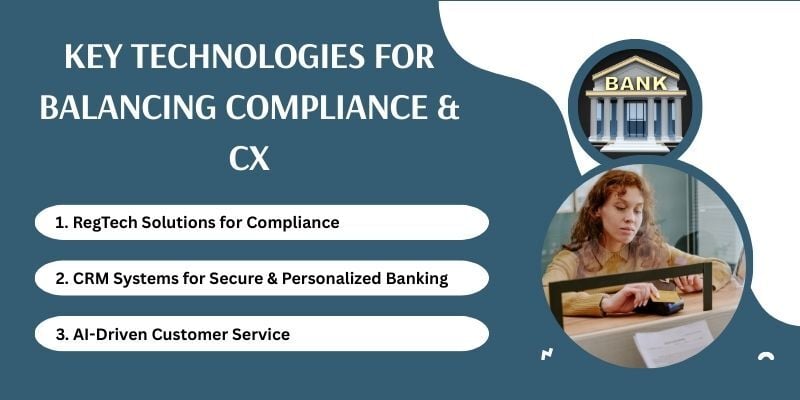
Banks rely on technology to meet regulatory requirements while enhancing customer satisfaction. Specialized solutions help financial institutions streamline compliance, reduce operational friction, and offer secure, personalized experiences.
Several approaches are particularly effective in achieving this balance.
1. RegTech Solutions for Compliance
RegTech solutions simplify regulatory processes and help banks manage risk efficiently. Automated KYC verification and AI-powered risk monitoring help detect fraud, ensure secure transactions, and maintain accurate records.
These solutions reduce manual workload, speed up onboarding, and minimize customer frustration during verification. At the same time, they help maintain customer confidence by keeping personal data secure and compliant with regulations.
Banks looking to implement these improvements can turn to Wavetec’s Know Your Customer (KYC) Compliance solution, which integrates identity verification and transaction monitoring into the onboarding process.
This GDPR-compliant platform allows them to meet regulatory requirements while keeping the experience smooth for customers, reducing friction and maintaining trust.
2. CRM Systems for Secure and Personalized Banking
Customer Relationship Management systems allow banks to manage customer data securely while personalizing interactions.
By tracking preferences, providing timely updates, and resolving inquiries quickly, CRM systems enhance customer engagement and satisfaction without compromising compliance.
To fully benefit, banks need to ensure staff are trained properly and maintain strong data security protocols to protect sensitive information.
3. AI-Driven Customer Service
AI-powered assistants, including chatbots, provide instant support and guide customers through regulatory steps. They respond to inquiries around the clock and help customers complete processes efficiently.
These solutions improve operational efficiency and customer convenience, but banks must monitor interactions to ensure accurate guidance and careful handling of sensitive data.
Compliance vs. Customer-Centric Approach
Banks often face a difficult choice between focusing primarily on regulatory compliance or prioritizing the customer experience.
A compliance-first approach emphasizes strict adherence to rules, regulations, and internal policies. This ensures that the institution avoids legal penalties, mitigates risk, and protects sensitive customer data.
However, an overly rigid focus on compliance can create friction, slow down processes, and frustrate customers.
On the other hand, a customer-first approach prioritizes convenience, service quality, and seamless interactions. While this enhances customer satisfaction and loyalty, it can lead to non-compliance if regulatory requirements are overlooked or shortcuts are taken.
According to FICO’s 2025 survey, 88% of banking customers consider customer experience just as important as a bank’s products and services, showing that customer expectations now influence how banks approach service and compliance.
Neither approach is inherently wrong. Success comes from balancing compliance and customer satisfaction, integrating regulatory requirements into smooth processes that support both security and convenience.
Industry surveys show that banks achieving this balance enjoy higher retention rates and stronger trust.
Practical steps include mapping customer journeys to identify friction points, training staff to uphold compliance while offering support, and using technology to automate regulatory checks without slowing service.
Challenges of Balancing Compliance with Customer Experience
Meeting regulatory requirements while maintaining a seamless customer experience presents significant banking compliance challenges for financial institutions. Banks must follow strict protocols such as KYC and AML while keeping the customer journey smooth and convenient.
Real-world difficulties often include lengthy verification processes, customer frustration due to multiple regulatory steps, and limitations of existing technology systems.
At the same time, banks need to comply with data privacy regulations such as GDPR, which adds extra layers of reporting and security requirements that can slow down customer interactions.
Technology can help, but implementation gaps or outdated systems can further complicate compliance. For instance, automated onboarding systems or identity verification tools must be accurate, secure, and aligned with privacy laws to avoid regulatory issues.
Platforms like Wavetec’s KYC Compliance solution help banks tackle these challenges by providing a secure and automated way to verify customer identities and monitor transactions.
By streamlining these processes, banks can reduce bottlenecks, improve customer satisfaction, and maintain regulatory adherence without overburdening staff.
Balancing regulatory adherence with customer convenience is not easy, and banks must continuously refine processes, train staff, and update digital solutions to overcome these challenges while protecting both the customer and the institution.
Frequently Asked Questions (FAQs)
What is the role of compliance in customer satisfaction?
Compliance reassures customers that their data is protected and transactions are secure. When done smoothly, it enhances confidence, reduces anxiety, and builds long-term trust in the bank.
How can banks comply with regulations without affecting customer service?
Banks can integrate automated verification, digital ID checks, and real-time monitoring into workflows. This ensures regulatory requirements are met while keeping processes quick and user-friendly.
What are the best tools for balancing compliance and customer experience?
RegTech platforms, AI-driven risk management, CRM systems, and GDPR-compliant onboarding solutions help banks maintain security while offering personalized, efficient service.
How can banks use technology to improve customer experience while staying compliant?
Digital solutions like AI chatbots, secure document uploads, and automated KYC streamline interactions, reduce wait times, and ensure strict regulatory compliance.
What are some challenges banks face in balancing compliance and customer satisfaction?
Challenges include slow onboarding, regulatory complexity, data privacy requirements, and integrating technology without creating friction in the customer journey.
Conclusion
Balancing compliance with customer trust is essential for long-term success in banking. Banks that implement clear processes, train staff effectively, and use technologies such as RegTech, CRM systems, and AI-driven services can meet regulatory requirements while providing seamless customer experiences.
Secure, automated systems help streamline onboarding, minimize friction, and maintain high data protection standards, reinforcing customer confidence and loyalty.
Wavetec’s GDPR-compliant KYC solution offers a practical way to achieve this balance, ensuring regulatory obligations are met without disrupting customer interactions.
By investing in staff education, advanced technologies, and customer-focused strategies, banks can align compliance with convenience.
Prioritizing both security and user experience strengthens trust, enhances retention, and enhances the institution’s reputation, proving that regulatory adherence and customer satisfaction can thrive together.
BOOK A FREE DEMO