Government Queue Management System for U.S. Agencies

Trusted by U.S. counties, courts and state agencies, and by public sector clients in 80+ countries


What Is a Government Queue Management System?
A government queue management system checks residents in by kiosk, phone or appointment, sends each one to the right counter and gives staff live wait and service times. It replaces paper tickets and single lines at DMVs, county offices, courts and benefit centers.
Why Lines Build Up in Government Offices
Government service centers handle peaks they can’t control: renewal deadlines, tax dates, benefit cycles and election days. When every visitor takes a paper ticket or stands in one line, staff can’t see who is waiting for which service, and residents can’t tell how long they will wait.
Public satisfaction is moving the wrong way. The ACSI Federal Government Study 2026 put citizen satisfaction with federal services at 68.6 out of 100, down from 70.4 in 2025. Forrester’s 2026 US Federal CX Index fell from 61.9 to 59.4, the first significant drop since Forrester began measuring federal CX in 2016.
- One line for many services, so a two-minute document pickup waits behind a long permit review.
- No-shows that leave appointment slots empty while walk-ins wait.
- No wait-time information in the lobby, which drives complaints and walk-aways.
- Counter staffing set by guesswork, because nobody has data on arrivals and service times.
- Residents who need ADA access, another language or a staff-assisted option.
Benefits for Government Agencies



Wavetec Solutions for Government Service Centers
Each product works on its own or as one platform under the Spectra queue management system, hosted in the cloud or on the agency’s own servers.
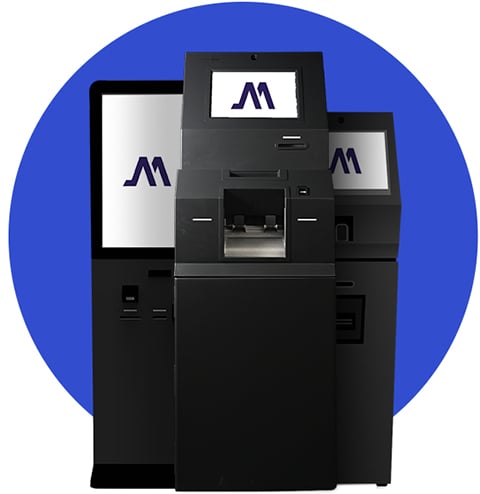
ADA-Compliant Check-In Kiosks
Residents check in, pick a service and get a ticket on an M-13 kiosk with a 17-inch touchscreen and dual ticket printers, so one printer fault doesn’t stop check-in.

Virtual Queuing
Residents join the line by QR code, web or SMS and wait outside the lobby until they are called. St. Lucie County’s tax collector offices use it to clear crowded lobbies.

Online Appointment Booking
Self-service booking, rescheduling and reminders that cut no-shows and spread demand across the day. Booked and walk-in residents are served in one queue.
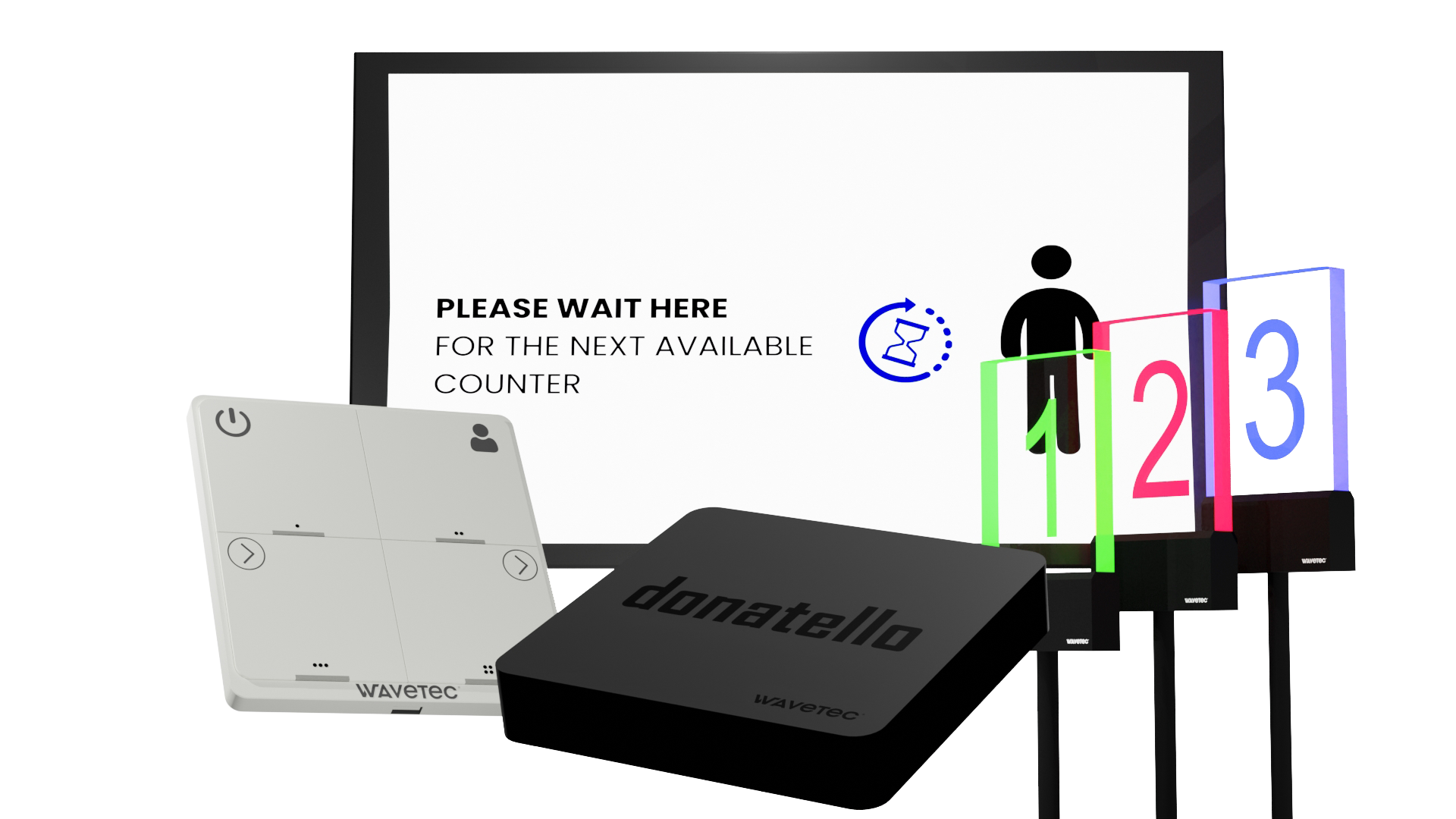
UNO-Q Linear Queuing
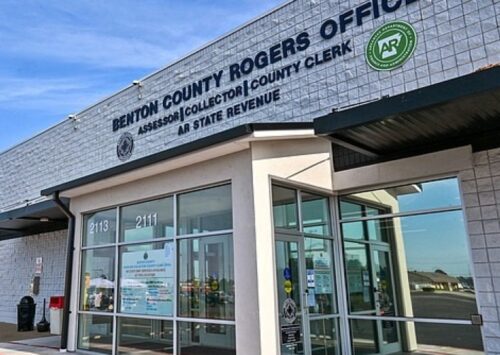
One line feeding many counters, with automatic counter calls, for offices with a single service type. Benton County runs its counter services on UNO-Q.

Donatello Digital Signage
Lobby screens show ticket calls, counter numbers, wait times, wayfinding and public notices.
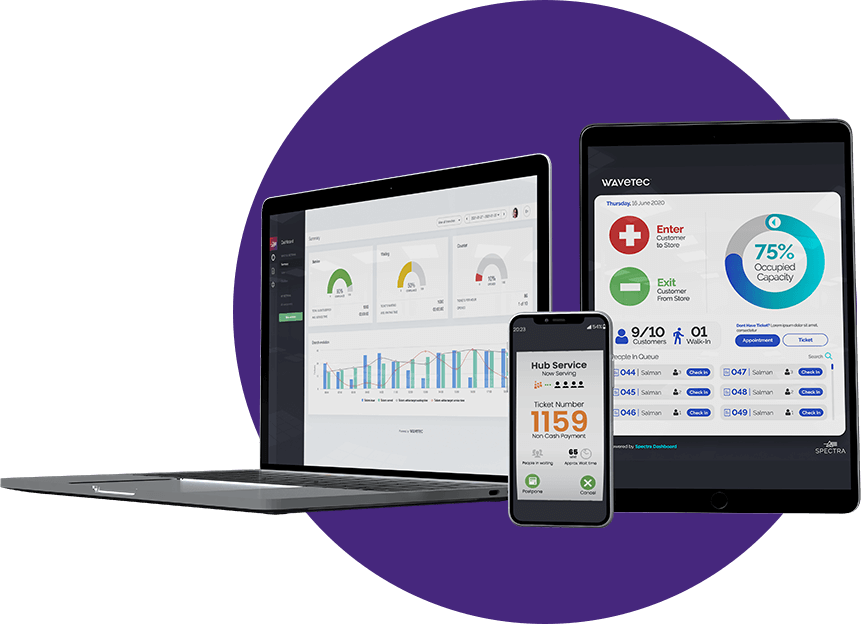
Spectra Queue Analytics
Live dashboards and reports on wait times, service times, no-shows and staff performance by office, service and counter. Agencies with seasonal peaks can add the AI Traffic Forecasting module that ships with Spectra 2.0. It predicts expected arrivals in 30-minute intervals up to 14 days ahead, so managers can plan counter staffing before lines form.

Opinion Plus Customer Feedback
Post-visit ratings on kiosks, tablets or SMS, reported by office and service, so you can see where service falls short.
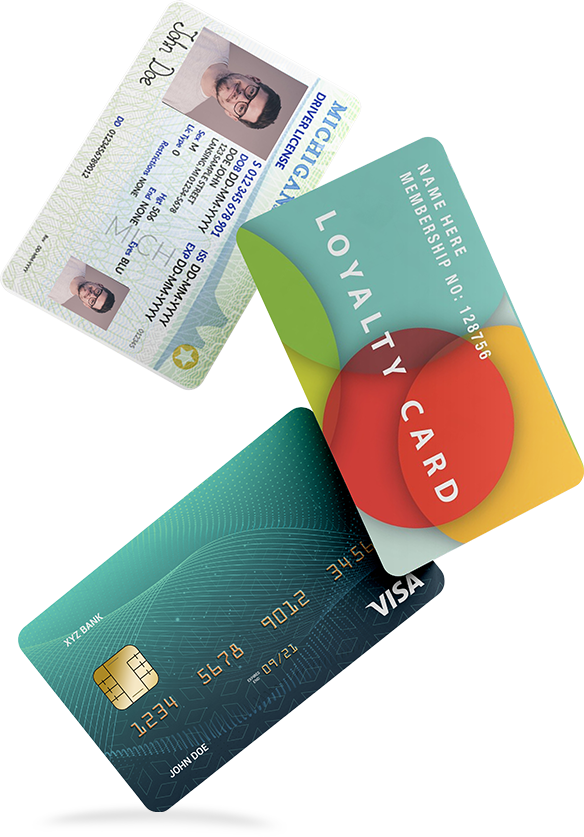
Card Issuance and KYC Kiosks
Issue new or replacement cards without a counter visit. The kiosk runs on ViaOS, with an embedded webcam and Know Your Customer identity checks before a card is released.
30,000+
systems deployed
80+
countries
Since 1986
in queue management
500+
public sector and SME clients
How a Government Queue Management System Works
This is how a resident moves through a service center that runs on Wavetec, from booking to the counter.
- Book or join remotely. Residents book an appointment online or join a virtual queue by QR code, SMS or the agency website, and can check current wait times before they leave home.
- Check in on arrival. An ADA-compliant M-13 self-service kiosk or the reception desk activates the visit and issues a ticket or SMS confirmation.
- Go to the right service. The system routes each visitor to the counter or department that handles their request, with appointments and walk-ins managed in one queue.
- Wait with information. Donatello digital signage and SMS updates show the ticket being called, the counter number and the expected wait.
- Serve and transfer. Staff call the next visitor from Lobby Leader and can move a resident to a second service without issuing a new ticket.
- Measure and improve. Managers see wait times, service times and counter activity live in Spectra dashboards, and collect post-visit ratings with Opinion Plus.

Results From U.S. and Canadian Public Agencies
Wavetec runs queue management in county service centers, courts, pension offices and licensing networks across North America. These figures come from the published case studies.
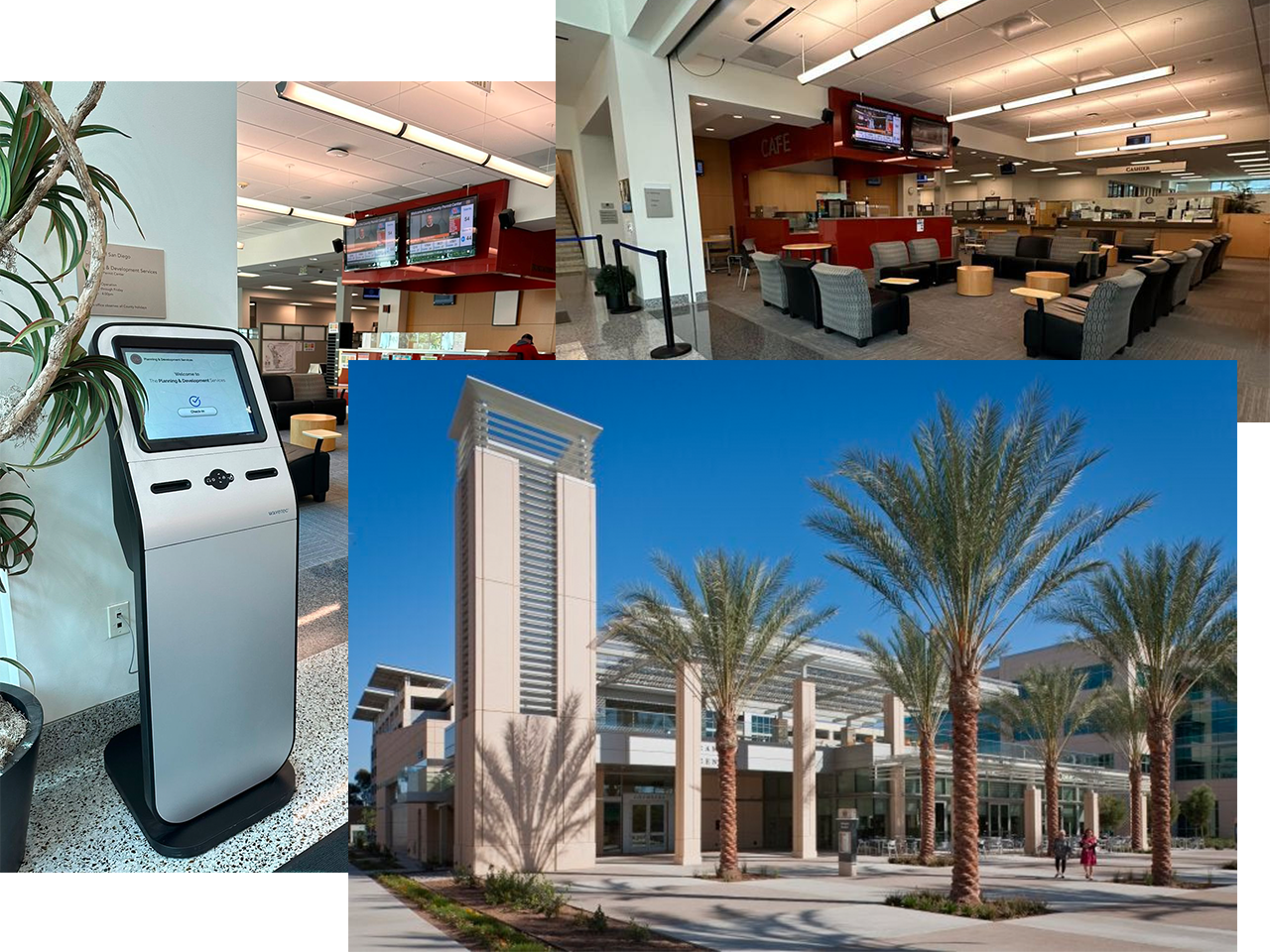
San Diego County Permit Center
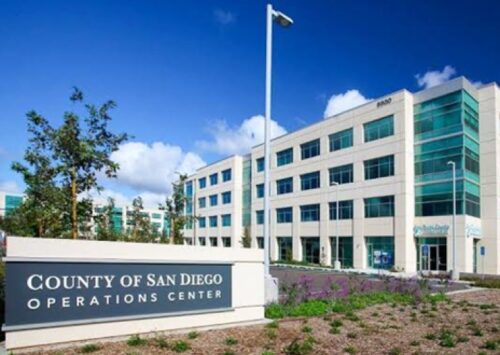
San Diego County’s Planning & Development Services runs check-in on ADA-compliant M-13 kiosks, Spectra queue management, Donatello signage, Lobby Leader and SMS updates, with live wait times on the County website. The permit center handles more than 1,000 visits a day with a 27-minute average wait, a 13-minute average service time and a 97.14% ticket-served rate.
Schenectady County Department of Social Services
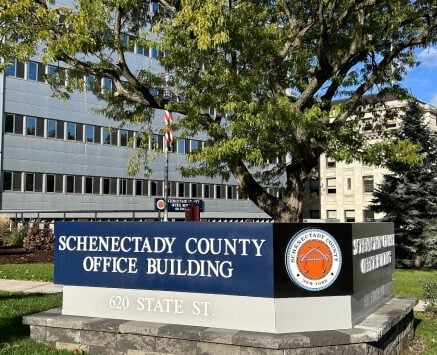
Twelve DSS departments share two ADA-compliant M-13 kiosks, appointment booking with automated confirmations and resident notifications. No-shows fell 30% after appointments were connected to confirmations, and the system serves more than 10,000 residents a month.
DriveTest Ontario
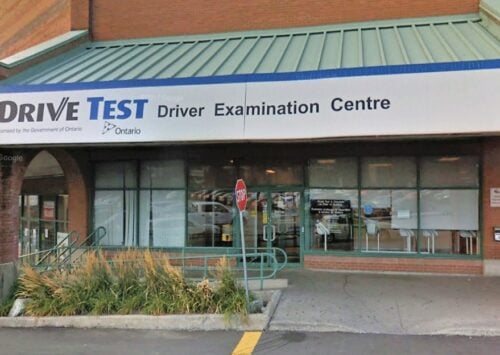
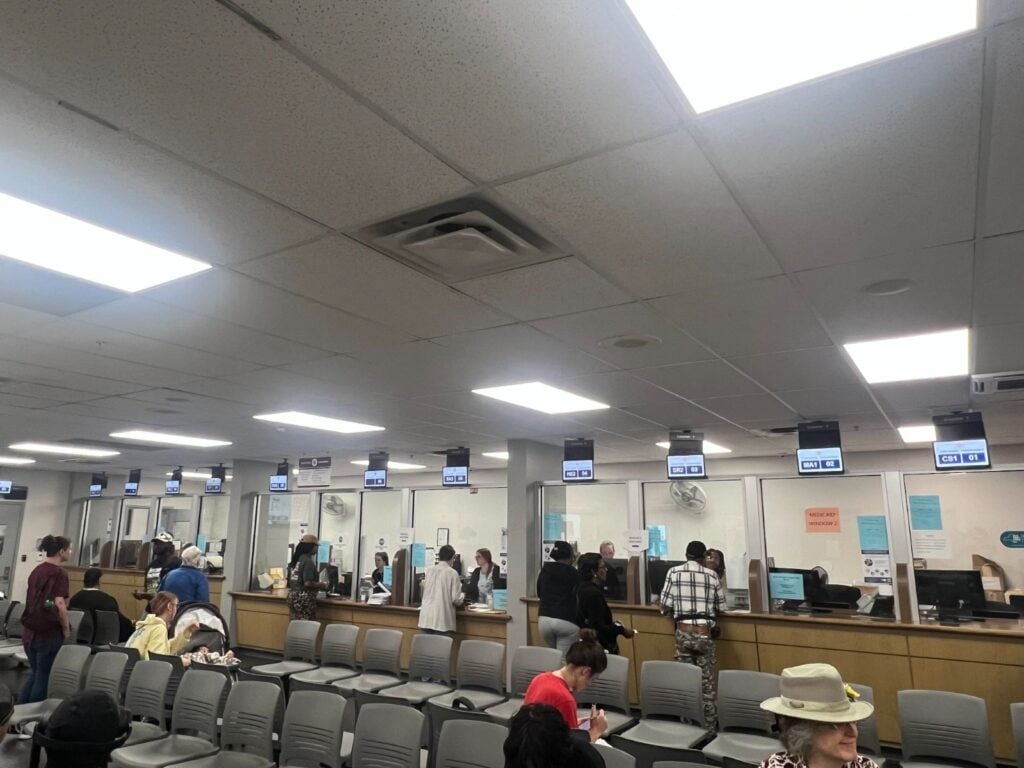
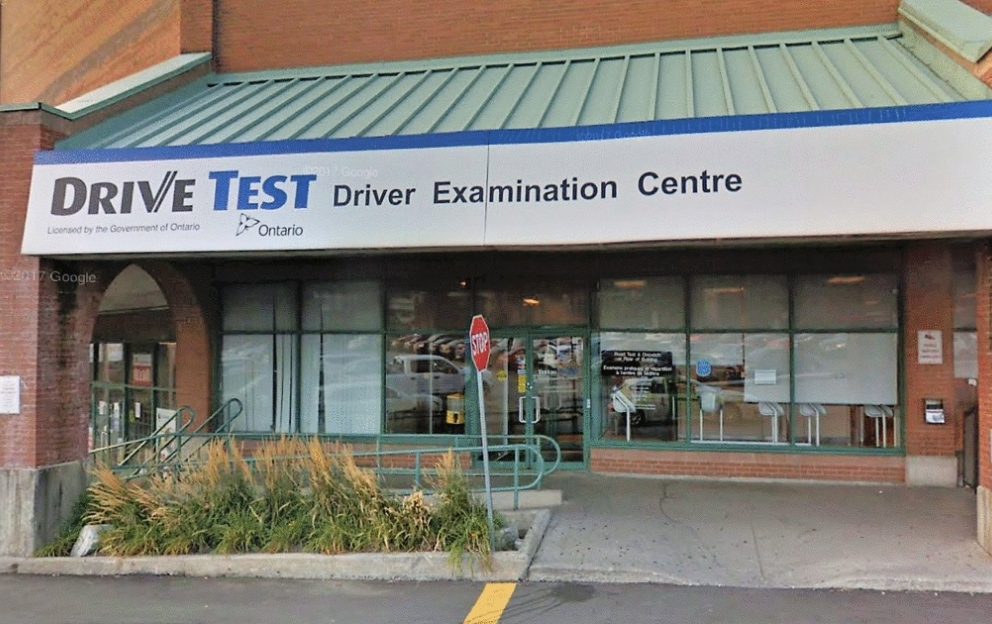
Ontario’s driver licensing network books road tests online and checks drivers in on M-13 kiosks or with staff. In 30 days the platform handled 93,783 booking, rescheduling and cancellation transactions, 89.3% of them completed through self-service on the public website.
97.14%
Tickets served
San Diego County
30%
Fewer no-shows
Schenectady County DSS
89.3%
Bookings made by self-service
DriveTest Ontario
1,000+
Permit center visits a day
San Diego County
| Agency | Service | What Wavetec deployed | Result |
|---|---|---|---|
| San Diego County Planning & Development Services | Permit center | M-13 kiosks, Spectra QMS, Donatello signage, Lobby Leader, SMS, wait times on the County website | 1,000+ visits a day; 27-minute average wait; 13-minute average service; 97.14% of tickets served |
| Schenectady County Department of Social Services | 12 DSS departments | Two ADA-compliant M-13 kiosks, appointments with automated confirmations and notifications | 30% fewer no-shows; 10,000+ residents served each month |
| DriveTest Ontario | Driver licensing and road tests (Canada) | Online booking, M-13 kiosks, Lobby Leader, customer notifications | 93,783 booking transactions in 30 days; 89.3% completed through self-service online |
| Clackamas County Courthouse | 16 courtrooms and 20 judicial chambers | 17-inch self-service kiosks and queue management for a new facility | Serves a county of 430,000+ residents |
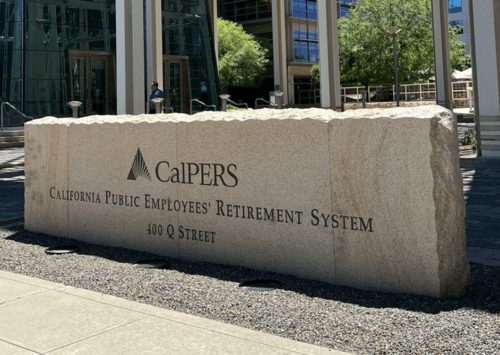
| CalPERS | Pension and health benefits service centers | Virtual and physical queue management | Serves 1.5 million members |
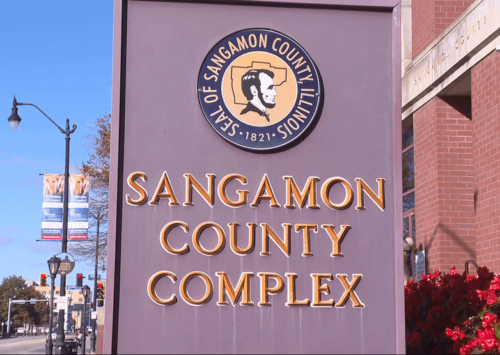
| Sangamon County | Polling stations | Queue management at voting sites during peak elections | Serves 190,000+ residents |
| St. Lucie County Tax Collector | Tax collector offices | QR-code virtual queuing | Remote waiting replaced lobby crowding |
| Benton County | Counter services | UNO-Q linear queuing feeding Spectra analytics | Counter calls become real-time service data |
Where Government Agencies Use Queue Management

Motor Vehicle and Licensing Offices
Appointments, road-test check-in and walk-in lines at licensing offices, with kiosks and signage that separate each service.
County Permit and Planning Centers
Multi-step permit visits where staff transfer a resident between counters without a new ticket, as at San Diego County.
Social Services and Benefit Offices
Many departments under one roof, with appointments, walk-ins and notifications in one system, as at Schenectady County DSS.
Courthouses and Clerk Offices
Clear routing to courtrooms, clerks and payment windows. Clackamas County’s new courthouse serves 430,000+ residents across 16 courtrooms.
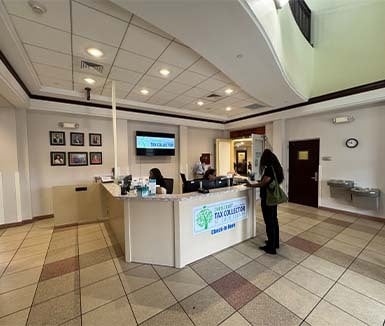
Tax Collector and Revenue Offices
Deadline peaks handled with QR-code virtual queuing, so residents wait remotely instead of in a crowded lobby, as at St. Lucie County.
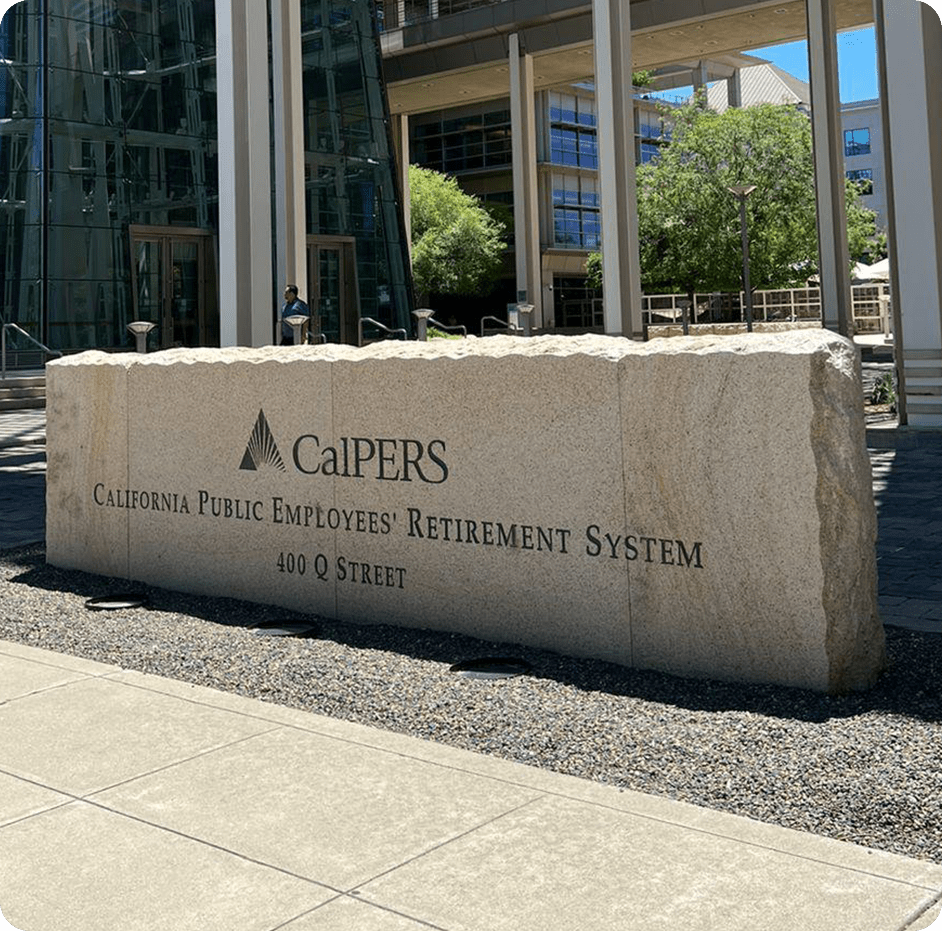
Pension and Retirement Agencies
Member service centers that serve appointments and walk-ins together. CalPERS uses Wavetec for 1.5 million members.
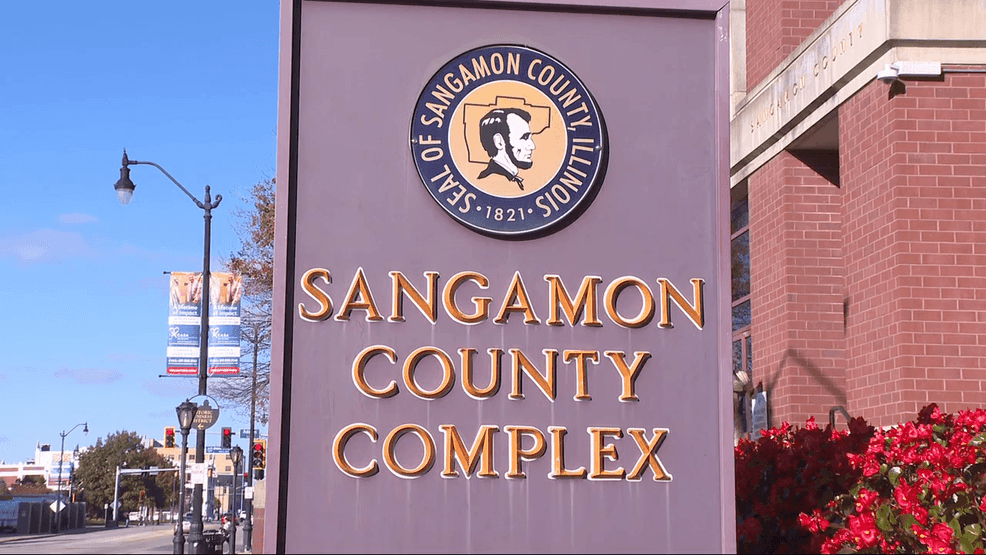
Polling Places and Election Offices
Short, predictable voting lines on election day. Sangamon County, home to 190,000+ residents, manages polling queues with Wavetec.
Consulates, Passport and ID Services
Appointment-led document services with identity checks at the kiosk and card issuance without a counter visit.
Security, Accessibility and Compliance
Public agencies have to protect resident data and serve every visitor, including people with disabilities and residents with limited English.



How to Choose a Queue Management System for a Government Agency
Most agencies buy through an RFP. These are the questions worth putting in it:
Our guide on how to choose a queue management system covers each point in more detail.
- Does it handle walk-ins and appointments in one queue, across every office?
- Can residents check in without staff, and is the kiosk ADA compliant?
- Does it send SMS updates and publish wait times on the agency website?
- Can staff transfer a visitor between services without a new ticket?
- Which reports come standard: wait time, service time, no-shows and tickets served?
- Which security certifications does the vendor hold, and can the system run on-premise?
- Can the vendor show measured results from agencies like yours?
Government Queue Management FAQs
A government queue management system is software and lobby hardware that checks residents in, sends them to the right counter and tracks wait and service times. It replaces paper tickets and single lines in places like DMVs, county offices, courts and benefit centers.
It splits visitors by service, so short requests don’t wait behind long ones, and it lets residents wait remotely until they are called. Managers also see live wait times and move staff to the busiest counters before lines grow.
Yes. Residents can book an appointment online or join a virtual queue by QR code, web or SMS, as visitors to the St. Lucie County Tax Collector do, and then get updates on their phone until it is their turn.
Yes. The M-13 self-service kiosks used by San Diego County and Schenectady County DSS are ADA compliant, and agencies keep a staff-assisted check-in for residents who need help.
Wavetec is certified to ISO/IEC 27001:2022 and ISO 9001:2015, has completed a SOC 2 Type II assessment, and is HIPAA and GDPR compliant. Deployments use role-based access and audit logs and can run in the cloud or on the agency’s own servers.
U.S. clients include San Diego County, Schenectady County DSS, Clackamas County Courthouse, CalPERS, Sangamon County, Benton County and the St. Lucie County Tax Collector. In Canada, DriveTest Ontario runs driver licensing appointments and check-in on Wavetec.
Yes. San Diego County shows live queue status and wait estimates on its own website, and DriveTest Ontario takes bookings online, through agents and by phone (IVR) on the same platform.
Spectra dashboards report average wait time, service time, tickets served and no-shows by office, service and counter. San Diego County’s permit center, for example, tracks a 27-minute average wait, a 13-minute average service time and a 97.14% ticket-served rate.
Wavetec serves 500+ public sector and SME clients
Wavetec has built queuing systems since 1986, with 30,000+ deployed in 80+ countries and U.S. offices in New York and Sacramento. Our team helps you find the setup that fits your offices, your residents and your budget.

Guides for Public Sector Teams
Practical guides on wait times, appointments, kiosks and signage for government offices.
- Queue management systems for the public sector
- How virtual queue systems improve government office visits
- How to reduce wait times in government offices
- Online appointment scheduling for government offices
- How self-pay kiosks help governments collect tax revenue
- How digital signage improves government messaging
- DMV kiosks: what they do and where they fit
- Customer experience in government offices
Public Sector Case Studies
See how U.S. and Canadian agencies use Wavetec to shorten waits and serve more residents.