Wavetec’s Queuing System at Schenectady County DSS
Executive Summary
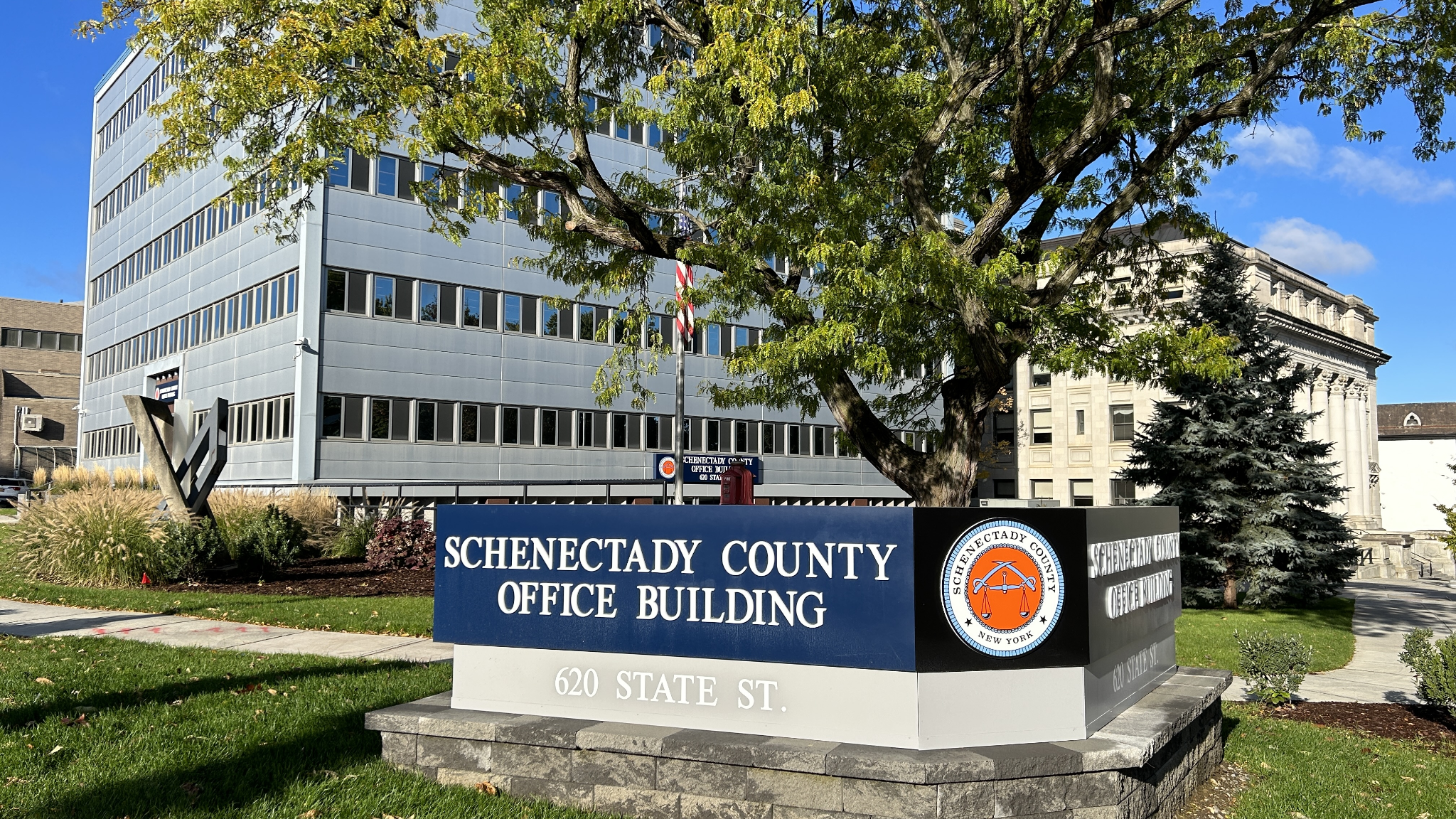
The Schenectady County Department of Social Services (DSS) serves more than 10,000 residents each month across 12 service departments, managing this volume requires more than moving people through a waiting line. Residents may arrive without an appointment, check in for a scheduled visit, require a specific caseworker, or need assistance from a department with its own service availability and operating requirements.
To support this environment, Schenectady DSS deployed Wavetec’s integrated Queuing System, with Spectra serving as the central queue orchestration and analytics platform. The deployment includes two ADA-compliant M-13 self-service kiosks, featuring 17-inch capacitive touchscreens and dual thermal ticket printers for ticket-issuance redundancy. The kiosks support configurable service selection and accessible self-service check-in.
Spectra manages queue and service logic across the deployment, synchronizing visitor tickets, appointments, service progression, and operational data. Lobby Leader provides staff with real-time control of active queues, ticket calling, service routing, and visitor flow, while Donatello Digital Signage and Counter Display Units communicate queue calls and direct residents to the appropriate service point.
The system also extends queue access beyond the physical lobby through web ticketing and online appointments, with Ventek appointment integration connecting scheduled visits to the queue workflow. SMS and email notifications provide automated updates throughout the customer journey, while Feedback Forms Plus captures post-service feedback that can be analyzed alongside operational data to identify service trends and improvement opportunities.
The result is a unified customer-flow environment that connects residents, frontline staff, and management from check-in through service and feedback. The system supports both walk-in and appointment-based visits while giving DSS real-time visibility into queue activity and operational performance. The deployment has also delivered a measurable 30% reduction in no-shows, while supporting service delivery for more than 10,000 residents every month.
What Challenge Was Schenectady DSS Facing?
Government service environments present a unique customer-experience challenge. Residents often visit to access essential benefits, documentation, assistance, and other public services, making clear communication and accessibility especially important. Unlike a single-service waiting line, a social services office must manage multiple service categories, appointment types, staff members, and visitor needs at the same time.
The key challenges Schenectady DSS was facing included:
- Managing walk-in and appointment-based visitors simultaneously across different service requirements
- Coordinating multiple customer entry channels without a unified operational workflow
- Handling high visitor volumes efficiently while minimizing bottlenecks and uncertainty around wait times
- Providing staff with greater visibility into queue activity, waiting times, and appointment types
- Keeping residents informed about their queue status and expected waiting times
These requirements reflect a broader challenge facing public-sector organizations. Deloitte’s 2025 Government Trends research found that satisfaction with online government services trails the private sector by more than 20 percentage points, while over 70% of government CIOs planned to increase investment in measuring citizen experience by 2026.
For DSS Schenectady, the objective was therefore not simply to digitize ticketing. It was to create a connected service journey that could bring together physical and digital interactions while giving staff the operational tools and visibility required to manage a complex public-service environment.
The Solution: A Unified Digital Customer-Flow Platform
Wavetec implemented a full-stack Queue Management System designed around DSS Schenectady’s multi-department operating model. The deployment connects multiple customer-flow technologies into one integrated ecosystem:
- Self-service check-in: Two M-13 self-service kiosks allow residents to check in for either walk-in services or scheduled appointments.
- Accessible, multilingual experience: The ADA-compliant kiosks provide multilingual guidance and dynamically display available service categories based on real-time availability.
- Staff and caseworker selection: Residents can select a specific employee or caseworker when their service requires assistance from a designated staff member.
- Remote queue access: Web Ticketing allows residents to join a same-day queue remotely from their mobile device, reducing the need to wait in the physical lobby.
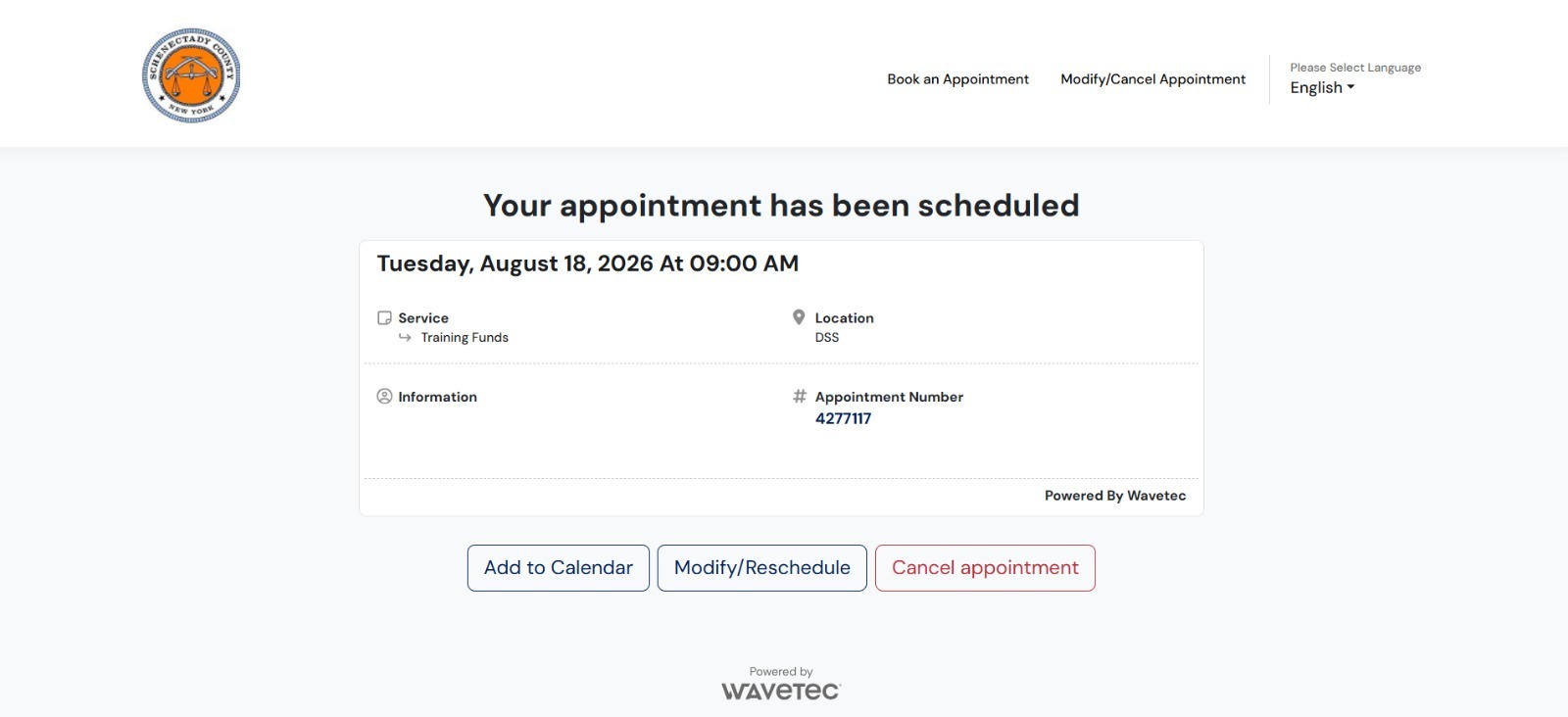
- Online appointment scheduling: Wavetec Web Appointment enables residents to schedule visits in advance, while staff can create appointments through the Spectra Dashboard on behalf of residents who need assistance.
- Ventek integration: Appointments created through Ventek are integrated into the Wavetec environment, allowing residents to use the same kiosk-based check-in process when they arrive at the DSS facility.
How did we connect Residents, Staff and the Operations?
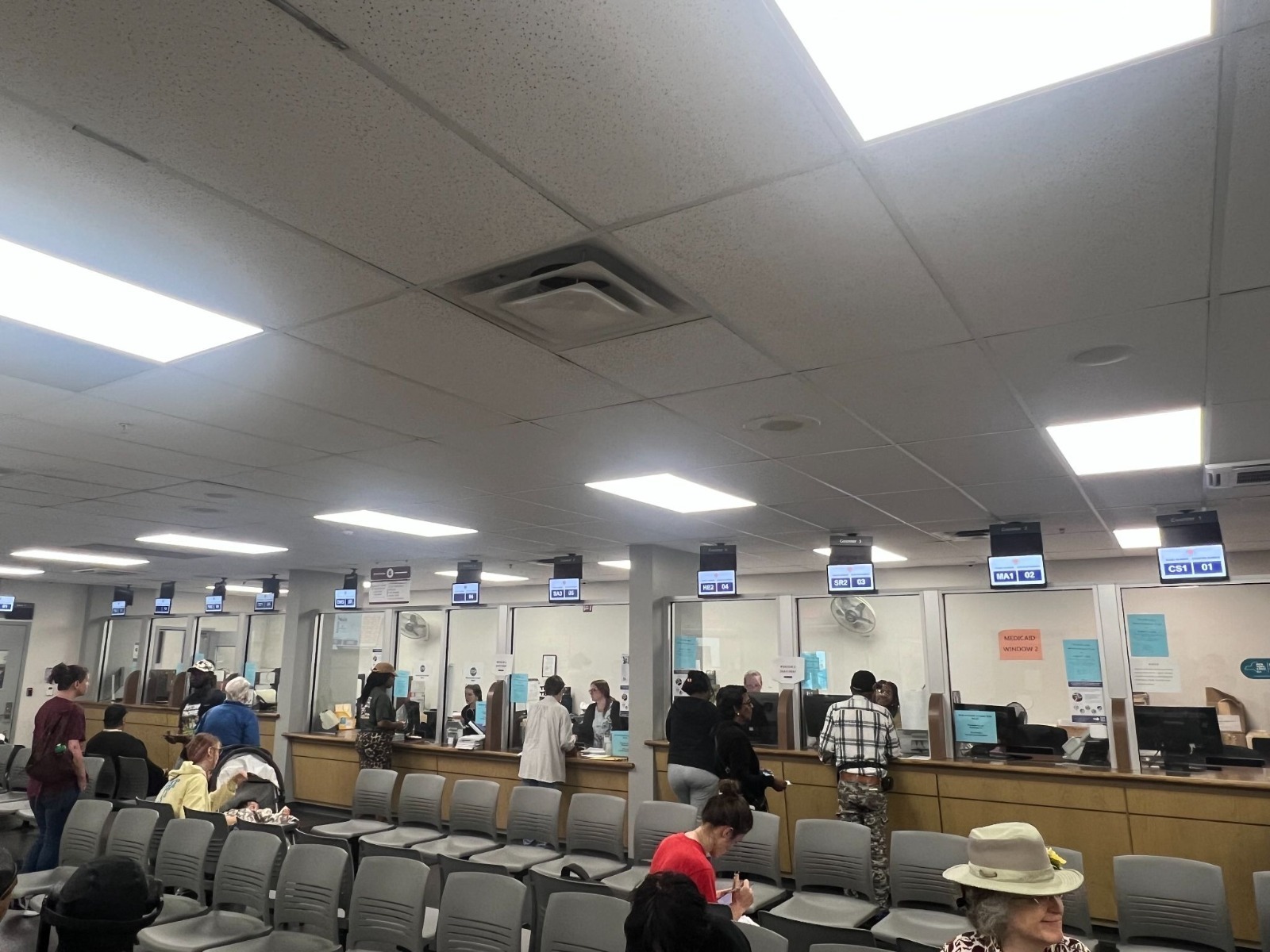
Once a resident checks in, the system manages the remainder of the service journey through an integrated combination of queue orchestration, digital communication, and staff tools.
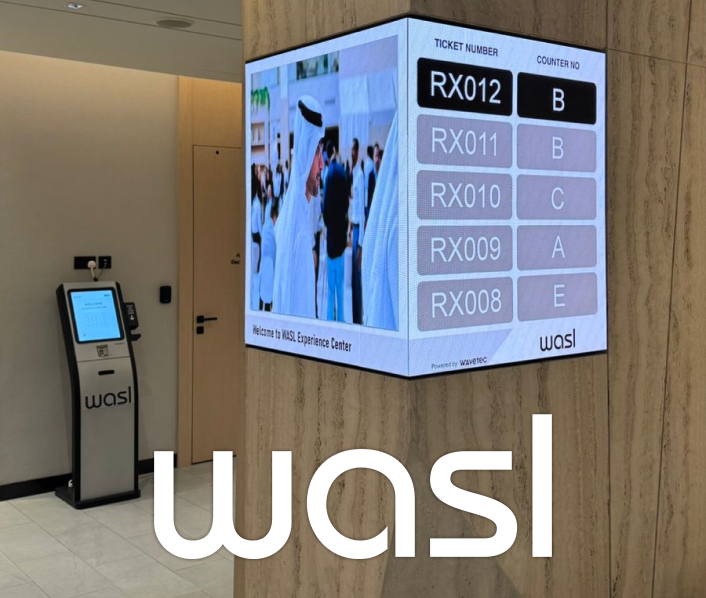
Donatello digital signage provides residents with real-time ticket information, wait-time information, and synchronized audio announcements. Instead of requiring residents to repeatedly approach a service desk or ask staff for updates, the system communicates queue progress directly in the waiting environment.
Residents who opt into notifications can also receive SMS and email updates while they wait and when they are called for service. This provides an additional layer of flexibility by allowing residents to monitor their status without continuously watching a lobby display.
Behind the scenes, Lobby Leader provides staff with centralized queue management and customer-calling capabilities. When a ticket is called, staff receive visual and audio notifications, including alerts that remain available even when they are working in another browser tab. Staff Alerts provide an additional mechanism for notifying employees when new customer activity requires attention.
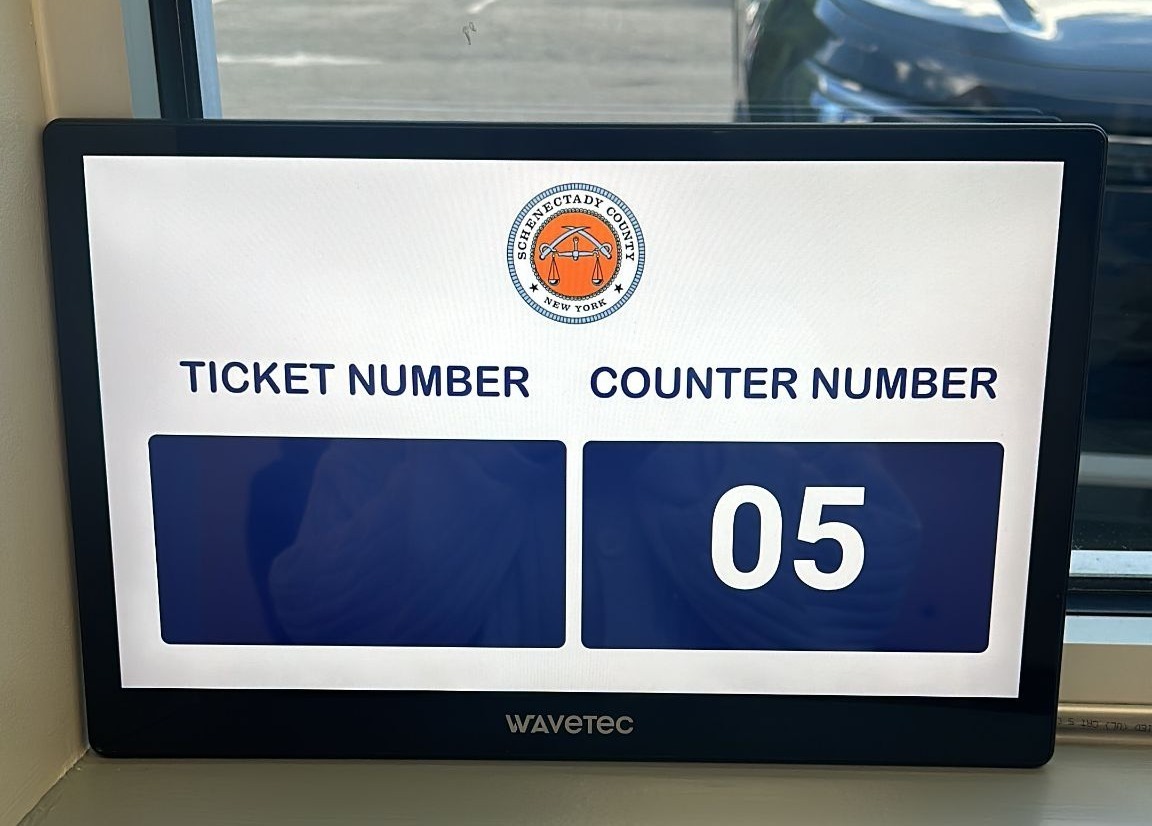
At the service window, Counter Display Units provide clear visual guidance to residents when they are called. This connects the queue-calling process with the physical service environment, helping residents understand where to go next and reducing uncertainty during the transition from waiting to service.
For management, Spectra Dashboard provides real-time visibility into queue activity, customer volumes, service performance, and operational statistics. This gives supervisors a data-based view of what is happening across the operation rather than relying exclusively on manual observation.
A Customer Journey Designed Around Choice
One of the defining characteristics of the Schenectady deployment is that residents are not forced into a single method of accessing services.
Here’s what the in person Customer journey looks like:
- Resident arrives at Schenectady DSS
- Resident waits to be called
- Accessibility to provide feedback
- Booking appointments at Schenectady DSS
Resident arrives at Schenectady DSS
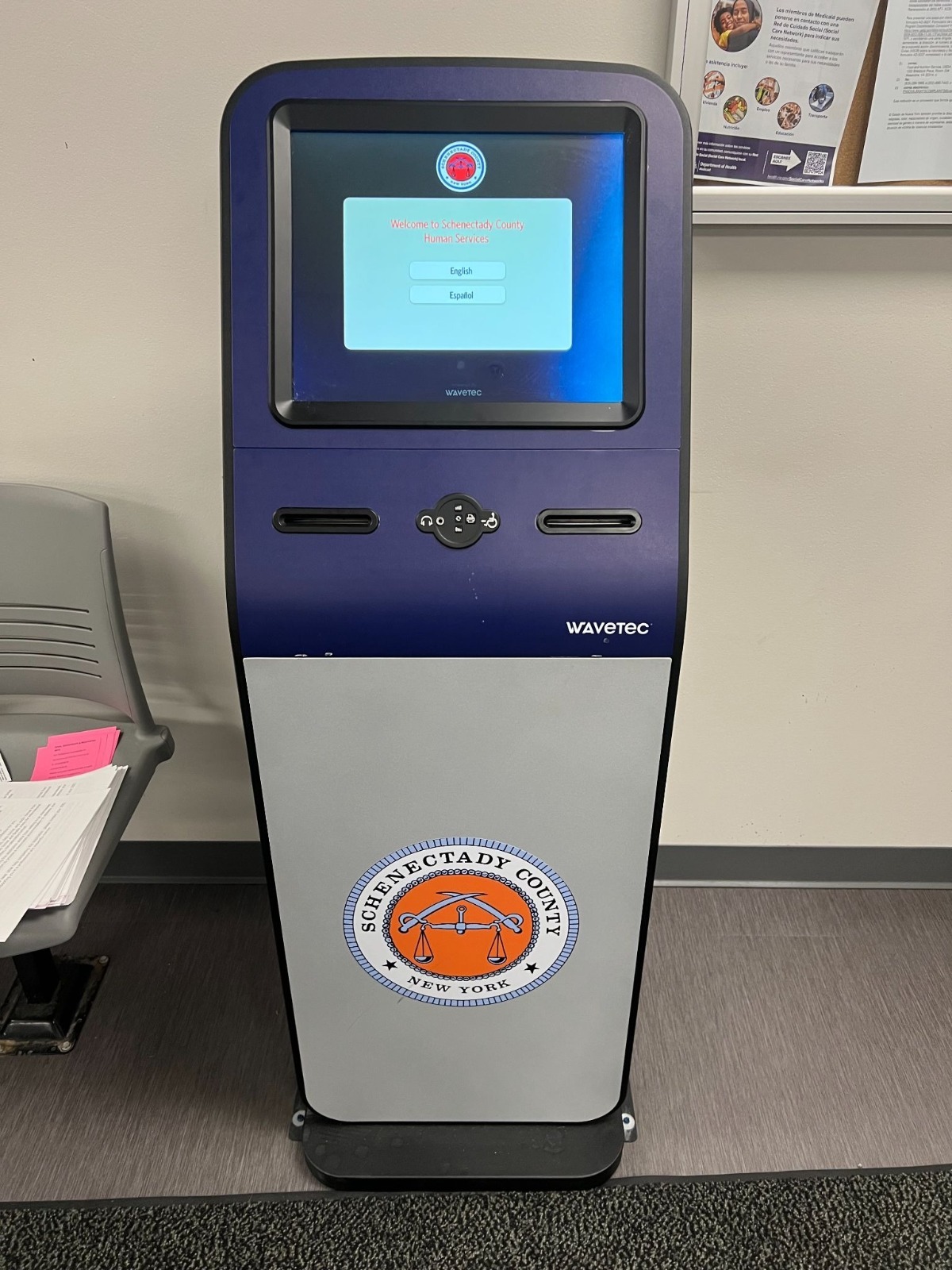
For walk-in visits, a resident can arrive at the DSS facility and use an M-13 kiosk to select the appropriate service, provide the required information, and receive a queue ticket. Alternatively, the resident can use Web Ticketing from a mobile device to join the same-day queue before arriving.
Resident waits to be called
During the wait, residents can follow queue progress through Donatello digital signage or receive SMS and email notifications. When it is time for service, Lobby Leader calls the resident while the CDU provides guidance to the appropriate service location.
Accessibility to provide feedback
The journey continues after the interaction. Feedback Forms Plus automatically sends a feedback form following service, allowing DSS to collect resident feedback and identify potential service barriers or areas for improvement.
Booking appointments at Schenectady DSS
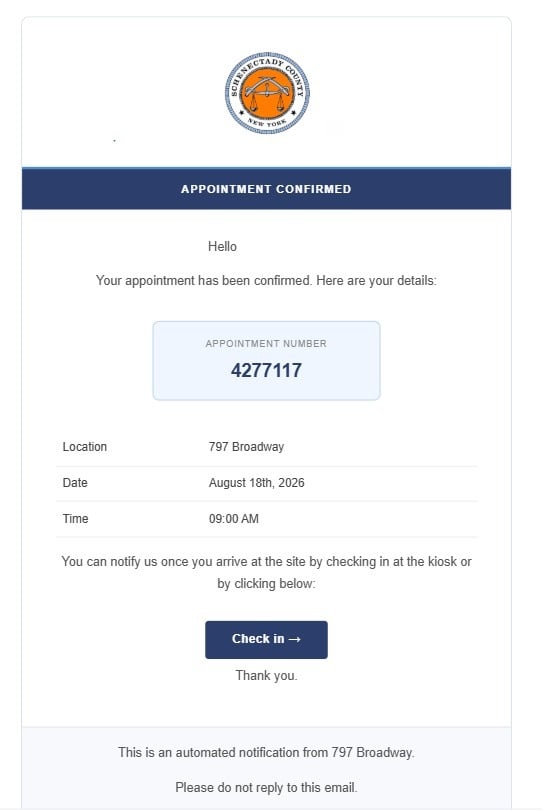
The appointment journey follows a similar model. To make an appointment at Schenectady DSS, Residents can book through Ventek or Wavetec Web Appointment, while the DSS staff can create appointments through the Dashboard. Once the resident arrives, the kiosk recognizes the scheduled appointment and streamlines check-in. The appointment is then incorporated into the queue, where the resident can receive the same notifications and service-call experience as other visitors.
This approach allows DSS to operate walk-in and appointment services within a common framework without requiring residents or staff to manage separate customer-flow processes.
How Wavetec Supports More Than 10,000 Residents Each Month
The deployment has given all 12 DSS departments a more consistent way to manage the resident journey, from check-in and queue management to customer communication and service delivery. The system is built to support more than 10,000 residents each month, helping DSS manage a high volume of service requests across departments.
One of the clearest results has been a 30% reduction in no-shows after integrating appointments with automated confirmations and customer notifications. The system also makes it easier for DSS to manage both scheduled appointments and walk-in residents, helping staff prioritize appointments while keeping walk-in traffic organized.
Residents now have several ways to access services, whether they check in through one of the two kiosks, join a queue remotely through Web Ticketing, or schedule an appointment online. By spreading demand across both physical and digital channels, DSS can reduce pressure on a single check-in point and give residents more flexibility in how they access services.
For staff and managers, the deployment has also made day-to-day operations easier to monitor. Through the Spectra Dashboard and reporting tools, DSS can see queue activity, service performance, customer volumes, and staff productivity in real time. Feedback Forms Plus adds to this visibility by capturing resident feedback after service interactions, giving the organization a better understanding of how residents experience its services.
This deployment also builds on Wavetec’s experience supporting public-sector organizations across the United States, including Schenectady DMV and Clackamas County Courthouse in Oregon.
Accessibility as Part of the Service Experience
Accessibility is particularly important in public-sector environments where residents may have different physical abilities, language preferences, levels of digital literacy, and familiarity with technology.
The M-13 kiosks deployed at DSS Schenectady provide an ADA-compliant self-service check-in experience, while multilingual guidance helps residents navigate the check-in process. Residents can also receive assistance from DSS staff, who can create appointments through the Dashboard when someone is unable to use online appointment systems independently.
This combination of self-service and staff-assisted options helps avoid a common problem in digital transformation: replacing a manual process with a digital one without accounting for people who may need another route into the service.
At Schenectady, digital channels complement rather than eliminate human assistance. Residents can choose the interaction method that best fits their circumstances while DSS retains the ability to support them when necessary.
AI and the Next Stage of Public-Service Operations
Wavetec is extending this operational model beyond real-time monitoring through AI-powered forecasting and simulation.
With the release of Spectra’s AI Forecasting and Simulation capabilities, We are moving from simply showing managers what is happening in a service environment to helping them anticipate what may happen next. The module uses historical queue activity, appointment demand, service durations, calendar variables, and other operational patterns to generate forecasts that can support staffing and capacity planning.
“Our AI-powered forecasting system can predict expected arrival volumes in 30-minute intervals for up to 14 days in advance. By analyzing at least 90 days of historical queue data, the model provides organizations with actionable insights to anticipate demand, plan resources, and proactively manage potential bottlenecks.” – Muhammad Wasif, CTO of Wavetec
The development of these AI features creates an important opportunity for government agencies operating high-volume service locations. Managers can use predictive intelligence to evaluate expected demand and consider staffing or capacity adjustments in advance. This reduces reporting time and increases immediate improvements for the customer journey.
Wavetec reports that deployments where the forecasting module has been in production for 90 days or more have recorded a 19-percentage-point improvement in service-level compliance, an average 23% reduction in avoidable overtime, and a 40% to 60% reduction in weekly manual roster-adjustment time. These figures are Wavetec-reported deployment data and should be treated as such unless supported by an independently verified benchmark.
Frequently Asked Questions
How does DSS Schenectady manage walk-ins and appointments at the same time?
DSS uses Wavetec’s Queue Management System to bring both customer types into a unified service workflow. Appointment residents can check in through the kiosk, while walk-in residents can use the kiosk or Web Ticketing. The system supports appointment prioritization while maintaining an organized queue for walk-in visitors.
What is the role of the M-13 kiosk?
The M-13 self-service kiosks provide the primary in-person check-in interface. Residents can select available services, provide required information, receive a queue ticket, and, where applicable, select a particular staff member or caseworker. The kiosks also support multilingual guidance to cater to a wider demographic of customers.
How does Ventek integrate with Wavetec?
Ventek appointments are integrated into Wavetec’s platform so residents with appointments created through Ventek can check in through the Wavetec kiosk when they arrive. This creates a consistent check-in experience across appointment sources.
What is the difference between Web Ticketing and Web Appointment?
Web Appointment is designed for scheduling a future visit at a specific time. Web Ticketing allows a resident to obtain a same-day virtual ticket remotely, helping them join the queue before arriving at the facility.
How does Spectra help DSS managers?
Spectra Dashboard provides real-time visibility into queue activity, customer volumes, service performance, and operational statistics. This gives managers data they can use to monitor performance and identify opportunities for operational improvement.
How does Wavetec support accessibility?
The M-13 kiosks provide an ADA-compliant check-in experience, while multilingual guidance and multiple access options help accommodate residents with different needs. DSS staff can also book appointments through the Dashboard for residents who require assistance using digital channels.
How does AI fit into a queue-management platform?
Wavetec’s newer AI Forecasting and Simulation capabilities extend queue analytics into predictive operations. The technology can analyze historical demand and operational patterns to forecast future traffic and support staffing and capacity planning. This represents the next stage of Wavetec’s approach: moving from monitoring service performance to helping organizations anticipate and plan for future demand.