A customer walks into a bank branch, a clinic waiting room, or a government service center. They take a number, find a seat, and wait. Minutes pass. Then more minutes. No one updates them. No one explains the delay.
Eventually, frustration sets in. Some customers leave. Those who stay often carry their frustration into the service interaction, coloring everything that follows.
This scene plays out millions of times daily across industries, damaging customer relationships and eroding trust.
Businesses that fail to manage customer waiting times risk losing the same customers permanently. The data is stark: up to 86% of customers may leave or switch providers due to long waiting times, with most customers reaching their tolerance limit after just 8 minutes.
For organizations serious about customer experience, a Wait Time Management System is no longer optional. It is essential infrastructure that transforms how service organizations operate.
What Is a Wait Time Management System?
A Wait Time Management System is a digital platform designed to track, monitor, and optimize customer waiting times across service environments.
Unlike manual systems that rely on paper tickets and guesswork, these systems use technology to collect real-time data on queue lengths, service durations, and customer flow. They provide managers with visibility into how long customers wait and why delays occur.
The system then uses this data to help organizations make smarter decisions about staffing, service routing, and capacity planning.
A wait time management software platform typically integrates with self-service kiosks, digital signage, and staff workstations to create a unified view of service operations.
When implemented effectively, these systems transform chaotic waiting areas into orderly, predictable service environments where customers feel respected and valued.
Why Managing Customer Wait Times Is Critical
Waiting is not just a matter of minutes. It is a matter of perception, trust, and loyalty.
Research shows that customers who wait longer than they were led to expect are 18% less satisfied with their overall experience, while dissatisfaction can increase by 262% when delays feel unexplained.
This means that unmanaged waiting times do not just annoy customers; they actively damage the relationship between the business and its customers.
The cost of poor wait time management extends beyond satisfaction scores. Customers who experience long, unexplained waits are more likely to take their business elsewhere. In industries like banking and healthcare, where switching costs may be high, the loss of a single customer represents significant lifetime value.
Conversely, businesses that manage waiting times effectively build trust. When customers see that their time is valued, they are more likely to return, recommend the business to others, and remain loyal even when occasional delays occur.
The link between wait time management and customer retention is direct and measurable.
For healthcare providers, addressing long wait times is particularly critical, as patient satisfaction and clinical outcomes are closely tied to access and timeliness.
Key Features of a Wait Time Management System
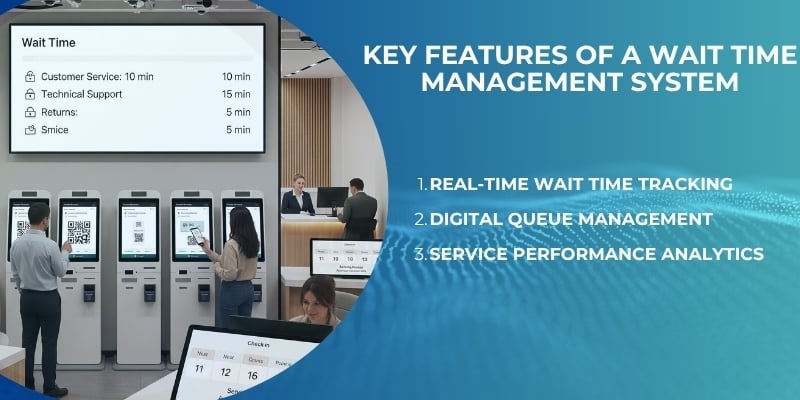
Modern wait time management systems combine several capabilities to deliver comprehensive service optimization. Each feature addresses a specific aspect of the waiting experience.
Real-Time Wait Time Tracking
The system continuously monitors queue lengths and service times across all service points. Sensors, check-in data, and staff inputs feed into a central dashboard that shows current wait times by service type, counter, and staff member.
This visibility allows managers to see problems as they develop and intervene before queues become unmanageable. Real-time tracking also powers customer displays that show current wait times, setting accurate expectations.
Digital Queue Management
A core component of any queue wait time management system is the ability to organize customer flow digitally. Instead of physical lines, customers check in through kiosks or mobile devices and join virtual queues.
The system assigns them to the appropriate service based on their needs and routes them to the right staff member when their turn arrives. This eliminates the chaos of multiple lines and ensures that customers are served in a fair, orderly manner.
Service Performance Analytics
The system collects data on every service interaction, creating a rich dataset for analysis. Managers can review wait times by hour, day, and week to identify patterns.
They can see which service types take the longest and which staff members are most efficient. This data supports continuous improvement, helping organizations refine staffing schedules, adjust service protocols, and identify training needs.
The analytics capabilities of modern wait time monitoring software turn operational data into strategic insight.
How Wait Time Management Improves Customer Satisfaction
Reducing actual wait times is important, but managing the perception of waiting is equally critical. A customer wait time management system addresses both dimensions through several mechanisms.
- First, transparency builds trust. When customers see their position in the queue and receive accurate wait time estimates, they feel respected. The unknown is far more stressful than a known wait, no matter how long. Digital displays and mobile notifications keep customers informed, reducing anxiety and improving satisfaction even when delays occur.
- Second, engagement reduces perceived wait time. When customers are occupied with meaningful content, time passes more quickly. Digital signage that shows service information, promotions, or entertainment transforms waiting from passive frustration into active engagement. This approach has been shown to significantly reduce the perceived length of waits.
- Third, predictability improves the overall experience. When customers know what to expect, they can plan accordingly. A reliable digital wait time tracking system allows customers to arrive at optimal times, reducing their in-person wait. Those who must wait do so with accurate expectations, which reduces frustration.
- Fourth, efficient service delivery shows customers that the business values their time. When wait times are consistently short and service moves smoothly, customers notice. They interpret efficiency as competence and respect, strengthening their overall perception of the organization.
Technologies Used in Wait Time Management Systems
Several technologies work together to create comprehensive wait time management capabilities. Each serves a specific role in the customer journey.
- Queue management platforms form the central nervous system of wait time management. These software solutions track customer check-ins, manage virtual queues, route customers to appropriate staff, and provide real-time dashboards for managers. They integrate with other systems to create a unified service environment.
- Digital signage displays communicate wait times and queue status to customers. Screens placed in waiting areas show current queue positions, estimated wait times, and service information. This transparency reduces anxiety and keeps customers informed without requiring staff intervention.
- Self-service kiosks empower customers to manage their own check-in process. Customers can select their service type, enter identifying information, and join the queue without staff assistance. This reduces administrative burden on staff while giving customers a sense of control over their experience.
- Service analytics tools process the data collected by queue systems to generate insights. These tools create reports on wait time trends, staff performance, and customer flow patterns. They help managers identify opportunities for improvement and measure the impact of changes over time.
Benefits of Wait Time Management Systems for Businesses
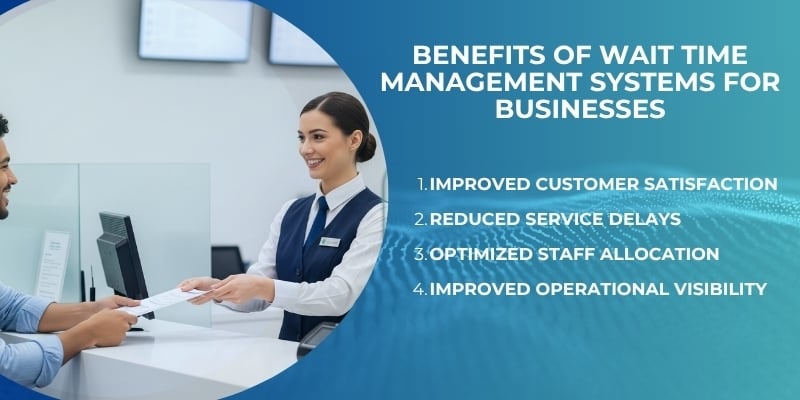
Organizations that implement wait time management systems realize benefits across multiple dimensions of their operations. These advantages extend beyond customer satisfaction to operational efficiency and financial performance.
- Improved customer satisfaction is the most direct benefit. Customers who wait less and feel informed during their wait report higher satisfaction scores. This improvement translates into better reviews, increased loyalty, and positive word of mouth.
- Reduced service delays occur when organizations have visibility into queue dynamics. Managers can identify bottlenecks and address them before they escalate. Staff can be redeployed to areas of highest demand in real time.
- Optimized staff allocation becomes possible with data on demand patterns. Instead of guessing how many staff members are needed at different times, managers use historical wait time data to schedule appropriately. This reduces both overstaffing and understaffing, improving labor efficiency.
- Improved operational visibility gives managers a clear view of service performance. Real-time dashboards show current conditions, while historical reports reveal trends and patterns. This visibility supports better decision making at all levels.
Better service efficiency results from the combination of these benefits. When wait times are shorter, staff work more productively, customers move through the system faster, and the organization serves more people with the same resources.
Industries That Benefit From Wait Time Management Systems
The challenges of managing customer waiting times cut across industries, but each sector applies wait time management solutions to its unique context.
Banking
Bank branches use wait time management systems to balance teller workloads, manage appointments, and reduce lobby congestion. Customers check in through kiosks or mobile apps, specify their service needs, and are routed to the appropriate staff.
Wait time displays set expectations, while analytics help branches optimize staffing schedules based on demand patterns.
Healthcare
Hospitals and clinics face some of the most complex wait time management challenges, with patients needing different types of care and varying levels of urgency.
Wait time systems help manage patient flow from check-in through service, reducing congestion in waiting areas and improving the patient experience. For healthcare providers, managing long wait times is essential for both patient satisfaction and clinical outcomes.
Retail
Retailers use wait time management at checkout counters, customer service desks, and fitting rooms. Systems track queue lengths and alert managers when additional staff are needed.
Some retailers also use virtual queuing, allowing customers to join a waitlist remotely and receive notifications when service is available.
Government Services
Government offices, including departments of motor vehicles, social service agencies, and municipal service centers, use wait time management to handle high volumes of constituents.
Systems help organize queues, manage appointments, and communicate wait times, reducing frustration in environments where long waits are common.
Challenges Businesses Face Without Wait Time Management
Organizations that operate without a wait time management system experience predictable operational problems that affect both customers and staff.
- Long queues develop when there is no system to balance demand across service points. Customers cluster around counters, creating congestion that slows service for everyone. Without real-time visibility, managers cannot see queues building until they are already a problem.
- Poor service experiences result from unmanaged waiting. Customers do not know how long they will wait or when their turn will come. They may miss their turn while distracted or feel frustrated by the lack of information. These negative experiences damage the relationship between customer and business.
- Inefficient staff utilization occurs when workloads are not balanced. Some staff may be overwhelmed while others are idle, but without visibility into queue dynamics, managers cannot redistribute work effectively. This inefficiency increases costs and reduces capacity.
- Customer frustration becomes the dominant emotion in the waiting experience. Without transparency, customers assume the worst. They may perceive waits as longer than they actually are and blame the business for disorganization. This frustration carries over into service interactions, making every transaction more difficult.
Future of Wait Time Management Systems
The evolution of wait time management is being shaped by advances in artificial intelligence, analytics, and integration with broader customer experience platforms. Several trends point toward increasingly sophisticated capabilities.
- AI-driven queue prediction will allow organizations to forecast demand with greater accuracy. Machine learning models trained on historical data will predict not just how many customers will arrive, but when and what services they will need. This will enable proactive staffing that matches capacity to demand perfectly.
- Real-time service analytics will become more granular and actionable. Systems will analyze wait times by customer segment, service type, and staff member, providing managers with specific recommendations for improvement. Alerts will trigger automatically when wait times exceed thresholds, prompting immediate intervention.
- Predictive service management will shift the focus from reactive queue management to proactive flow optimization. Systems will anticipate bottlenecks before they form and suggest routing changes to prevent them. Customers will be directed to alternative service points or times before queues become problematic.
- Integrated customer journey platforms will connect wait time management to broader customer experience systems. Wait time data will inform customer relationship management, marketing, and service design. Organizations will have a complete view of how wait times affect customer behavior and loyalty across all touchpoints.
Frequently Asked Questions About Wait Time Management Systems
What is a wait time management system?
A wait time management system is a digital platform that tracks, monitors, and optimizes customer waiting times across service environments. It uses real-time data, queue analytics, and digital tools to help organizations reduce delays, balance workloads, and improve customer satisfaction.
How does a wait time management system improve customer satisfaction?
It improves satisfaction by reducing actual wait times, providing transparent information about expected delays, and keeping customers engaged while they wait. When customers understand how long they will wait and see progress, perceived wait times decrease even when actual waits remain unchanged.
What industries use wait time management systems?
Banking, healthcare, retail, government services, hospitality, and transportation all use wait time management systems. Any organization that serves customers in person can benefit from better visibility into queue dynamics and service efficiency.
How do businesses reduce perceived waiting times?
Businesses reduce perceived wait times by providing accurate wait time estimates, displaying queue positions, engaging customers with digital signage or content, and ensuring the waiting environment is comfortable. When customers feel informed and occupied, time passes more quickly in their perception.
Conclusion
A Wait Time Management System transforms how organizations serve customers. By replacing guesswork with data, chaos with order, and frustration with transparency, these systems address one of the most persistent challenges in customer service.
The benefits are clear: shorter waits, happier customers, more efficient operations, and stronger loyalty. For businesses across banking, healthcare, retail, and government, implementing wait time management software is not just an operational improvement.
It is a strategic investment in the customer relationships that drive long-term success. In an era where customers have more choices than ever, the organizations that respect their time will be the ones they choose to return to.
BOOK A FREE DEMO