The telco store still matters, but how work gets done inside it is changing
Telco stores remain a critical touchpoint for customers, especially when they want certainty, speed, or face-to-face support. However, a large share of in-store traffic today consists of routine, repeatable transactions — bill payments, top-ups, SIM replacements, and standard service requests — journeys that don’t always require a staffed counter or long wait times.
The opportunity isn’t to replace the store, but to modernise it: shift everyday journeys to self-service, reduce pressure on staff, and allow store teams to focus on higher-value interactions and complex cases.
At MWC Barcelona, 2nd to 5th March 2026, we’re showcasing a self-service telco retail experience that brings the majority of what customers typically do in a store directly onto the kiosk.
This year, wavetec is unveiling how telecom operators can shift high-volume in-store journeys – including SIM activation, top-ups, bill payments, and service requests – to a fully governed self-service ecosystem operating live at the Rakuten Symphony booth (Hall 2, Stand 2C70).
A telco store in self-service: journeys we’re showcasing
Rather than focusing on a single demo flow, we’re showcasing a variety of real customer journeys that reflect actual branch traffic.
Everyday retail journeys
- New SIM purchase/activation initiation
- SIM replacement / SIM swap
- Top-up/recharge
- Bill payment
- Plan selection and add-ons (where applicable)
Device journeys
- Browse and order a new phone (order-only or order + payment)
- Accessories and add-ons (optional)
- Order confirmation and next steps (pickup, delivery, assisted activation)
Service journeys
- Guided service selection to route customers quickly
- QR handoff to continue on mobile or with an agent if required
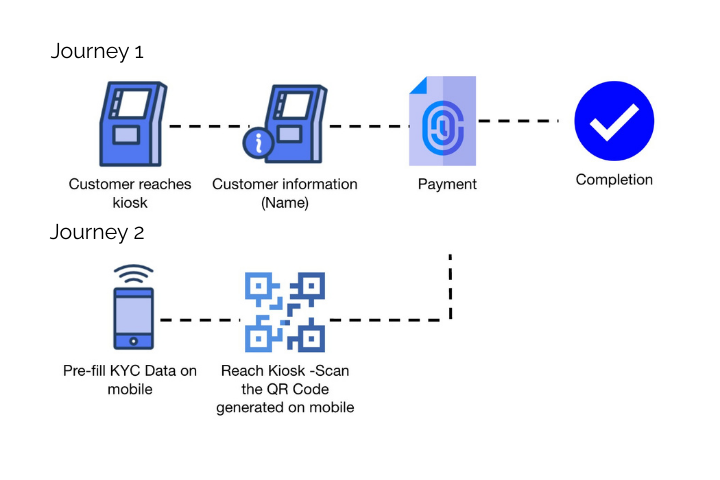
At MWC Barcelona 2026, we’re showcasing two core onboarding and service models:
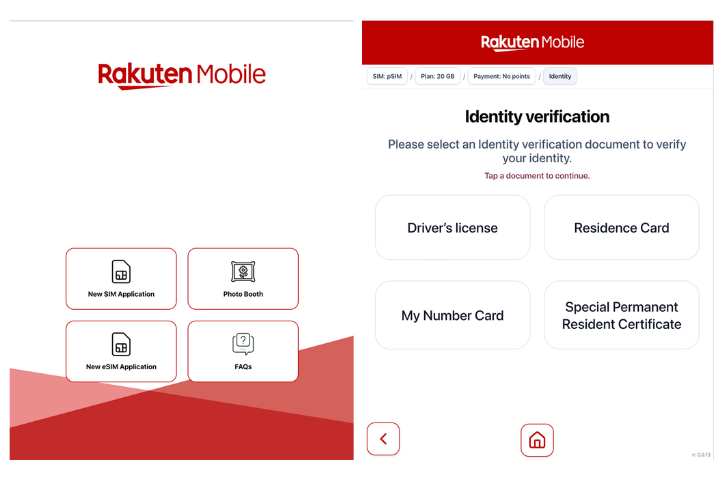
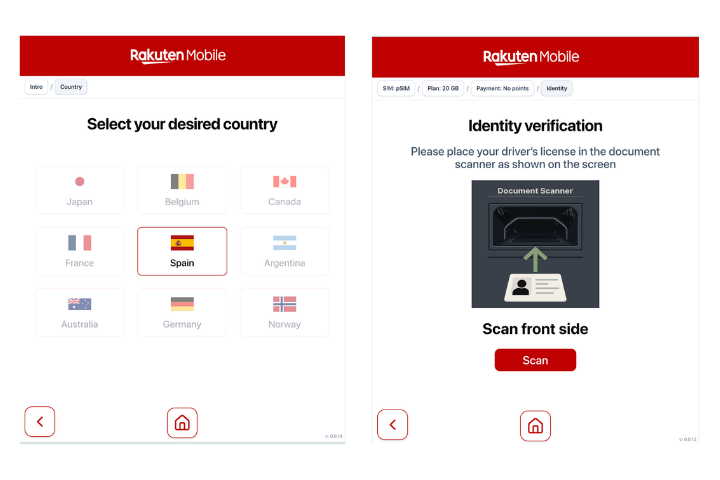
- End-to-End Kiosk Journey: Customers complete SIM activation or service requests directly at the kiosk – from information capture to payment and confirmation — in a single guided flow.
- Mobile-to-Kiosk Hybrid Journey: Customers begin onboarding on their mobile device with pre-filled KYC data, generate a secure QR code, and seamlessly continue the journey at the kiosk for verification, payment, and completion.
Behind the scenes: the technology powering the kiosk
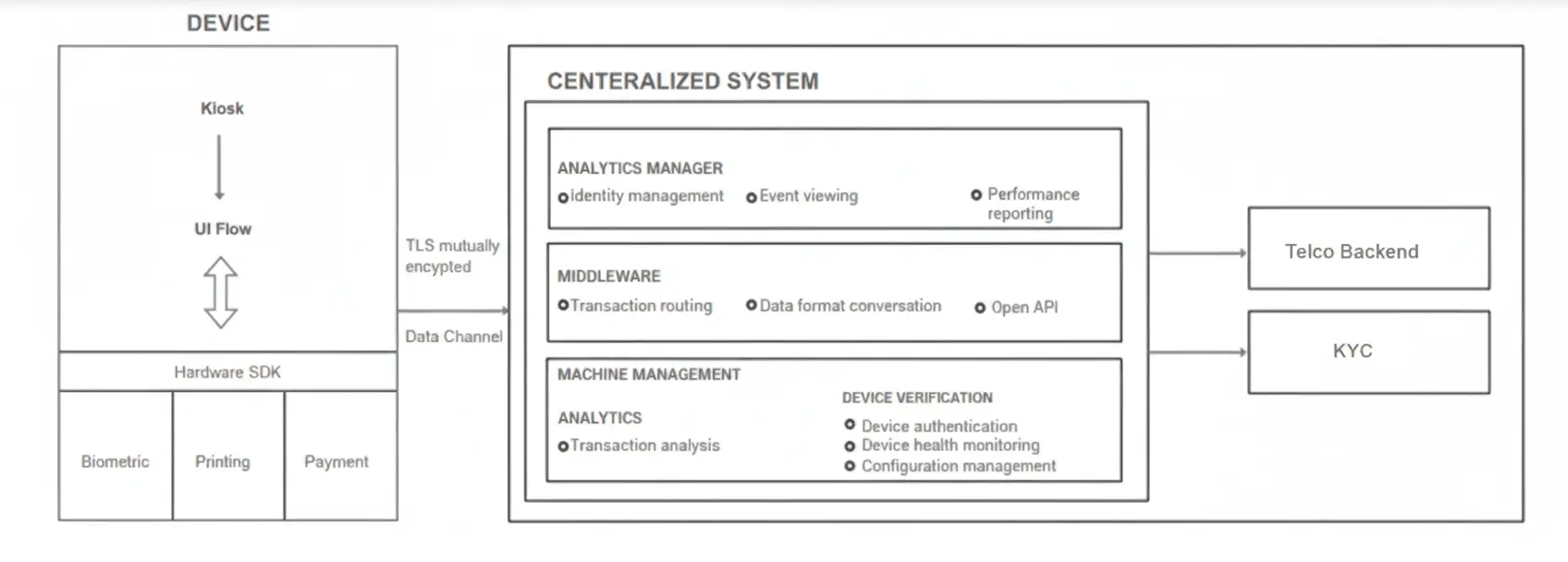
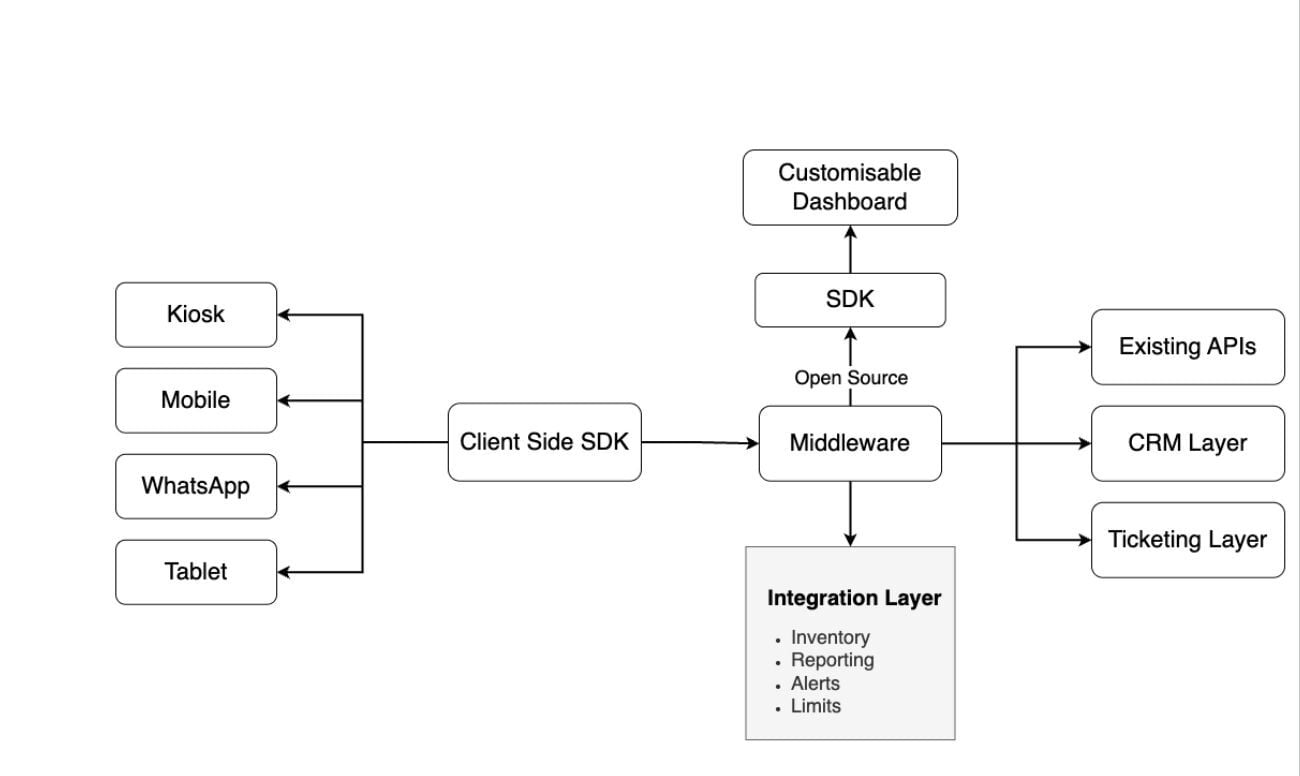
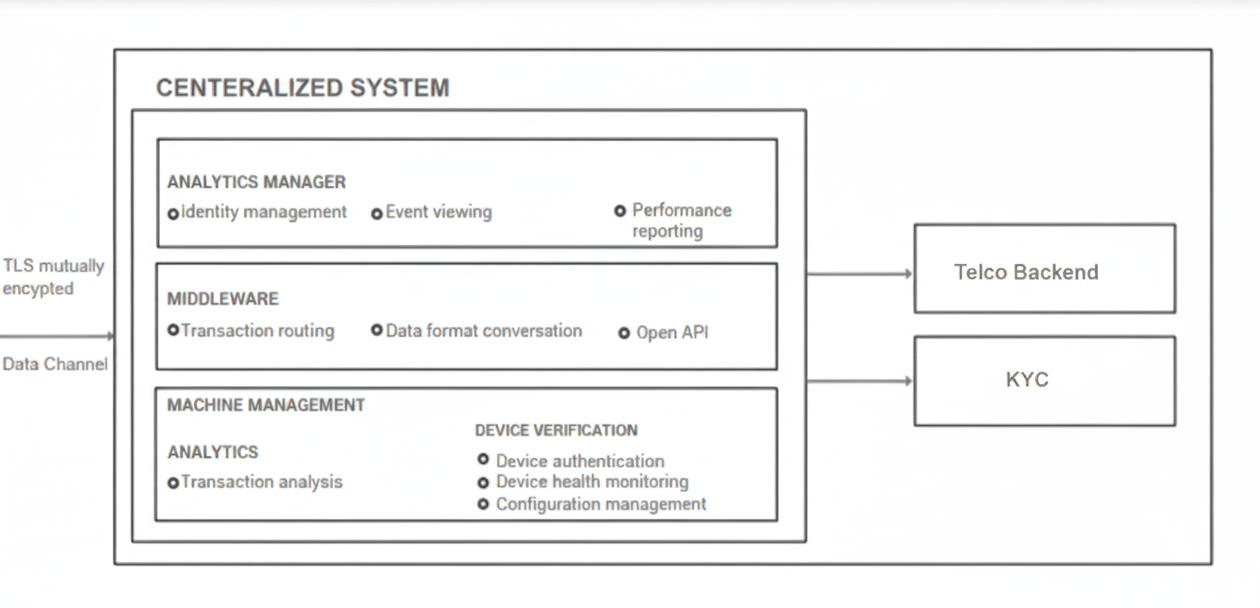
This is not a standalone device demo. The kiosk operates as a fully governed retail channel, backed by a scalable ecosystem.
- Architecture: Channel apps (kiosk/web/mobile) → Middleware/API layer → Telco back-end systems
- Integration model: REST APIs supporting cloud and on-prem deployments
- Deployment controls: remote provisioning, OTA updates, staged releases, rollback, and configuration templates
- Operations layer: live dashboards, device health monitoring, inventory and refill workflows
Designed for customers: fast, guided, and consistent
From a customer’s perspective, great self-service is simple: clear steps, minimal friction, and fast completion.
Our approach focuses on:
- guided journeys that reduce decision fatigue
- consistent UX across branches
- minimal dependency on staff intervention
- support for accessibility and multilingual requirements
The kiosk is just the surface — the ecosystem is what scales
To move beyond pilots, kiosks must behave like any other digital channel: integrated, monitored, and adaptable.
Middleware-based ecosystem built for telco integration
Our deployments use a custom middleware solution that enables backward compatibility with legacy systems and flexibility as APIs evolve.
This layer provides:
- journey orchestration for services such as new SIM, SIM replacement, bill payment, and device ordering
- API abstraction so kiosks integrate to a single layer
- reusable services including authentication, payment initiation, receipts, auditing, and operational events
The platform can integrate with enterprise and telecom systems including Oracle NetSuite, Oracle Communications BRM/BSS, Amdocs, Netcracker, and other operator-specific CRM, billing, charging, inventory, and order management platforms.
Build with us — or build it yourself
Operators can choose how much ownership they want.
- End-to-end delivery: we design, build, integrate, deploy, and operate
- Operator-owned frontend: build your own UX using our open SDK
- Hybrid models: shared responsibility across journeys
Platform and SDK capabilities
- Support for Flutter, Linux, and Windows applications
- Open SDK with full customization, using modern JavaScript
- Starter code and pre-built templates
- 3-tier architecture with separate Production and Staging environments
- High Availability design
- Broad hardware compatibility with third-party/OEM kiosks and peripherals (cash acceptors, KYC devices, scanners, printers, etc.)
- Near-zero perceived latency with real-time processing
- Full server-side monitoring for performance, diagnostics, and uptime optimisation
Live operations: dashboards, monitoring, inventory
Scaling self-service requires strong operational visibility.
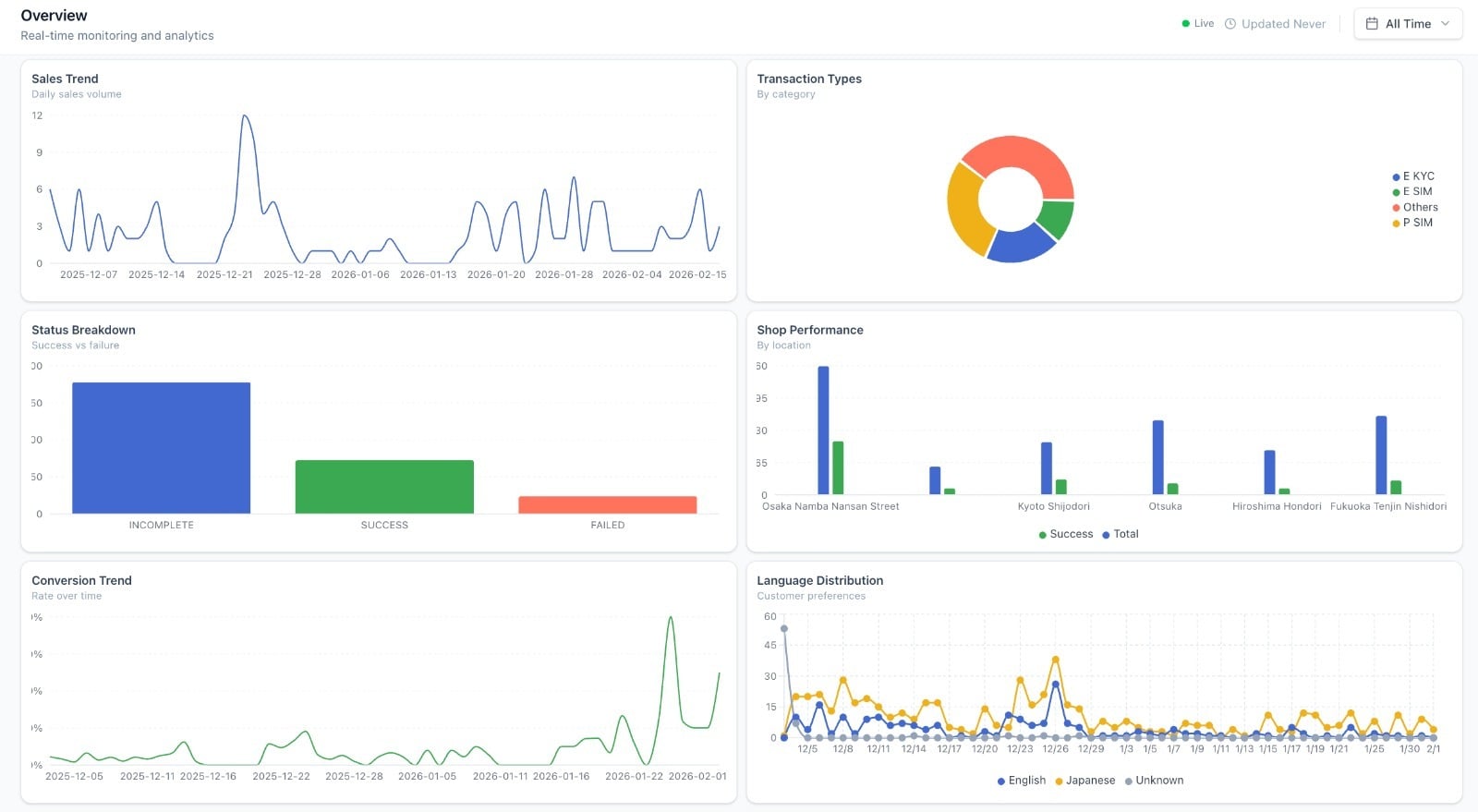
Dashboards and analytics
The platform supports dashboards for:
- operations and fleet status
- dynamic inventory management
- agent management and performance
- sales and service analytics
- user journey insights and drop-off points
It also supports real-time dashboards, BI tools, and report extraction covering:
- sales and service data
- inventory maintenance and trip management
- machine, API, and server health
Alerts and maintenance
Real-time alerts include:
- inventory thresholds
- maintenance requirements
- health and fault notifications
- operational alerts routed directly to ops teams
Inventory and refills
Inventory servicing can be handled either by the operator’s team or by our team/partners, depending on the agreed operating model.
Security and compliance built for telco retail
Self-service kiosks handle real customer transactions and must meet enterprise security expectations.
- Device security: Windows-based kiosk environments, locked-down modes, staged updates with rollback
- Data security: encrypted transport using modern TLS protocols
- Access control: OAuth2, mTLS, API keys, or SSO for admin portals
- RBAC: role-based access for dashboards, configuration, and inventory
- Audit logs: machine access, administrative actions, and operational events, with configurable granularity
- Payments: tokenisation and gateway-based processing to minimise PCI exposure
- Physical security: locks, tamper detection, and secure compartments (when cash modules are used)
- Certifications: Giteki, FCC, CE, PSE (market dependent)
Support model: 24/7 support + on-ground support when needed
Self-service isn’t “install and walk away.” Real outcomes require real support.
Our model can include:
- 24/7 remote support with escalation paths
- on-ground support where required (direct or partner network)
- preventative maintenance planning and spares strategy
SLAs are customisable and defined jointly with the client based on service hours, geography, deployment size, and criticality.
Real-world experience: Du and Rakuten
Du (UAE) — self-service retail at scale
At du, kiosks currently provide more than 10 customer journeys, covering a wide range of everyday telco services.
The operational impact is significant. Services that typically take 30–40 minutes at a staffed counter are completed on the kiosk in approximately 2–4 minutes, representing more than a 13× reduction in transaction time.
Customer satisfaction has been consistently strong, with feedback above 88% overall, and certain journeys achieving satisfaction levels of up to 98%, depending on the service. Watch it here.
Rakuten — compact, multi-journey retail experiences
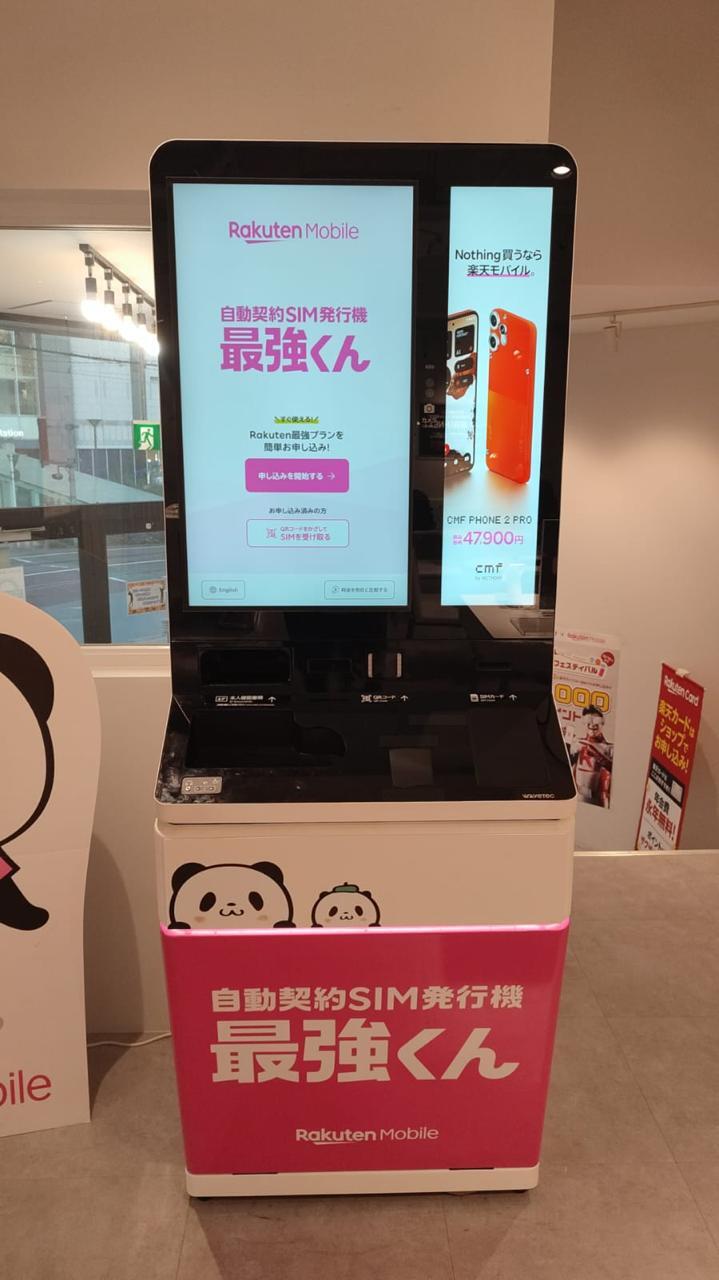
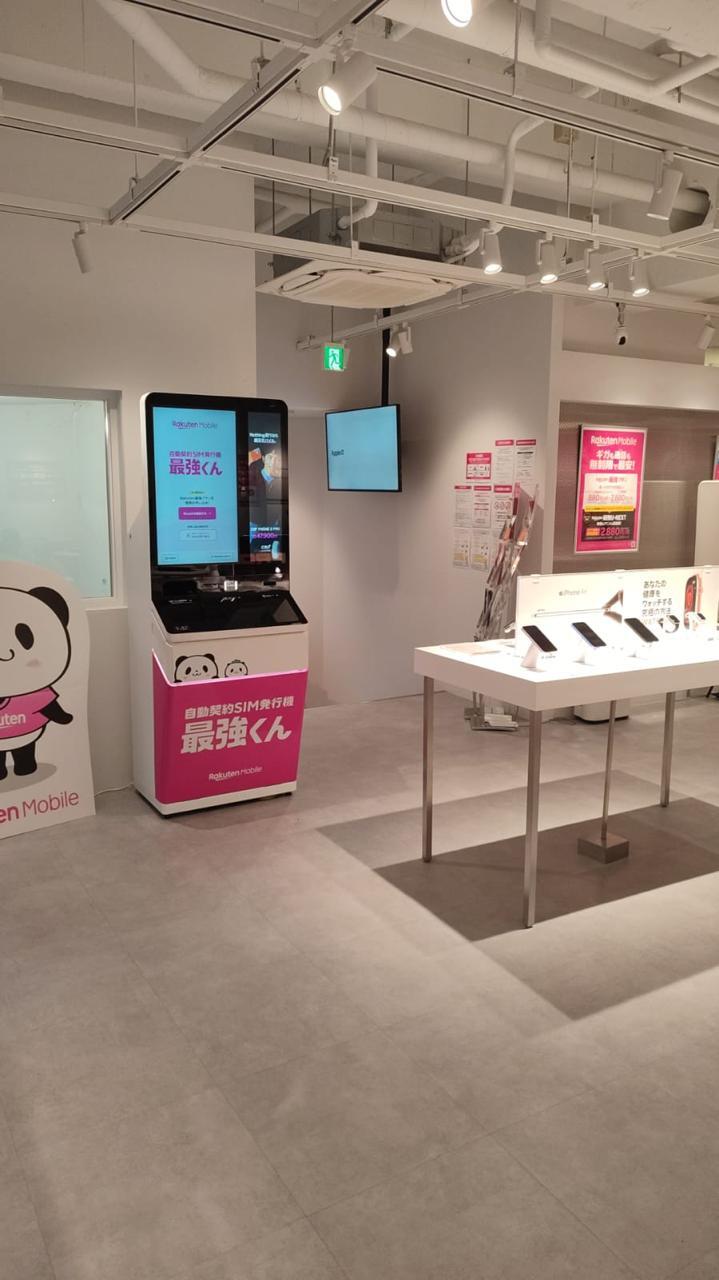
Together with Rakuten, we are showcasing a joint booth and a new kiosk design optimised for the Japanese market — and other regions where space constraints are a factor, such as parts of Europe and East Asia.
What telcos measure: adoption, time saved, cost-to-serve
In one deployment, approximately 80% of bill payment, top-up, and SIM replacement transactions shifted to kiosks.
Those same journeys, which traditionally take 30–40 minutes at the counter, are completed in 2–4 minutes on the kiosk — a 13× or greater reduction in transaction time.
This results in:
- high kiosk adoption for routine services
- substantial reductions in staff time spent on repeatable transactions
- the ability to redeploy staff toward assisted sales and complex services
- consistently high customer satisfaction (above 88%)
Actual staffing impact depends on branch size, operating model, and peak-hour demand, but the time efficiency gains alone materially reduce cost-to-serve.
See it live at MWC Barcelona
Experience a working self-service telco store — multiple journeys, live dashboards, and the full ecosystem behind the kiosk.
Location: Fira Gran Via, Symphony booth (Hall 2, Stand 2C70)
Dates: 2nd to 5th March, 2026
BOOK A FREE DEMO