A patient arrives at a clinic expecting a short wait, only to sit for hours in an overcrowded waiting room. Appointments are delayed. Staff are stretched thin. Clinical outcomes suffer.
This scenario plays out daily in healthcare systems worldwide, and long patient wait times remain one of the most persistent and frustrating challenges in modern medicine.
They stem from physician shortages, inefficient scheduling, high patient volumes, and manual workflows that cannot keep pace with demand. These delays negatively impact patient satisfaction, clinical outcomes, and operational efficiency.
The role of telemedicine in addressing this challenge has become increasingly clear.
By enabling providers to deliver timely care remotely, telemedicine reduces in-person congestion, accelerates access to medical services, and fundamentally reshapes how patients flow through the healthcare system.
According to McKinsey, long patient wait times remain a global healthcare challenge, driving providers to adopt digital care models such as telemedicine.
For healthcare organizations focused on improving the healthcare customer journey, integrating virtual care is a strategic imperative.
What Is Telemedicine?
Telemedicine refers to the use of digital communication technologies to deliver clinical care without requiring a physical visit. This includes video consultations between patients and providers, mobile health applications, remote patient monitoring devices, and secure messaging platforms.
Virtual healthcare services include a wide range of clinical activities, from primary care checkups to specialist consultations, mental health therapy, and chronic disease management.
Telemedicine is not a replacement for all in-person care, but rather a complementary channel that extends the reach of healthcare providers and offers patients greater flexibility and convenience.
It is enabled by secure, HIPAA-compliant platforms that integrate with electronic health records and support real-time audio and video interaction.
Why Patient Wait Times Are a Major Healthcare Challenge
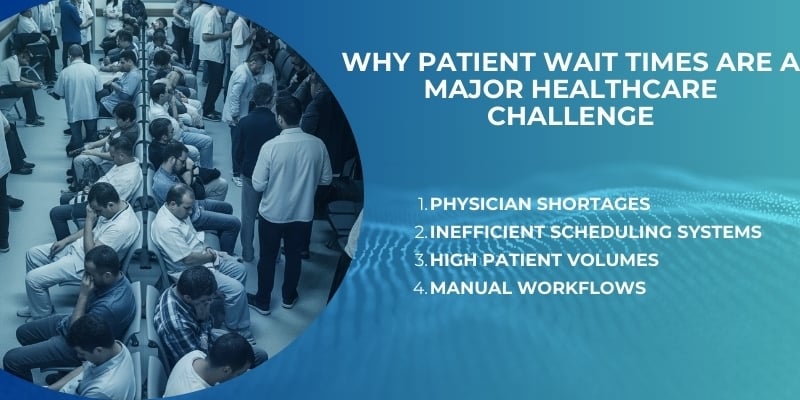
Understanding why patient wait times are so pervasive is essential to appreciating the value of telemedicine. The root causes are structural and complex.
- Physician shortages mean there are simply not enough providers to meet demand, particularly in rural and underserved areas.
- Inefficient scheduling systems often create mismatches between patient demand and provider availability.
- High patient volumes, especially during flu season or public health crises, overwhelm clinic capacity.
- Manual workflows for appointment booking, registration, and check-in add administrative friction that slows down every patient interaction.
These factors combine to create long queues, delayed diagnoses, deferred treatments, and frustrated patients. The result is compromised healthcare access and a patient experience that falls far short of expectations.
Role of Telemedicine in Reducing Patient Wait Times
The role of telemedicine in reducing wait times is powerful. By shifting a portion of care from physical clinics to virtual channels, telemedicine directly alleviates pressure on crowded facilities.
It enables providers to see more patients in less time by eliminating the need for travel, room turnover, and physical proximity.
Virtual consultations can be scheduled more flexibly, including evenings and weekends, expanding access beyond traditional clinic hours.
Telemedicine also supports faster follow-up visits, reducing the backlog of patients waiting for post-procedure or post-discharge care.
The telemedicine benefits extend beyond patients to providers, who can optimize their schedules and reduce burnout by managing their time more effectively.
Early evidence supports this: a study on AI-enhanced telemedicine found that AI scheduling reduced wait times for emergency patients by 40 percent.
Virtual Consultations and Faster Appointment Access
Virtual consultations are the most visible application of telemedicine. They allow patients to connect with a provider from home, work, or anywhere with an internet connection. This immediacy translates directly into faster appointment access.
Instead of waiting weeks for an in-person slot, patients can often secure a same-day or next-day virtual visit. This is particularly valuable for minor acute issues, medication refills, and follow-up consultations that do not require physical examination.
For providers, virtual visits are typically shorter and more efficient than in-person appointments, enabling higher daily patient volumes without sacrificing quality. This is a prime example of online doctor consultations improving both access and throughput.
Integrating these virtual visits with a robust queue management system ensures that patients move through the care journey smoothly, whether they are seen virtually or in person.
Telemedicine and Digital Triage
Digital triage is a critical component of telemedicine’s impact on wait times. Before a patient ever steps foot in a clinic, telemedicine platforms can perform pre-visit assessments that determine the urgency and appropriate care pathway.
Patients complete structured questionnaires about their symptoms, and algorithms, increasingly powered by artificial intelligence, classify the urgency level. This ensures that patients with urgent needs are prioritized and directed to immediate care, while those with routine concerns are scheduled appropriately or directed to self-care resources.
The results are dramatic.
A GP practice in Surrey implemented an AI-powered triaging system called Smart Triage and saw the median waiting time for non-urgent appointments fall by 73 percent, from 11 days to 3 days. The average waiting time for pre-bookable appointments fell by 69 percent, from 13 days to 4 days.
Furthermore, 70 percent fewer patients required a further appointment within a fortnight of their first. This is remote patient care at its most effective, directing patients to the right level of care at the right time.
Improving Patient Flow Across Care Channels
Patient flow optimization requires a holistic view of customer journey management between virtual and in-person care channels.
Telemedicine does not operate in isolation. It is most effective when integrated with traditional care delivery.
A patient might start with a virtual consultation, receive initial assessment and advice, and then be directed to an in-person visit if necessary.
Conversely, a patient discharged from the hospital might receive a virtual follow-up to monitor recovery and prevent readmission. This integrated approach balances demand across channels, reducing bottlenecks in emergency departments and clinics.
The Virtual Provider in Triage program at MUSC Health is a powerful example. By using telehealth to connect patients with emergency physicians soon after arrival, the program cut door-to-provider time in half and reduced the number of people who left without being seen by 80 percent.
This demonstrates how healthcare efficiency can be dramatically improved through smart integration of virtual and physical care.
Telemedicine, Scheduling, and Care Coordination
Appointment scheduling and care coordination are often the hidden drivers of wait times. Telemedicine platforms that integrate digital scheduling, automated reminders, and real-time availability can dramatically reduce no-shows and idle time.
When patients can book their own appointments online, 24/7, without phone tag, they are more likely to show up and less likely to book appointments they cannot keep. Automated reminders via text or email further reduce no-show rates.
Duke University Health System’s Virtual Care Center demonstrated this powerfully. By providing centralized support for virtual visits, including dedicated staffing for pre-visit tasks, they achieved a 91.1 percent rate of patients arriving on time, compared to 82.5 percent without support.
On-time starts for appointments improved from 31.5 percent to 83.8 percent. No-show rates dropped from 11.1 percent to 7.5 percent. These operational improvements translate directly into reduced wait times and better access for all patients.
Impact of Telemedicine on Patient Experience
The patient experience is shaped by wait times. Long waits are consistently cited as a top source of patient dissatisfaction. Telemedicine directly addresses this by making care more accessible, convenient, and timely.
Patients appreciate the ability to be seen from home, avoiding travel time, parking hassles, and exposure to other sick patients in waiting rooms. They value faster access to appointments and shorter time to treatment.
Satisfaction scores reflect this. A comprehensive teleconsultation program at Hospital Israelita Albert Einstein in Brazil achieved a Net Promoter Score of 85 from patients and 91 from physicians, both falling within the “zone of excellence“.
The CDC reports that telemedicine in healthcare significantly improves access to timely care, especially for routine and follow-up visits. When patients feel heard and seen promptly, their trust in the healthcare system grows.
Telemedicine in Outpatient Clinics and Hospitals
The application of telehealth solutions extends across the care spectrum. In outpatient clinics, telemedicine is used for follow-up appointments, chronic disease management, and specialty consultations that would otherwise require long waits and travel.
In hospitals, telemedicine supports inpatient consultations, discharge follow-up, and emergency department triage. The impact on waitlists can be dramatic.
TeleSpecialists launched an outpatient neurology service that slashed follow-up wait times by 83 percent, improving access from six months to just 30 days. This is a profound improvement for patients with neurologic conditions who desperately need timely follow-up care.
Similarly, UC San Diego Health implemented a virtual transition of care clinic for high-risk patients being discharged from the hospital. The 30-day readmission rate for patients seen in the virtual clinic was 14.9 percent, compared to 20.1 percent for the benchmark group.
These are examples of virtual healthcare services delivering measurable improvements in access and outcomes.
Operational Efficiency Gains from Telemedicine
In addition to patient-facing benefits, telemedicine drives significant operational efficiency gains for healthcare organizations. By offloading routine visits to virtual channels, clinics can reduce congestion in waiting areas and free up physical space for patients who truly need in-person care.
Staff workload is better balanced, as administrative tasks like check-in and registration can be digitized.
Provider utilization improves, as physicians can see patients back-to-back without the delays of room turnover and travel.
Fewer bottlenecks occur, and the entire care delivery system becomes more resilient.
Healthcare automation, through tools like AI triage and automated scheduling, further enhances these gains.
The AI-enhanced telemedicine study demonstrated not only reduced wait times but also improved resource allocation and cost-efficiency, with a significant drop in patient costs and better utilization of health professionals.
Security, Compliance, and Data Privacy in Telemedicine
As telemedicine adoption grows, so do concerns about telemedicine security and healthcare compliance. Patients and providers must trust that virtual consultations are private and that sensitive health data is protected.
Telemedicine platforms must comply with regulations such as HIPAA in the United States, which sets standards for the protection of electronic health information. This requires end-to-end encryption for video and messaging, secure data storage, access controls, and comprehensive audit logs.
Integration with electronic health records (EHR) must be done securely via APIs that maintain data integrity.
Organizations like GlobalMed emphasize these features in their telemedicine software, offering HIPAA-compliant platforms with secure messaging, encrypted video, and API integration with any EMR.
A telemedicine strategy must prioritize security and compliance from the outset to maintain patient trust and meet regulatory requirements.
Challenges in Telemedicine Adoption (And How to Address Them)
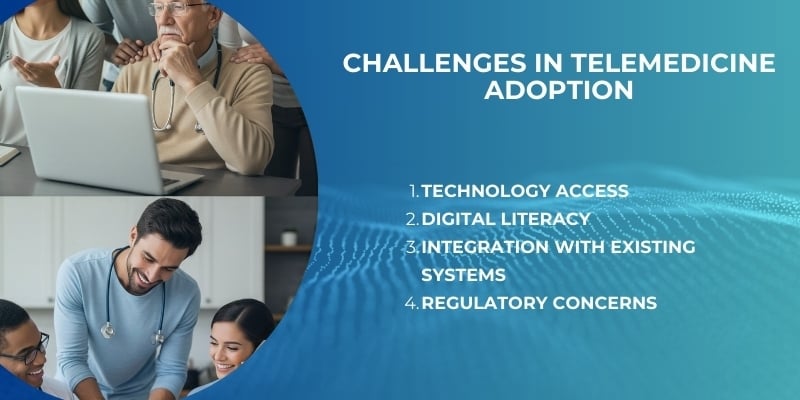
While telemedicine offers tremendous potential for reducing patient wait times and improving access to care, healthcare organizations face several real obstacles when implementing these digital health solutions.
Understanding these challenges and their solutions is essential for successful adoption and sustainable telemedicine programs.
Technology Access
Not every patient has reliable access to the technology required for telemedicine. High-speed internet remains unavailable in many rural and underserved communities.
Some patients lack smartphones, computers, or tablets with cameras and microphones capable of supporting video consultations. Others have devices but cannot afford sufficient data plans for regular virtual visits.
This digital divide creates a risk that telemedicine could inadvertently widen health disparities rather than reduce them, leaving vulnerable populations behind.
The Solution
Healthcare organizations can address technology access through several practical approaches.
- Offering multiple telemedicine modalities, including audio-only consultations for patients without video capabilities, ensures broader reach.
- Partnerships with community organizations, libraries, and schools can provide patients with access to devices and internet connections.
- Some health systems have implemented device lending programs, where patients can borrow tablets for the duration of their care.
- Mobile-friendly platforms that work on basic smartphones and consume minimal data also help bridge the access gap.
Digital Literacy
Even when technology is available, not all patients or providers possess the digital skills needed to use telemedicine effectively.
Older adults, individuals with limited education, and those who have never used video conferencing may struggle to connect to virtual visits, navigate patient portals, or communicate effectively through digital channels.
This digital literacy gap leads to frustrated patients, failed consultations, and increased burden on staff who must provide technical support.
Providers themselves may lack training in delivering care through a virtual medium, affecting clinical quality and patient rapport.
The Solution
Patient education programs are essential for improving digital literacy.
- Simple, printed guides with step-by-step instructions and pictures can be mailed to patients before their first virtual visit.
- Pre-visit test calls allow patients to practice connecting and troubleshoot issues with staff support.
- Family caregivers can be encouraged to assist patients during virtual consultations.
- For providers, dedicated training on virtual bedside manner, technical platform use, and adapting clinical workflows to telemedicine ensures they deliver high-quality care regardless of channel.
Integration with Existing Systems
Healthcare organizations operate complex technology ecosystems that include electronic health records (EHR), practice management systems, billing platforms, and clinical decision support tools.
Adding telemedicine as a new channel requires seamless integration with these existing systems to avoid creating data silos and duplicate workflows.
Without integration, providers may need to manually enter visit notes into multiple systems, schedule appointments across disconnected platforms, and struggle to access complete patient histories during virtual consultations. This fragmentation undermines efficiency and increases administrative burden.
The Solution
Secure, interoperable platforms designed for healthcare integration are the foundation of successful telemedicine programs.
- Organizations should prioritize telemedicine solutions that offer robust APIs for bidirectional data exchange with major EHR systems. This enables automatic synchronization of appointment details, clinical notes, and encounter data.
- Pre-built integrations with common healthcare platforms reduce implementation complexity and cost.
- A phased integration approach, starting with core functionality and expanding over time, allows organizations to manage change effectively while building toward a fully connected digital health ecosystem.
Regulatory Concerns
Telemedicine operates within a complex and evolving regulatory landscape. Licensing requirements often restrict providers from treating patients across state or national borders.
Reimbursement policies vary by payer and region, creating uncertainty about financial sustainability.
Privacy and security regulations, such as HIPAA in the United States, impose strict requirements on technology platforms and data handling.
During public health emergencies, many regulations were temporarily relaxed, creating uncertainty about long-term requirements as these flexibilities expire.
Managing this regulatory complexity requires expertise and resources that many healthcare organizations lack.
The Solution
Organizations can address regulatory concerns through several strategies.
- Partnering with telemedicine vendors that prioritize compliance ensures that platforms meet current regulatory standards and update as requirements evolve.
- Legal and compliance teams should be engaged early in telemedicine planning to review licensing requirements, reimbursement policies, and data protection obligations.
- Participating in industry associations and monitoring regulatory updates helps organizations anticipate changes rather than react to them.
- For cross-state practice, some organizations establish provider networks licensed in multiple states or partner with regional health systems to maintain compliance while expanding access.
Future of Telemedicine and Patient Wait Time Reduction
The future of telemedicine is bright and evolving rapidly. Several trends will amplify its impact on wait times.
- AI-assisted triage will become more sophisticated, using machine learning to assess symptoms, predict urgency, and recommend care pathways with increasing accuracy.
- Remote patient monitoring, using connected devices for blood pressure, glucose, and other vital signs, will enable proactive management of chronic conditions, reducing the need for in-person visits.
- Virtual-first care models, where telemedicine is the default entry point for non-emergency care, will become more common. Deeper integration with healthcare workflows will make virtual care an invisible, seamless part of the patient journey.
The World Health Organization recognizes telemedicine as a key enabler of timely, accessible, and patient-centered healthcare delivery. As these trends converge, the digital healthcare landscape will continue to evolve toward faster, more efficient, and more patient-centered care.
FAQs
What is the role of telemedicine in reducing patient wait times?
Telemedicine reduces wait times by shifting appropriate care to virtual channels, enabling faster appointment access, supporting digital triage that prioritizes urgent cases, and improving provider efficiency through streamlined workflows and reduced no-show rates.
How does telemedicine improve access to healthcare?
It improves access by eliminating geographic barriers, offering flexible scheduling including evenings and weekends, reducing travel time and costs for patients, and enabling quicker follow-up care after hospital discharge or in-person visits.
Can telemedicine replace in-person visits completely?
No, telemedicine complements rather than replaces in-person care. It is ideal for many routine, follow-up, and chronic care visits, but physical examination, procedures, and emergency care still require in-person consultation. Hybrid models offer the best of both.
Is telemedicine secure and compliant?
Yes, when implemented properly. Reputable telemedicine platforms use end-to-end encryption, secure data storage, access controls, and audit logs to protect patient information.
They are designed to comply with regulations like HIPAA and integrate securely with electronic health records.
Which healthcare services benefit most from telemedicine?
Telemedicine is highly effective for primary care, mental health services, chronic disease management, post-discharge follow-up, specialty consultations, and triage.
It is particularly valuable for conditions that do not require physical examination and for patients with limited access to in-person care.
Conclusion
The role of telemedicine in reducing patient wait times is transformative.
By enabling virtual consultations, supporting digital triage, improving scheduling and care coordination, and integrating seamlessly with in-person services, telemedicine addresses the root causes of long delays.
It improves access, enhances patient experience, and drives operational efficiency for healthcare organizations.
The evidence is clear from Duke’s Virtual Care Center, MUSC Health’s emergency department innovation, UC San Diego’s virtual transition clinic, and TeleSpecialists’ neurology service.
As patient expectations rise and healthcare demand grows, providers must adopt digital care models that combine virtual and in-person services for faster, more efficient care delivery.
Investing in telemedicine benefits is investing in a future where patients receive the right care at the right time, without unnecessary waiting.
BOOK A FREE DEMO