The moment a customer begins to wait, their experience is already in motion. A visitor enters a service environment with expectations, questions, and a limited tolerance for delay.
What follows, whether it is guidance or a lack of information, directly affects how the service is perceived. These subtle interactions form micro-moments in waiting, influencing customer perception long before service delivery begins.
Micro-moments are brief, often unnoticed interactions that occur during waiting periods. A service update, an indication of next steps, or access to basic information can affect how customers experience the wait.
When these moments are thoughtfully designed, they reduce frustration, improve satisfaction, and maintain engagement throughout the waiting period.
Organizations are increasingly using technologies such as digital kiosks, mobile applications, and real-time notifications to make better use of these moments.
This article explains how micro-moments can be applied during wait times, shares practical strategies, and examines applications across industries where waiting is an unavoidable part of the customer experience.
What are Micro-Moments in Customer Service?

In customer service, wait-time micro-moments are brief interactions that occur while customers wait for assistance or the next step in a service process.
These moments may involve receiving a service update, noticing guidance on what to expect next, or interacting with information that provides reassurance.
Although often overlooked, these brief interactions influence how customers perceive waiting and evaluate the service they receive.
Customer impatience during waiting periods can quickly affect loyalty and future behavior. According to Zendesk, 52% of customers will switch brands after a single poor experience. This shows how perceptions formed during waits can affect trust and long-term relationships.
When these moments are addressed intentionally, waiting becomes a point of connection rather than a source of frustration.
How Micro-Moments Improve Customer Satisfaction during Wait Times?
Micro-moments influence customer satisfaction by affecting how waiting is emotionally experienced. When customers receive timely information or meaningful interaction, waiting feels more manageable, even when service takes longer than expected.
Simple touchpoints that acknowledge a customer’s presence help reduce frustration and contribute to a more positive view of the service overall. This is where customer engagement during wait times becomes a determining factor in how satisfaction is formed.
From a psychological perspective, waiting is most frustrating when it feels uncertain or unproductive. Engagement redirects attention, reduces anxiety, and creates a sense of progress.
Retailers that provide queue updates or product information, healthcare providers that explain delays or next steps, and hospitality businesses that offer check-in notifications or mobile ordering all use these moments to keep customers mentally occupied and emotionally balanced. In many cases, customers remember how the wait felt rather than how long it lasted.
Businesses can improve satisfaction by adopting engagement-focused approaches such as SMS updates, mobile apps for queue status, digital signage with relevant information, and self-service kiosks that allow customers to interact while they wait.
These tools help maintain attention, reduce uncertainty, and support a more positive service experience.
The Role of Technology in Leveraging Micro-Moments
Technology supports a more structured and responsive waiting experience by keeping customers informed and connected throughout the service journey.
When communication and visibility are built into waiting environments, customers are less likely to feel uncertain or disengaged. Approaches centered on digital engagement during wait-time help maintain continuity in the experience, even when delays occur.
According to Forrester, 25% of US brands saw customer experience quality decline for a second consecutive year in its 2025 Customer Experience Index, reinforcing the need for stronger, more consistent experience management.
Digital signage, real-time notifications, interactive kiosks, and AI-powered chat interfaces give customers access to status updates, guidance, and simple interactions without depending entirely on staff availability.
These touchpoints reduce ambiguity and help steady emotional responses during waiting periods. When data is applied thoughtfully, on-screen information or messages can reflect context such as queue position or service type, making the wait feel more purposeful.
Queue management platforms and self-service technologies help organize customer flow, balance demand, and reduce congestion. Systems that combine journey visibility, analytics, and customer-facing communication support consistency across physical and digital environments.
For example, Wavetec provides queue management, digital signage, and self-service kiosk solutions that help organizations manage wait times while keeping customers informed and engaged throughout the journey.
Best Practices for Creating Micro Moments during Wait Times
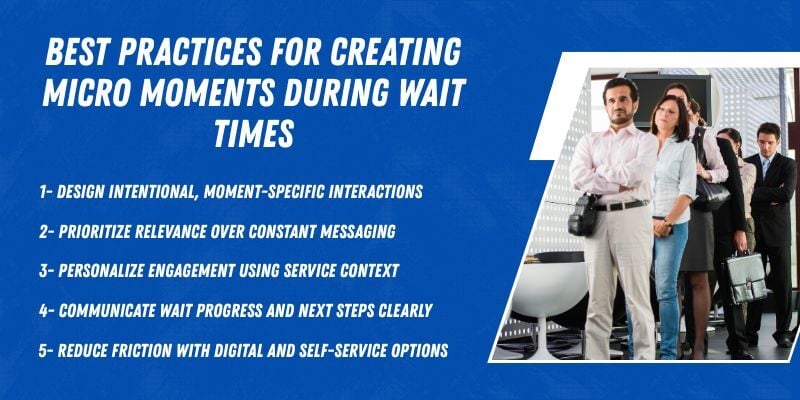
Effective wait-time experiences start with intentional design. Organizations that succeed focus on delivering the right interaction at the right moment, rather than overwhelming customers with constant messaging.
Well-planned wait-time engagement strategies prioritize relevance and timing so customers feel acknowledged throughout the wait without feeling distracted.
Personalized engagement is one of the most effective approaches. By using service context, queue position, or visit purpose, businesses can present information that aligns with what customers need at that moment.
This may include service-related guidance, wayfinding information, or simple prompts that help customers understand what to expect next. When personalization is subtle and situational, it supports engagement without interrupting the service flow.
Clear and consistent communication is equally important. Updates about progress, delays, or upcoming steps help manage expectations and reduce uncertainty.
Messaging delivered via digital displays, mobile notifications, or self-service interfaces reassures customers that the process is progressing and that their time is being considered.
Reducing friction during waits further improves the experience. Allowing customers to check in digitally, continue browsing, or access information without staff assistance removes unnecessary bottlenecks.
In retail, this approach has shown strong results. At Player 22 Sportswear in Italy, Wavetec implemented a queue management solution that allowed shoppers to join a queue and continue browsing while receiving updates on digital screens.
This approach improved customer flow and reduced perceived waiting pressure while maintaining operational efficiency.
How Micro-Moments Can Help Build Customer Loyalty?
Customer loyalty develops over time and is influenced by every interaction along the service journey, including waiting. The way customers are treated during delays affects how they remember the experience and whether they feel inclined to return.
By enhancing the waiting experience, organizations can build positive associations that support long-term customer relationships.
Customer behavior shows that when waiting feels managed and respectful, trust increases. Customers who receive timely information during delays are more likely to view the brand as attentive and customer-focused.
These impressions carry forward into future decisions, increasing the likelihood of repeat visits and recommendations.
To understand how waiting affects retention, organizations can link improvements in waiting interactions to customer satisfaction indicators such as Net Promoter Score (NPS) and Customer Satisfaction Score (CSAT).
Reviewing these indicators over time helps organizations see how attention to micro-moments supports sustained customer loyalty.
How to Overcome Challenges in Managing Micro-Moments?
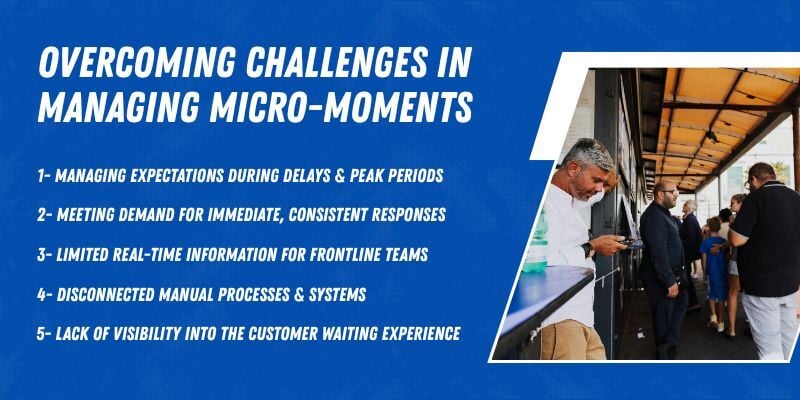
Managing micro-moments effectively can be difficult, especially during peak periods or unexpected delays. Micro-moments during service delays often expose weaknesses in service design, as customers are more sensitive to uncertainty and inconsistent communication.
Expectations are also rising. According to Zendesk, 72% of customers demand immediate service, which increases pressure on organizations to respond clearly and consistently, even when waits are unavoidable.
Operational constraints add further complexity. Frontline teams may lack timely or accurate information, making it harder to respond to customer questions while customers wait.
In some cases, manual processes slow response times or create inconsistent experiences across locations. When staff and digital systems are not aligned, waiting interactions can feel disjointed rather than coordinated.
Another frequent challenge is limited insight into how customers experience waiting. Without structured data and ongoing feedback, it becomes difficult to identify where frustration builds or which interactions require adjustment.
Regular data collection and feedback mechanisms allow organizations to track patterns and refine waiting interactions based on actual customer behavior.
Technology can help address these challenges when applied with intention. Automated feedback collection, real-time performance tracking, and centralized customer data improve consistency and responsiveness during delays.
Approaches such as AI-supported queue management and CRM-connected messaging help organizations maintain continuity during service interruptions, keeping customers informed and supported throughout the wait.
How Micro-Moments Influence Customer Behavior?
Customer behavior during service interactions is influenced by how waiting is handled. Moments of uncertainty or reassurance during a wait affect immediate decisions, such as whether a customer proceeds with a purchase, disengages, or leaves.
When waiting feels structured and predictable, customers are more likely to remain engaged and complete their intended actions.
Emotional response during waiting also affects longer-term behavior. Waiting can create frustration or calm depending on how expectations are managed.
Brief interactions that reduce uncertainty help steady emotions and contribute to how customers interpret the experience. These impressions influence how the brand is remembered and whether customers feel inclined to return or recommend the service.
Perceived wait time often has more influence on behavior than actual duration. Customers react to how well the wait aligns with their expectations, not to the length of time alone.
When expectations are communicated early and reinforced consistently, waiting feels more acceptable. Applying principles of consumer psychology, such as expectation setting and attention management, helps organizations more predictably guide customer behavior.
Frequently Asked Questions (FAQs)
How do businesses use micro-moments to enhance customer experience?
Businesses focus on timely acknowledgment, expectation setting, and purposeful interaction during waits. Addressing customer needs in these moments helps reduce uncertainty and improves how the service experience is perceived.
What technologies can help improve customer engagement during wait times?
Technologies such as queue management systems, digital signage, mobile notifications, and self-service interfaces help keep customers informed and connected while they wait.
How do micro-moments influence customer loyalty and retention?
Positive waiting interactions contribute to stronger emotional recall and higher confidence in the brand. Customers who feel considered during delays are more likely to return and recommend the service.
How can businesses overcome challenges in managing micro-moments?
Organizations can address challenges by improving system integration, using real-time data, and gathering feedback to refine waiting interactions. Coordinated technology and consistent communication help maintain continuity during delays.
Conclusion
Micro-moments during waiting influence how customers perceive service quality and how they feel about a brand. When these moments are handled with care, they help reduce frustration, support satisfaction, and encourage continued engagement.
Waiting shifts from a source of irritation to a managed part of the experience that customers remember positively.
Technology supports this approach by bringing structure, visibility, and consistency to waiting interactions. Queue management systems, self-service options, and real-time communication help organizations better meet customer expectations.
Solutions such as those provided by Wavetec offer a practical path for organizations seeking to improve how waiting is experienced and remembered.
BOOK A FREE DEMO