Governments worldwide are modernizing public services through digital technologies.
For decades, citizens have experienced the limitations of traditional service models: manual paperwork that requires multiple office visits, long waiting times at service centers, and fragmented systems that force citizens to repeat information across different agencies.
These inefficiencies create frustration for citizens and operational burdens for government employees.
Approximately 70% of global economies (140 countries) have formally committed to a “whole-of-government” approach to digital transformation, focusing on integrated digital service delivery across government agencies.
Digital transformation in government services represents a strategic shift that enables governments to digitize processes, automate service delivery, and improve citizen engagement.
By moving beyond paper-based workflows and siloed systems, governments can provide faster, more accessible services through integrated digital platforms.
This transformation touches every aspect of public service delivery, from online licensing portals to automated queue systems at service centers, creating a more responsive and efficient government.
What Is Digital Transformation in Government Services?
Digital transformation in government services refers to the integration of digital technologies into public sector processes to modernize service delivery.
It represents more than simply adding technology to existing processes: it involves reimagining how government services are designed, delivered, and experienced by citizens.
Government digital transformation replaces manual, paper-based processes with digital platforms and automated service systems.
Instead of requiring citizens to visit multiple offices, fill out physical forms, and wait weeks for approvals, digital government services enable online applications, automated document processing, and real-time status updates.
This shift fundamentally changes the relationship between governments and citizens, making interactions more convenient and efficient.
At its core, digital transformation in government is about creating a government that works for citizens rather than expecting citizens to navigate complex government structures.
By digitizing backend processes and creating unified front-end service portals, governments can deliver services that are accessible anytime, anywhere, and through channels that citizens prefer to use.
Why Governments Are Prioritizing Digital Transformation
Governments across the globe are investing heavily in digital transformation for several compelling reasons that address both operational needs and citizen expectations.
- Improving citizen service accessibility is a primary driver. Citizens increasingly expect government services to match the convenience they experience in the private sector; online banking, e-commerce, and on-demand services have set new standards for accessibility. Digital government services meet these expectations by enabling 24/7 access to applications, payments, and information without requiring office visits or phone calls.
- Increasing operational efficiency helps governments do more with limited resources. By automating routine processes, digitizing records, and eliminating redundant data entry, government agencies can reduce administrative costs and redirect staff to higher-value work. This efficiency is particularly important as governments face budget constraints while demand for services continues to grow.
- Enhancing transparency and accountability builds trust between governments and citizens. Digital platforms provide visibility into how services are delivered, how decisions are made, and how public resources are used. Citizens can track the status of applications, access public data, and hold agencies accountable for service levels.
- Supporting smart city initiatives requires digital infrastructure that connects government services with urban systems. As cities invest in smart technologies for transportation, utilities, and public safety, digital government platforms provide the citizen-facing interface for these services.
Approximately 60%–65% of government officials report satisfaction with current digital transformation initiatives, while public satisfaction levels remain slightly lower at around 50%.
Key Technologies Driving Digital Government Services
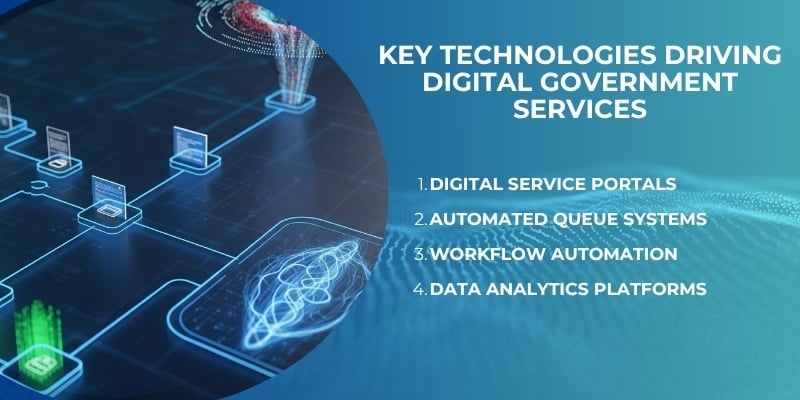
Several core technologies form the foundation of modern digital public service delivery.
Digital Service Portals
Centralized online portals serve as the primary interface between citizens and government services. These platforms allow citizens to access multiple services (from driver’s license renewals to business permits) through a single login.
The best portals integrate data across agencies, so citizens never need to provide the same information twice. They also provide personalized dashboards where citizens can track application status, receive notifications, and manage their interactions with the government.
Automated Queue Systems
Physical service centers remain essential for transactions that require in-person interaction, but digital queue systems transform how these centers operate.
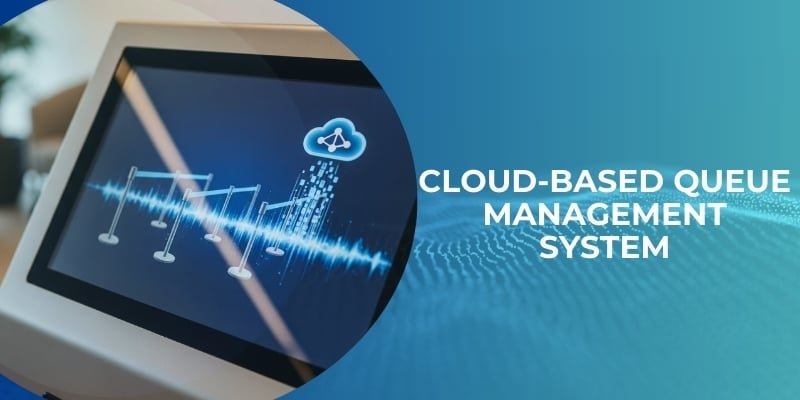
Queue management systems allow citizens to join queues remotely before arriving, reducing wait times and eliminating the uncertainty of walk-in visits.
Digital check-in at kiosks or mobile apps streamlines arrival processes, and real-time queue monitoring helps managers optimize staffing to meet demand.
Workflow Automation
Behind-the-scenes automation accelerates service delivery by eliminating manual processing steps.
Digital workflow tools route applications to the appropriate staff, enforce approval processes, and automatically generate notifications. This automation reduces processing times from weeks to days or even hours for routine transactions.
Data Analytics Platforms
Analytics tools help governments understand service demand, identify bottlenecks, and measure performance.
By analyzing patterns in service usage, governments can allocate resources more effectively, predict peak periods, and continuously improve service delivery.
Improving Citizen Experience Through Digital Services
Digital technologies fundamentally improve citizen experience by addressing the pain points that have long characterized government interactions.
- Reducing waiting times is perhaps the most visible improvement. When citizens can complete transactions online, they eliminate waiting entirely. For services that require in-person attendance, digital appointment scheduling and virtual queuing ensure that citizens spend minimal time in waiting areas. Queue analytics provide managers with real-time visibility into service performance, enabling immediate adjustments when wait times exceed targets.
- Simplifying service access makes government interactions less daunting. Instead of requiring citizens to understand complex agency structures and processes, digital platforms present services in intuitive, task-oriented ways. Citizens can find what they need through search functions, guided workflows, and clear instructions rather than navigating bureaucratic complexity.
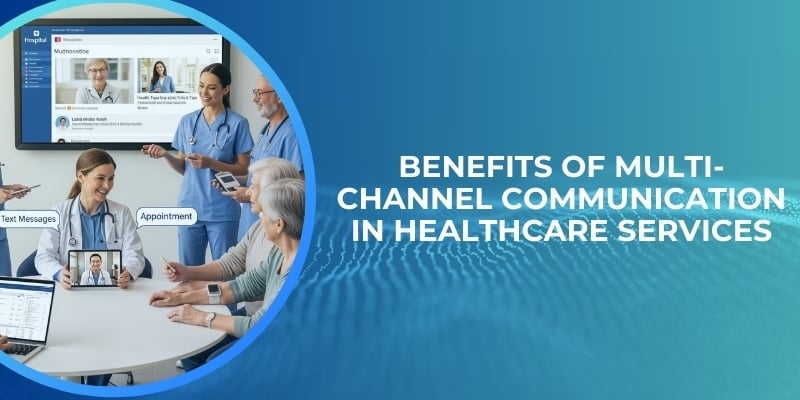
- Providing convenient channels lets citizens choose how they interact with the government. Some prefer online portals for routine transactions, while others want mobile apps for on-the-go access. Some citizens still value in-person service centers for complex matters or when they need assistance. Digital government services provide consistent experiences across all these channels, ensuring that citizens can use whichever channel suits their needs.
Omnichannel Citizen Service Delivery
Modern governments deliver services across multiple channels that work together seamlessly, creating an omnichannel experience that meets citizens where they are.
- Online portals serve as comprehensive service hubs where citizens can access information, complete applications, make payments, and track progress. Well-designed portals integrate with backend systems to provide real-time updates and eliminate manual follow-up.
- Mobile applications extend government services to smartphones, enabling citizens to complete transactions on the go. Mobile apps are particularly valuable for services that citizens access frequently, such as public transit payments or property tax lookups.
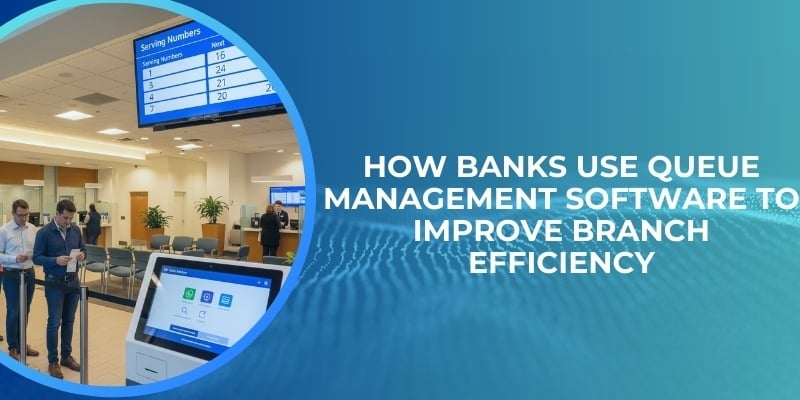
- Service centers remain essential for complex transactions, citizens who need assistance, and those who prefer face-to-face interaction. Digital technologies transform these centers from places of long waits and frustration to efficient, welcoming environments. Self-service kiosks allow citizens to complete routine transactions without waiting for staff assistance, freeing employees to focus on complex cases.
Call centers integrated with digital platforms provide consistent information and service regardless of the channel citizens use. When citizens call, staff can access the same information available online, providing seamless support across channels.
Role of Digital Signage in Government Service Centers
Digital signage has become an essential tool for improving service center operations and citizen experience. Strategically placed displays serve multiple functions that benefit both citizens and staff.
- Communicating updates keeps citizens informed about service availability, wait times, and important announcements. When delays occur or systems experience issues, digital signage provides immediate notification to everyone in the facility.
- Guiding citizens through service center workflows reduces confusion and streamlines operations. Displays can show which counters are open, direct citizens to specific service areas, and provide instructions for completing transactions.
- Reducing perceived waiting times is a significant benefit of digital signage. When citizens can see their position in the queue and estimated wait times, they experience less anxiety and perceive waits as shorter. Engaging content (from community information to educational materials) provides distraction that makes waiting time feel more productive.
Benefits of Digital Transformation for Public Sector Services
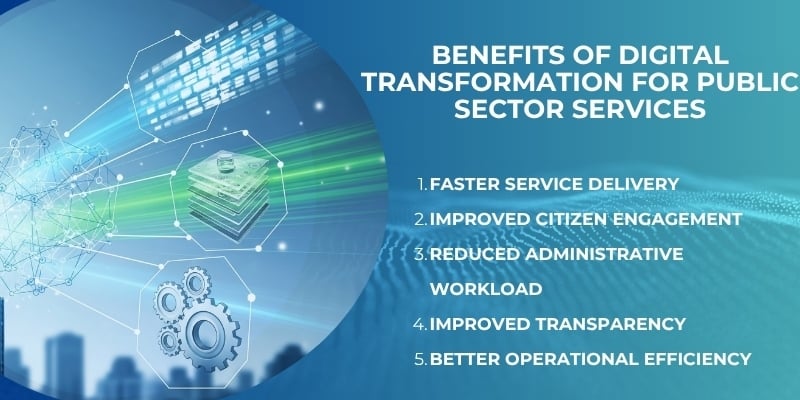
Digital transformation delivers measurable benefits across all dimensions of public sector service delivery.
- Faster service delivery is the most immediate benefit. Digital processes eliminate manual steps, reduce approval times, and enable real-time status tracking. Services that once took weeks can often be completed in hours or days, significantly improving the citizen experience.
- Improved citizen engagement results from accessible, convenient service channels. When citizens can interact with the government on their own terms, they are more likely to complete transactions on time and maintain positive relationships with government agencies.
- Reduced administrative workload frees government employees to focus on complex cases and value-added work. Automation handles routine tasks, while digital tools provide better information for decision-making.
- Improved transparency builds trust by making government operations visible. Citizens can see how long services take, track their applications, and access public data that was previously difficult to obtain.
- Better operational efficiency enables governments to deliver more services with existing resources. By optimizing workflows and resource allocation, digital transformation helps governments do more without increasing budgets.
Designing Efficient Citizen Service Centers
Modern service center design must support digital government services while creating environments that facilitate efficient citizen flow. Physical spaces and digital systems must work together seamlessly.
- Layout considerations start with understanding how citizens move through the service journey. Registration areas should provide easy access to self-service kiosks while maintaining clear sightlines to staffed stations. Waiting areas must accommodate expected volumes while providing comfortable spaces that reduce stress.
- Technology integration requires that physical infrastructure support digital systems. Power and network connectivity must be available where self-service kiosks and digital signage are placed. Staff workstations need integrated systems that provide real-time queue information and citizen data.
- Accessibility considerations ensure that all citizens can use services regardless of physical ability or technology comfort level. Service areas must comply with accessibility standards, and design should accommodate citizens who need additional assistance. Service area design expertise helps governments create spaces that balance efficiency, accessibility, and positive citizen experience.
Challenges Governments Face During Digital Transformation
Digital transformation in government is not without significant challenges that organizations must address to succeed.
- Legacy infrastructure often creates the greatest barrier. Many government agencies operate on decades-old systems that were never designed to integrate with modern platforms. Replacing or modernizing these systems requires substantial investment and careful planning to avoid disrupting essential services.
- Data integration issues arise when different agencies store information in incompatible formats or systems. Creating unified citizen views requires complex data integration that must respect privacy regulations and security requirements.
- Cybersecurity concerns intensify as government services move online. Digital platforms must protect sensitive citizen data while maintaining availability for legitimate users. Government systems are frequent targets for cyberattacks, making security a paramount concern.
- Digital inclusion barriers mean that not all citizens can access digital services equally. Some lack internet access, digital literacy, or the devices needed to use online services. Governments must maintain alternative service channels while working to close digital divides.
Future of Digital Government Services
Emerging trends point to increasingly sophisticated digital government services that leverage artificial intelligence, predictive analytics, and integrated platforms.
- AI-driven public services will automate more complex interactions. Chatbots and virtual assistants will handle routine inquiries, while AI systems will help process applications and detect fraud. Machine learning will enable personalized service recommendations based on citizen needs and history.
- Smart city service platforms will integrate government services with urban infrastructure. Citizens will interact with unified platforms that connect transportation, utilities, public safety, and administrative services through a single interface.
- Predictive service analytics will enable proactive government. Rather than waiting for citizens to request services, predictive systems will identify emerging needs and initiate service delivery automatically. This approach could transform how governments handle permitting, licensing, and social services.
- Integrated citizen journey platforms will track interactions across agencies and channels, providing a complete view of citizen relationships with the government. This integration will eliminate the need for citizens to repeat information or navigate complex referral processes.
Real-World Use Cases of Digital Government Services
Digital licensing systems enable businesses and professionals to apply for, renew, and manage licenses entirely online. Automated workflows route applications to appropriate reviewers, and digital dashboards provide real-time status tracking.
- Online tax services allow citizens and businesses to file returns, make payments, and access records through secure portals. Integrated systems calculate obligations, flag potential errors, and provide instant confirmation of completed transactions.
- Digital permit applications for construction, events, or business operations replace paper-based processes with streamlined digital workflows. Applicants can submit documents, pay fees, and track approval status without office visits.
- Automated citizen service centers combine self-service kiosks, digital signage, and queue management to create efficient service environments. Citizens can complete routine transactions at kiosks while staff focus on complex cases, reducing wait times and improving satisfaction.
Frequently Asked Questions About Digital Transformation in Government Services
What is digital transformation in government services?
Digital transformation in government services refers to the use of digital technologies to modernize public service delivery, streamline administrative processes, and improve citizen access to services through online platforms and automated systems. It represents a fundamental shift in how governments operate and serve citizens.
Why is digital transformation important for governments?
Digital transformation helps governments improve service efficiency, reduce operational costs, enhance transparency, and provide faster, more accessible services for citizens. It enables governments to meet rising citizen expectations while managing limited resources effectively.
What technologies support digital government services?
Key technologies include digital service portals, queue management systems, self-service kiosks, data analytics platforms, and workflow automation tools. These technologies work together to create integrated, efficient service delivery platforms.
What challenges do governments face during digital transformation?
Common challenges include legacy infrastructure that resists modernization, data integration issues across agencies, cybersecurity risks that require constant vigilance, and the need to ensure digital accessibility for all citizens regardless of technology access or literacy.
Conclusion
Digital transformation in government services plays a crucial role in improving public service delivery and citizen experience.
As governments worldwide face rising demand for services and expectations for convenience, digital technologies provide the tools needed to modernize operations, improve transparency, and deliver more efficient services.
The shift from manual, paper-based processes to integrated digital platforms represents a fundamental change in how governments serve citizens.
By implementing digital government services, public sector organizations can reduce waiting times, simplify access, and create service experiences that meet modern expectations.
The path forward requires addressing challenges of legacy systems, cybersecurity, and digital inclusion, but the benefits of transformation are clear: more efficient operations, better citizen engagement, and governments that are truly responsive to the people they serve.
BOOK A FREE DEMO