Many travel agencies still rely on printed posters, verbal explanations, and static displays to promote trips and services. This often leads to missed opportunities, repeated questions from customers, and poor use of waiting time.
Digital signage for travel agencies solves these problems by turning screens into active sales and information tools.
This guide explains how to use digital signage in your travel agency the right way, covering screen placement, content ideas, daily use, and planning basics so agencies can get real value instead of just hanging a screen on the wall.
Digital signage also makes it easier to keep offers fresh, share updates quickly, and guide customers without adding pressure on staff.
The digital signage market reached USD 27.66 billion in 2025 and is projected to grow to USD 41.39 billion by 2030 at a CAGR of 8.39 percent, showing how widely businesses now rely on managed screen networks as part of their operations and customer experience strategy.
Many travel agencies start with platforms like Wavetec digital signage solutions to manage content, updates, and screens from one place.
What Digital Signage Means for a Travel Agency
Digital signage in a travel agency refers to using digital screens connected to software that controls what content appears, when it appears, and where it appears. These screens can show travel deals, destination videos, real time information, and helpful guidance for visitors.
At the center of this setup is a digital signage CMS that allows staff to upload content, set schedules, and make updates without needing technical skills.
For travel agencies, digital signage is not just about advertising. It is about managing information flow inside the office.
Content scheduling allows agencies to rotate messages during the day, such as promotions in the morning, destination inspiration during peak hours, and service reminders later in the day. This keeps screens useful instead of repetitive.
Digital signage also supports real time updates, which is critical in travel. Weather alerts, general advisory notices, or peak time instructions can be pushed to screens instantly. This helps agencies stay accurate and reliable without printing new material every time something changes.
Why Digital Signage Works in Travel Agencies
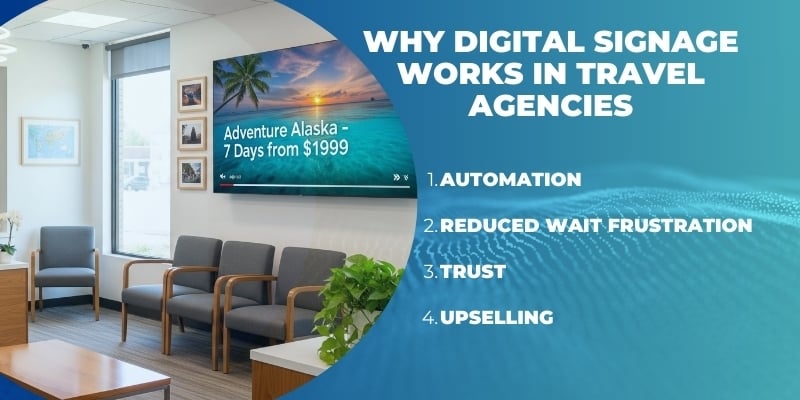
Digital signage works well in travel agencies because it matches how customers think and behave. People entering a travel office are usually open to ideas, visually driven, and waiting for service. Screens take advantage of this mindset.
- One key benefit is automation. Travel promotions on digital signage can run all day without staff repeating the same information. Instead of explaining deals verbally to every walk in customer, screens handle the first layer of communication. This frees staff to focus on consultations and bookings.
- Another benefit is reduced wait frustration. Waiting area screens give customers something useful to look at while they wait. Showing destination videos, service steps, or expected wait time helps people feel informed and calmer. Agencies that use signage for this purpose often see fewer complaints about delays.
- Digital signage also builds trust. Showing customer reviews, partner airline logos, and booking guarantees reassures customers that they are dealing with a reliable agency. A customer reviews display placed near consultation desks quietly supports the sales conversation without pushing too hard.
- Upselling becomes easier as well. Add on services like travel insurance, airport transfers, or visa support can be shown clearly on screens. Customers often notice these offers on their own and ask about them, which feels less sales driven.
Digital signage in tourism reduces manual efforts by automating promotions and crowd control, enhancing efficiency in agencies.
Many agencies also use signage to improve perceived wait time and customer flow, which is explained well in Wavetec’s guide on how digital signage lessens perceived wait times and boosts sales.
Best Places to Install Screens in Your Agency
Screen placement decides whether digital signage will help or simply blend into the background. Each location inside a travel agency should serve a clear purpose.
- The storefront is the first opportunity. A screen facing outside can attract foot traffic by showing top destinations, limited time offers, or seasonal travel ideas. Bright visuals work well here, especially if the screen is visible from the street.
- The reception area is where guidance matters. A screen near the entrance can explain service steps, display queue numbers if used, or highlight what the agency specializes in. This reduces confusion and sets expectations early.
- Waiting areas are ideal for engagement. Waiting area screens can show destination inspiration, customer stories, and service tips. This keeps customers interested and more open to discussing options once they meet an agent.
- Consultation desks benefit from trust focused content. Screens behind or beside agents can quietly show reviews, certifications, or popular packages. This supports the conversation without interrupting it.
- Checkout areas are good for last minute reminders. Payment options, add ons, or follow up services can be displayed here. This often leads to extra questions and small add on sales.
Agencies using large format or vertical screens often explore solutions like Wavetec Vertica displays, which are designed for clear viewing in compact spaces while supporting wayfinding screens and promotional content.
Travel Agency Digital Signage Content Ideas (That Drive Inquiries)
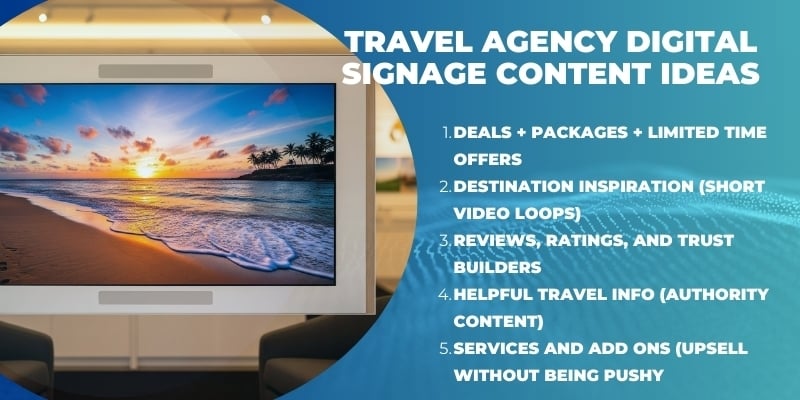
Effective digital signage content for travel agencies is built around content pillars. Each pillar serves a purpose and pushes customers one step closer to asking questions or making contact.
Good content does not overload viewers. It focuses on one clear message at a time and rotates regularly. Agencies that plan content in advance usually see better engagement and fewer ignored screens.
Many follow guidance similar to Wavetec’s digital signage marketing strategy to keep content structured and goal driven.
-
Deals + Packages + Limited Time Offers
Deals are often the first thing customers notice. Screens should show a clear from price, travel dates, what is included, and how many seats are left if applicable. Limited availability creates urgency without pressure.
A clear call to action is important. A QR code can lead to WhatsApp chat, a lead form, or a booking page. This allows customers to act immediately instead of waiting to speak to someone.
Travel promotions on digital signage work best when they are simple and updated often. Old or expired offers reduce trust quickly.
-
Destination Inspiration (Short Video Loops)
Destination videos help customers imagine the trip. Short video loops of 10 to 20 seconds work better than long clips. These can be grouped by themes like honeymoon, family travel, or adventure.
Using playlists helps agencies rotate content without manual work. Templates keep branding consistent while saving time. Each playlist should end with one clear message, such as asking customers to speak to an agent or scan a code.
This type of content is especially effective during peak hours when customers are waiting.
-
Reviews, Ratings, and Trust Builders
Trust content supports decisions. Showing real testimonials, star ratings, or partner logos builds confidence. A customer reviews display placed near desks works quietly but effectively.
Agencies can also include simple proof points like years of experience, number of happy customers, or service guarantees. These details reassure first time visitors who may be comparing options.
Trust content should feel genuine and not exaggerated.
-
Helpful Travel Info (Authority Content)
Helpful information positions the agency as knowledgeable. Screens can rotate general visa reminders, baggage rules, currency exchange tips, and seasonal travel advice.
Real time travel updates on screens are useful when shared carefully. General weather updates or advisory notices help customers feel informed without causing concern.
This type of content reduces repetitive questions and makes staff interactions more focused.
-
Services and Add Ons (Upsell Without Being Pushy)
Add on services should be explained simply. Insurance, transfers, visa support, corporate travel, or group tours can be shown with one or two benefits.
The goal is awareness, not pressure. When customers see these services clearly listed, they often ask about them naturally during discussions.
Real Time Updates to Display (So Your Screens Stay Useful)
Real time updates keep digital signage relevant. Travel agencies deal with changing conditions, and screens should reflect that reality.
Live content can include general route disruption notices, weather alerts for popular destinations, or guidance during busy hours. For example, screens can remind customers to have documents ready during peak times.
Urgent updates should be clear and temporary. Once the situation passes, content should return to normal programming. This avoids confusion and keeps screens trustworthy.
Travel agency digital signage works best when updates are controlled from one system. Remote management allows staff to push changes across all screens without visiting each one. This is especially useful for agencies with multiple branches.
How to Choose Digital Signage Software for a Travel Agency
Choosing the right digital signage software for travel agencies is one of the most important decisions in the entire setup.
The screen itself does not do much on its own. The software controls what plays, when it plays, and how easily updates can be made. For travel agencies, software should reduce daily work, not add more steps.
- A good system starts with an easy digital signage CMS. Staff should be able to upload images, videos, or text without design or technical training. Simple drag and drop tools, ready made templates, and clear menus make daily updates faster. When software feels complicated, screens often stay outdated.
- Content scheduling is another must. Travel agencies deal with time sensitive offers, seasonal packages, and daily rush hours. Scheduling allows content to change automatically based on time and day. Morning promotions, peak hour destination videos, and end of day service reminders can all run without manual changes.
- Remote management matters even for single location agencies. It allows content changes, screen restarts, and updates from one dashboard. For agencies with more than one branch, remote control becomes essential. Managers can push the same campaign across all locations in minutes.
- User roles and access control help keep things organized. Not every staff member should have full access. Role based access allows managers to approve content while front desk staff handle basic updates.
- Analytics should not be complex. Simple reports showing which content runs most, how often QR codes are scanned, or which offers stay on screen longest are enough. Agencies can use these insights to adjust messaging and focus on what works.
Many agencies start with platforms like Wavetec digital signage solutions because they combine CMS tools, remote control, and analytics in one system.
Hardware Basics (Screens, Media Player, Connectivity)
Digital signage hardware does not need to be confusing. Most travel agencies use a simple stack that includes a screen, a media player, and the software that connects them.
- The screen choice depends on placement. For storefronts, brightness is key. An LED display that stays visible in daylight helps attract attention from outside. Indoor screens do not need the same brightness, but clarity and size still matter.
- Screen size should match viewing distance. Small screens placed too far away often get ignored. Larger screens work better in waiting areas and near entrances. Some agencies use a video wall to create impact, especially in larger offices or malls.
- A media player connects the screen to the software. It handles playback and ensures content runs smoothly. Reliable players reduce crashes and blank screens. Connectivity can be wired or wireless, but stability is more important than speed.
Agencies looking for reliable components often review media player solutions, which are designed to support continuous playback and easy integration with signage software.
A Simple 7 Step Setup Plan (Non Technical)
Many travel agencies delay digital signage because they think setup is complex. In reality, a simple step by step plan keeps things manageable.
- The first step is setting clear goals. Decide what the screen should achieve. This could be more inquiries, fewer repeated questions, or better waiting experience. Clear goals guide content choices.
- Next is deciding placements. Choose screen locations based on customer movement. Entrance, waiting area, and consultation desks usually come first.
- The third step is planning content. List content types such as deals, destination videos, reviews, and service info. Decide how often each type should appear.
- Choosing software comes next. Select a system that fits your size and staff skills. Avoid features you will never use.
- Installation follows. Mount screens securely, connect media players, and test visibility from customer angles.
- Training staff is critical. Show them how to update content, schedule playlists, and report issues. Keep training simple and practical.
- The final step is weekly review. Check what content ran, what questions customers asked, and what can be improved. Small adjustments each week lead to better results over time.
Weekly Content Plan (Copy and Paste Rotation)
A weekly content plan keeps screens fresh without daily effort. Travel agencies benefit from predictable rotation.
- On weekdays, focus on deals and packages. Monday to Wednesday can highlight popular destinations and current offers. Thursday and Friday are good for weekend getaways and short trips.
- Destination inspiration works well every day but especially during busy hours. Short videos or image slides keep interest high.
- Customer reviews and trust messages can run consistently in the background. These support decisions without needing attention.
- Helpful travel tips fit well in the middle of the day when customers are waiting. Visa reminders, baggage tips, and seasonal advice reduce questions.
- Weekend content can focus on family trips, group tours, or upcoming holiday seasons.
Agencies that follow structured planning often use guidance similar to digital signage marketing strategy to build balanced playlists and avoid repetition.
Design Rules That Make People Read Fast
Design decides whether content is noticed or ignored. Travel agency screens should be easy to read at a glance.
- One message per slide is the most important rule. Too much text overwhelms viewers. Short sentences and clear headings work best.
- Font size should be large enough to read from a distance. High contrast between text and background improves visibility. Light text on dark backgrounds or dark text on light backgrounds usually works well.
- Slides should stay on screen long enough to read. Five to ten seconds is a good range for simple messages. Video loops should be short and smooth.
- Every promotional slide should include a clear call to action. This could be a QR code, a prompt to talk to staff, or a simple next step.
- QR codes should be placed where they are easy to scan. Avoid corners or moving backgrounds behind them.
How to Measure Results (So It Is Not Just a TV)
Digital signage should deliver measurable value. Without tracking, screens become decoration.
- Start with simple metrics. Count how many QR scans happen each day. Track how many inquiries mention an offer shown on screen.
- Booking conversions matter more than views. If certain deals lead to more bookings, those offers deserve more screen time.
- Staff feedback is useful too. Ask agents which screen content leads to better conversations. This insight often reveals what analytics miss.
- Digital signage can also reduce repeat questions. When customers already know service steps or offers, consultations become shorter and more focused.
Many agencies learn how to link signage to performance by following approaches outlined in our guide on how digital signage lessens perceived wait times and boosts sales.
Common Mistakes Travel Agencies Make (And Fixes)
One common mistake is overcrowding screens with text. This makes content hard to read and easy to ignore. The fix is shorter messages and more rotation.
Another issue is stale content. Old deals or expired offers damage trust. A weekly review process prevents this.
Some agencies forget to include calls to action. Without clear next steps, viewers do not know what to do. Simple prompts fix this.
Poor placement is also common. Screens placed too high, too low, or in low traffic areas get little attention. Observing customer movement helps choose better spots.
Ignoring analytics is another problem. Without reviewing results, agencies cannot improve. Even basic tracking helps guide decisions.
Sustainability is sometimes overlooked. Agencies interested in responsible practices can learn eco-friendly practices in digital signage, which can help them reduce waste and energy use.
Internal communication is another missed use. Screens can support staff messaging when used wisely.
FAQs
What should a travel agency display on digital signage
Travel agencies should display current deals, destination inspiration, customer reviews, helpful travel tips, and service information that answers common questions.
Where should screens be placed in a small travel office
Screens work best near the entrance, waiting area, and consultation desks where customers naturally look and spend time.
How often should travel deals be updated
Deals should be reviewed weekly and updated as soon as prices or availability change to maintain trust.
Do travel agencies need digital signage software
Yes, software is needed to manage content, schedule updates, and control screens from one place.
How can I measure if digital signage increases bookings
Track QR scans, inquiries linked to screen offers, and booking conversions related to displayed promotions.
Conclusion
Digital signage for travel agencies works best when placement, content, and management are planned together. Clear screen locations, strong content pillars, simple software, and regular review turn screens into active sales and service tools.
Starting small with one screen and one playlist allows agencies to test what works before expanding. With the right digital signage software for travel agencies, screens become easier to manage, more useful for customers, and more valuable for the business over time.
BOOK A FREE DEMO