The journey through a major airport or transit hub often begins with optimism but can quickly dissolve into a stressful test of patience.
Travelers cruise through a maze of long queues, scramble to interpret sudden gate changes on distant boards, and feel the anxiety of uncertainty when announcements are unclear.
This gap between the hoped for smooth journey and the chaotic reality is where frustration takes root. Today, a transformative solution: digital signage in travel industry; is rewriting this story.
Dynamic digital signage is systematically bridging these pain points by delivering unparalleled clarity, engaging content, and personalized guidance at every touchpoint. It turns anonymous crowds into informed passengers and chaotic terminals into navigable, even enjoyable, spaces. This shift is not a niche trend but a global movement.
The digital signage market is expected to grow from USD 24.41 billion in 2025 to USD 39.79 billion by 2033, with transportation and hospitality driving a significant portion of this adoption as they seek to modernize the passenger experience.
The New Face of Travel Communication
For decades, the flow of information in travel hubs was static, one way, and often inadequate. Passengers relied on monolithic departure boards with clattering letters, easily missed PA announcements, and fixed signs that could not adapt to real time changes. This environment created a common experience: confusion.
Digital signage solutions end this era by replacing passive bulletins with dynamic, real time communication that actively manages passenger flow and understanding. This transformation is foundational, turning information dissemination from a reactive task into a proactive strategy for crowd management and experience enhancement.
The change is not merely technological but psychological. A central content management system allows operators to update every screen across a vast facility instantly. When a gate changes or a flight is delayed, that information appears simultaneously on displays at check in, security, corridors, and the departure gate itself.
This consistency creates a single, trusted source of truth, eliminating the rumors and panic that spread when information is scarce or contradictory. This capability is the core of modern travel information displays.
By providing clear, visual, and constant updates, these systems build passenger trust and reduce the cognitive load of travel, allowing people to focus on their journey rather than on decoding their environment.
Enhancing Passenger Experience Through Real Time Information
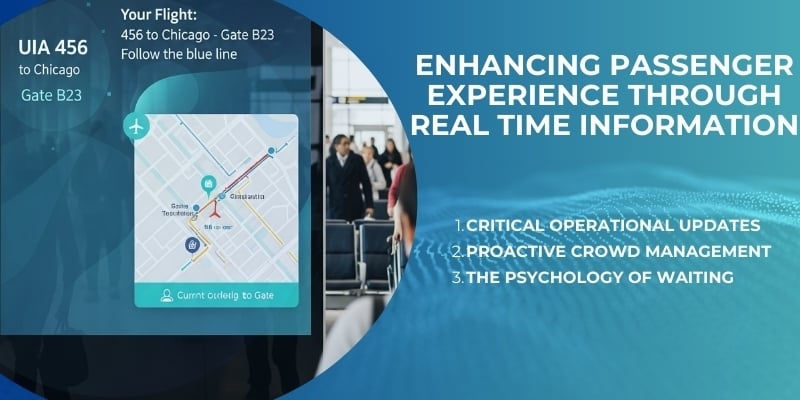
The most important value of digital signage in transit environments is its power to eliminate uncertainty. The stress of travel is less about movement itself and more about the unknown.
Where is my gate? How long is security? Is my flight on time? Digital signage directly addresses this by delivering live, actionable information that empowers passengers and restores a sense of control and calm.
Critical Operational Updates
The most immediate application is the display of integrated, real time flight information. Advanced systems connect directly to airline and airport operational databases to show not just schedules, but live gate changes, delay reasons with updated estimates, and precise baggage carousel assignments the moment they are confirmed. This allows travelers to adjust their plans instantly, avoiding unnecessary rushes or long waits at incorrect gates.
Proactive Crowd Management
Digital signs are powerful tools for managing the physical flow of people. By displaying live wait times at security checkpoints, customs, or transfer desks, passengers can make informed choices.
Operators can use these displays to dynamically redirect foot traffic to less congested areas, easing bottlenecks before they reach critical mass. This is essential for maintaining smooth operations during peak periods and improving overall terminal efficiency.
The Psychology of Waiting
A key insight in passenger experience is that perceived wait time often matters more than actual wait time. A 30 minute wait spent in boredom feels much longer than 30 minutes spent engaged.
Digital signage directly improves this perception. By showing news, captivating destination highlights, flight progress maps, or curated entertainment, screens provide a positive distraction. This principle is central to reducing traveler frustration. Informed and occupied passengers report significantly lower stress levels.
Implementing solutions focused on the passenger experience with digital signage demonstrates that managing perception is a critical component of managing the journey. This is a core function of how digital signage lessens perceived wait times and boosts sales by keeping passengers informed and engaged.
Boosting Impulse Purchases in Travel Retail

Airports and major train stations represent a unique retail environment: a captive audience with time to spend and often a mindset open to discretionary purchases.
Digital signage transforms these commercial spaces from static marketplaces into dynamic, context aware retail platforms. It moves far beyond the simple digital poster to become an intelligent tool for revenue generation.
The effectiveness is rooted in strategic relevance and impeccable timing. A networked signage system allows for sophisticated, zone based campaign management. Content can be scheduled by time of day, promoting coffee and pastries in the morning and fine wines or gifts in the evening.
More powerfully, it can react to real time operational data. Screens near gates for delayed flights can instantly switch to promoting nearby lounge access, premium meal deals at sit down restaurants, or last minute duty free offers on luxury goods. This hyper relevance captures passenger attention at the precise moment of need or opportunity.
The commercial impact is both measurable and substantial. Industry analysis shows that in travel retail, digital signage increases impulse purchases by 15 to 25 percent by showing personalized promotions linked to flight delays or gate changes.
This statistic highlights a crucial point: targeted airport promotions delivered via digital channels are no longer just background advertising. They are a valuable service that meets the passenger’s immediate need for options and distraction, while simultaneously driving significant ancillary revenue for airports, retailers, and concessionaires.
This synergy between passenger utility and commercial performance is a symbol of well executed travel retail digital signage and a proven way that digital signage impacts customer behaviour in a commercial setting.
Creating Immersive Visuals with Airport Video Walls
For creating unforgettable first impressions and communicating with large crowds simultaneously, video walls represent the pinnacle of digital signage. These large scale LED displays are more than just big screens. They are architectural landmarks that define the visual character and energy of a terminal space.
They display breathtaking destination videos, major international brand campaigns, live global sports events, or artistic digital installations, dramatically enhancing the ambiance and engaging travelers on an emotional level.
Their functional utility is equally commanding. During standard operations, a master video wall can serve as an ultra clear, centralized flight information hub visible from across a vast departure hall.
In times of widespread disruption, such as weather events, it becomes an indispensable tool for mass communication, displaying clear, calming instructions and unified updates to thousands of passengers at once, preventing misinformation and panic.
Specialized airport video walls are engineered for extreme environments, offering exceptional brightness to combat direct sunlight and robust reliability for 24/7 operation.
By merging stunning visual engagement with critical mass messaging, video walls fulfill a dual role as both the impressive flagship and the reliable command center of modern terminal communication.
Streamlining Navigation and Wayfinding
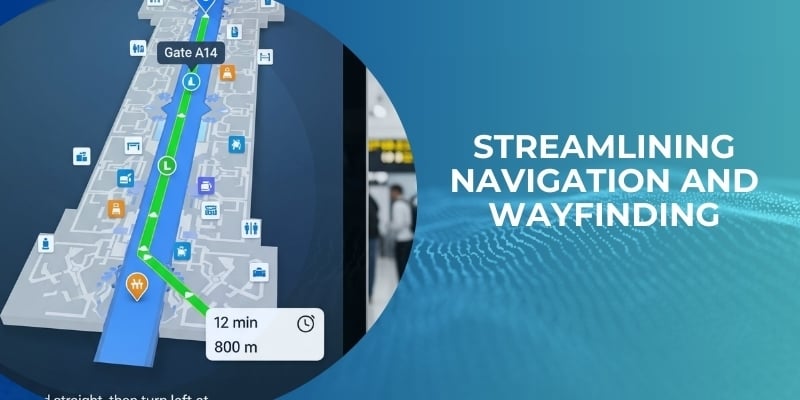
Large, multi terminal airports and complex central stations can be inherently disorienting. For infrequent travelers, those with mobility challenges, or passengers with tight connections, finding the way can be a primary source of stress.
Digital wayfinding displays are the definitive solution to this problem. Interactive touchscreen kiosks allow a passenger to input a flight number, gate, or amenity like a specific restaurant or lounge, and receive instant, step by step pictorial directions on a dynamic map, often complete with accurate estimated walking time.
This technology represents a quantum leap from the static “You Are Here” map. Advanced wayfinding systems can provide personalized routing.
For instance, a system might direct a passenger with a 45 minute connection via the most direct, expedited route, while another passenger with a longer layover might be shown a path that passes by duty free shops or art installations.
These systems can update in real time, rerouting paths to account for temporary corridor closures, crowded sections, or maintenance work. This sophisticated application of digital signage for airports is fundamental to operational efficiency.
It reduces missed connections, decreases the volume of lost passengers asking staff for directions, and creates a more accessible, dignified, and stress free environment for all. It empowers every traveler to navigate with autonomy and confidence.
Personalization and Multilingual Communication
The principle of passenger communication is moving beyond dynamism toward genuine personalization. Next generation digital signage systems are designed to deliver the right message to the right person at the right time, enhancing inclusivity and comfort. This begins with the essential layer of multilingual travel communication.
Screens can be programmed to cycle flight and safety information through multiple language streams or rely on intuitive, globally understood icons and animations, ensuring no passenger is excluded due to a language barrier.
The next level involves context aware content adaptation. Using anonymized, aggregated data feeds, such as the list of destinations for departing flights, the time of day, or the terminal location, signage networks can intelligently tailor broader content.
Screens in an international departures hall might highlight currency exchange services, duty free guides for popular destinations, and multilingual gate announcements. Meanwhile, screens in a domestic baggage claim area could prioritize ground transportation options, ride hail pickup points, and local hotel advertisements.
This move toward personalized digital signage makes each passenger feel recognized and catered to, significantly boosting passenger engagement and overall satisfaction. It transforms the terminal from a generic space into one that feels responsive and attentive.
Connecting Signage to the Entire Travel Ecosystem
The most crucial operational benefits of digital signage are realized when it ceases to function as a standalone information channel and becomes the integrated visual interface for the entire smart transportation system. In this role, it evolves from a simple broadcaster into an intelligent orchestrator of the passenger journey.
Consider the power of integration. A digital display at a security checkpoint is more helpful when it does not just show a generic message, but live wait times pulled directly from the integrated queue management system’s sensors and analytics.
A screen at baggage claim becomes infinitely more useful when it is directly connected to the baggage handling system, displaying precise carousel numbers and updates the moment luggage is unloaded.
Furthermore, by consuming data from IoT sensors for crowd control, a network of directional signs can dynamically update, showing green arrows to guide passengers to less congested corridors or retail areas in real time, smoothing peak flows.
This deep, seamless integration is exemplified by solutions like Donatello Vertica, a digital signage display system built for connectivity. This integrated travel signage ecosystem creates a responsive environment where data flows between operational back end systems and passenger facing displays, enabling a fluid and efficient journey.
It represents the critical shift from isolated point solutions to a holistic, connected, and intelligent journey companion.
Improving Efficiency for Airlines and Transport Operators
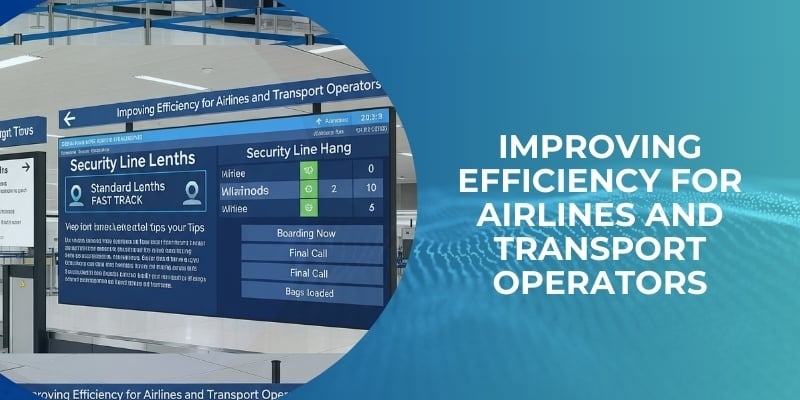
The advantages of this digitally integrated environment flow powerfully back to airlines, airport authorities, and rail operators.
For these entities, a robust digital signage network is a major driver of operational efficiency and cost management. It automates the mass dissemination of routine but critical information, drastically reducing the burden on frontline staff who would otherwise be inundated with repetitive questions about gate locations, flight status, and facility directions.
This liberation of human resources allows customer service personnel to focus on more complex, high value interactions, assisting passengers with special needs, resolving intricate booking issues, or managing exception cases.
The efficiency gains are measurable. Dynamic digital displays enable faster, more coordinated gate changes and streamline complex boarding processes with clear, sequenced, and multilingual instructions. They reduce boarding errors and miscommunication, leading to fewer delayed departures caused by passenger confusion.
This digital signage automation creates a more predictable, manageable, and cost effective operation. It turns critical information into a reliable, always available utility, allowing human staff to excel in providing the empathetic, problem solving service that technology alone cannot deliver.
Sustainability and Cost Efficiency
In addition to passenger experience and operational gains, transitioning to a comprehensive digital signage network aligns with broader goals of sustainability and long term financial efficiency.
Modern energy efficient LED screens consume significantly less power than the older lighting systems used to illuminate traditional backlit signs and the production and disposal of countless printed materials.
The move to paperless updates represents a monumental reduction in physical waste, eliminating the endless cycle of printing, shipping, posting, and disposing of thousands of paper notices, brochures, and promotional flyers each month.
From a management and cost perspective, the ability to control an entire global network of screens remotely from a single, cloud based platform yields substantial logistical and financial savings. There is no need to dispatch technicians across a sprawling airport campus to change a poster or update a text field on a screen. It can be done in minutes from a central office.
This reduces costs associated with labor, transportation, and materials, while also minimizing the operational carbon footprint.
Overcoming Common Challenges in Travel Signage
Deploying and maintaining a fail safe digital signage network in a 24/7, high stakes environment like a major airport comes with a distinct set of challenges that must be meticulously addressed.
The hardware itself must be industrial grade, offering maximum reliability and hardware uptime under constant use. Screens must maintain perfect readability and visibility under glare from massive terminal windows and bright architectural lighting. Perhaps the most non-negotiable requirement is flawless data integration.
A single display showing an outdated gate number can cause a cascade of missed flights and passenger distress. Therefore, seamless synchronization with core operational databases, such as Flight Information Display Systems and baggage systems, is essential.
Furthermore, maintaining content consistency and brand compliance across hundreds of displays, while also allowing for localized and timely messaging, requires a powerful, intuitive, and secure content management platform.
The network must also be designed with redundancy, in both hardware and data connectivity, to ensure it remains operational during partial system failures. Success in this arena depends on selecting a technology partner that provides not just hardware, but a holistic solution.
This includes durable technology, reliable software, seamless integration expertise, and, crucially, an in depth understanding of the unique operational pressures and passenger dynamics of the global travel industry.
Future of Travel Experience with Smart Signage
The trajectory of digital signage points toward an even more seamless, intuitive, and interconnected smart travel experience.
We are advancing rapidly toward AI driven personalization, where systems could analyze aggregated, anonymized data patterns, such as common connecting flight routes, typical dwell times in retail zones, or real time crowd density, to predict passenger needs and proactively tailor content and directions.
Integration with secure biometric systems, where passengers voluntarily opt in via trusted traveler programs, could enable discreet, personalized services.
As a registered passenger approaches a key junction, a nearby screen could display a personalized wayfinding instruction to their gate or a reminder of their lounge eligibility, all without the passenger needing to pull out a boarding pass or phone.
Looking further ahead, the concept of the ‘digital twin‘, a virtual, real time simulation model of the entire physical airport, could be fueled by data from sensor networks, flight systems, and passenger devices.
This would allow operators to run complex simulations of passenger flow, test emergency responses, and optimize signage messaging strategies in a virtual sandbox before deploying them in the live environment.
FAQs
How does digital signage improve passenger experience?
It reduces stress and confusion by providing clear, real-time information on flights, gates, and delays. It also entertains during waits, offers easy wayfinding, and can deliver personalized, relevant content, making the entire journey smoother and more predictable.
What type of content should airports display?
The best content mix includes essential operational data (flight info, gate changes), directional wayfinding, local amenities and promotions, public service announcements, and engaging entertainment or news to make wait times feel shorter.
Can signage integrate with flight data and alerts?
Yes, advanced digital signage platforms are built for this. They integrate directly with Flight Information Display Systems (FIDS) and other operational databases to ensure all displayed information, including emergency alerts, is accurate and instantaneous.
Are video walls useful for advertising in airports?
Extremely! Video walls offer unmatched visual impact in high-traffic areas, making them ideal for brand storytelling, destination marketing, and premium advertising. Their immersive quality captures attention far more effectively than standard signs.
Is digital signage cost-effective for transport hubs?
Absolutely! While requiring an initial investment, it generates return through advertising revenue, increased retail sales from targeted promotions, and significant operational savings from reduced printing and more efficient staff deployment. The improvement in passenger satisfaction also has long-term value.
Conclusion
Digital signage in travel industry has fundamentally redefined the very infrastructure of the travel experience. It has evolved from a passive information screen into the intelligent, integrated central nervous system of modern transit hubs.
By dissolving points of confusion, empowering passengers with real time knowledge, creating new revenue streams, and driving unprecedented operational efficiency, these dynamic networks are now indispensable.
For airlines, airports, and rail operators committed to building resilient, passenger centric, and future ready operations, the strategic adoption and sophisticated integration of digital signage for airports and terminals is not merely an upgrade.
It is an essential pathway to success. It is the key technology that orchestrates the complex ballet of global travel into a more harmonious, confident, and positive journey for every passenger.
BOOK A FREE DEMO