


Delta Air Lines Continues Its Trust in Wavetec for Premium Lounge Customer Journey Management
August 7, 2026
Commercial Bank International Deploys Wavetec Spectra QMS Across Six UAE Branches
August 18, 2026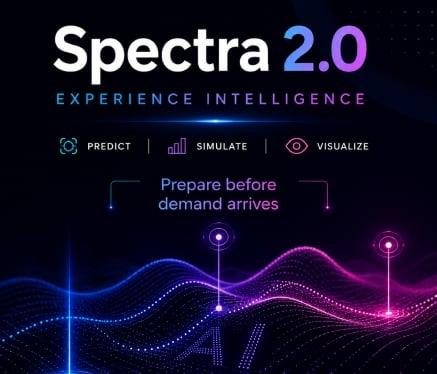
Wavetec Launches Spectra 2.0, Adding AI Traffic Forecasting and Branch Simulation to Its Queue Analytics Platform
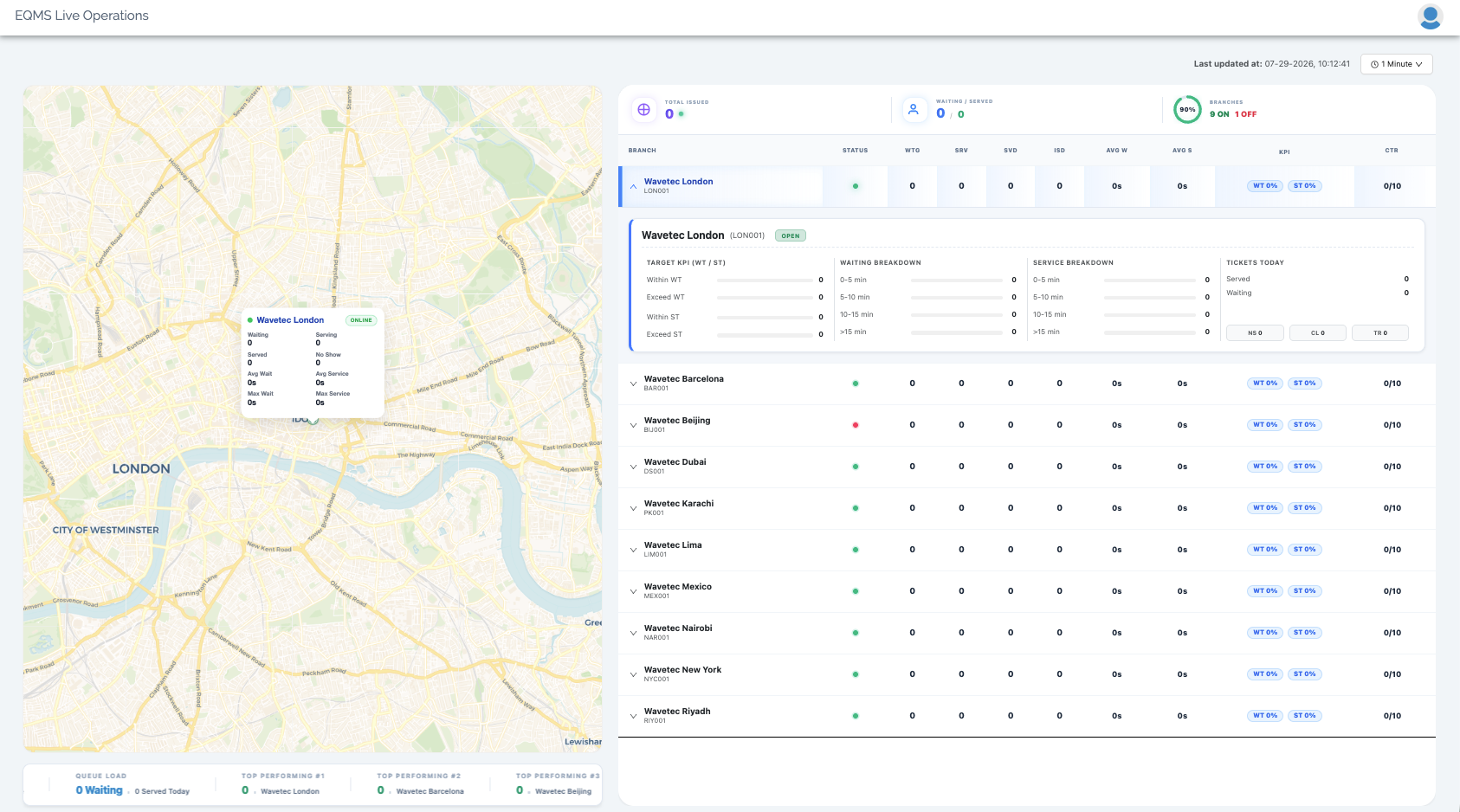
Wavetec has released Spectra 2.0, the newest version of its Spectra queue analytics and customer journey platform, adding two AI-driven modules on top of its existing live operations dashboards: AI Traffic Forecasting and Inflow Simulation. Together, the new modules move Spectra from a system that reports what already happened to one that predicts what is coming and lets planners test how a branch, store or service centre will respond before making a single staffing or layout decision.
Why branches still need this
Physical branches and service counters remain central to how banks, telecoms, healthcare providers and government agencies serve customers, even as digital channels grow. McKinsey’s Global Banking Annual Review 2025 notes that branches remain critical in many geographies, particularly for higher-stakes interactions such as opening an account, while also finding that most banking customers now want their primary bank to offer AI-powered tools, with many willing to switch providers if it doesn’t keep up. That combination, branches that aren’t going away, and customers who expect AI-level intelligence behind them, is the gap Spectra 2.0 is built to close.
How do the new features work?
AI Traffic Forecasting
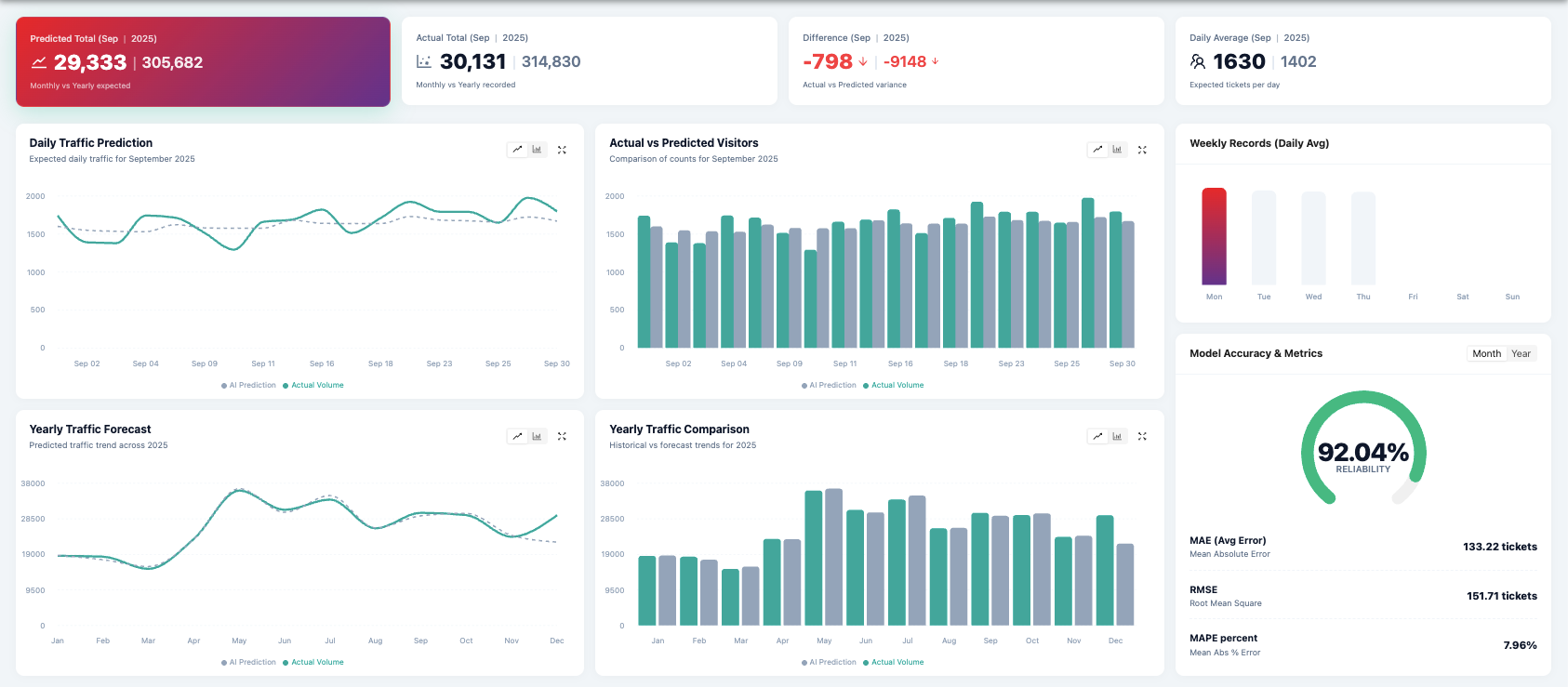
The forecasting module projects daily, weekly and yearly ticket volume per branch from a rolling three-year history, enriched with configurable environmental event features, public holidays, payroll and tax dates, local events, weather anomalies and operational changes such as new branch hours. Rather than asking planners to trust a black box, every forecast on screen is published alongside its own accuracy record:
Architecturally, the forecasting engine runs as a separate backend from the live Spectra dashboard, retraining automatically on a 30-day cycle and materializing its predictions into a prediction store that the dashboard reads from; keeping dashboard response times fast and isolated from the heavier, periodic training workload, and ensuring that if the forecasting service is ever unavailable, live queue monitoring keeps working uninterrupted.
Inflow Simulation
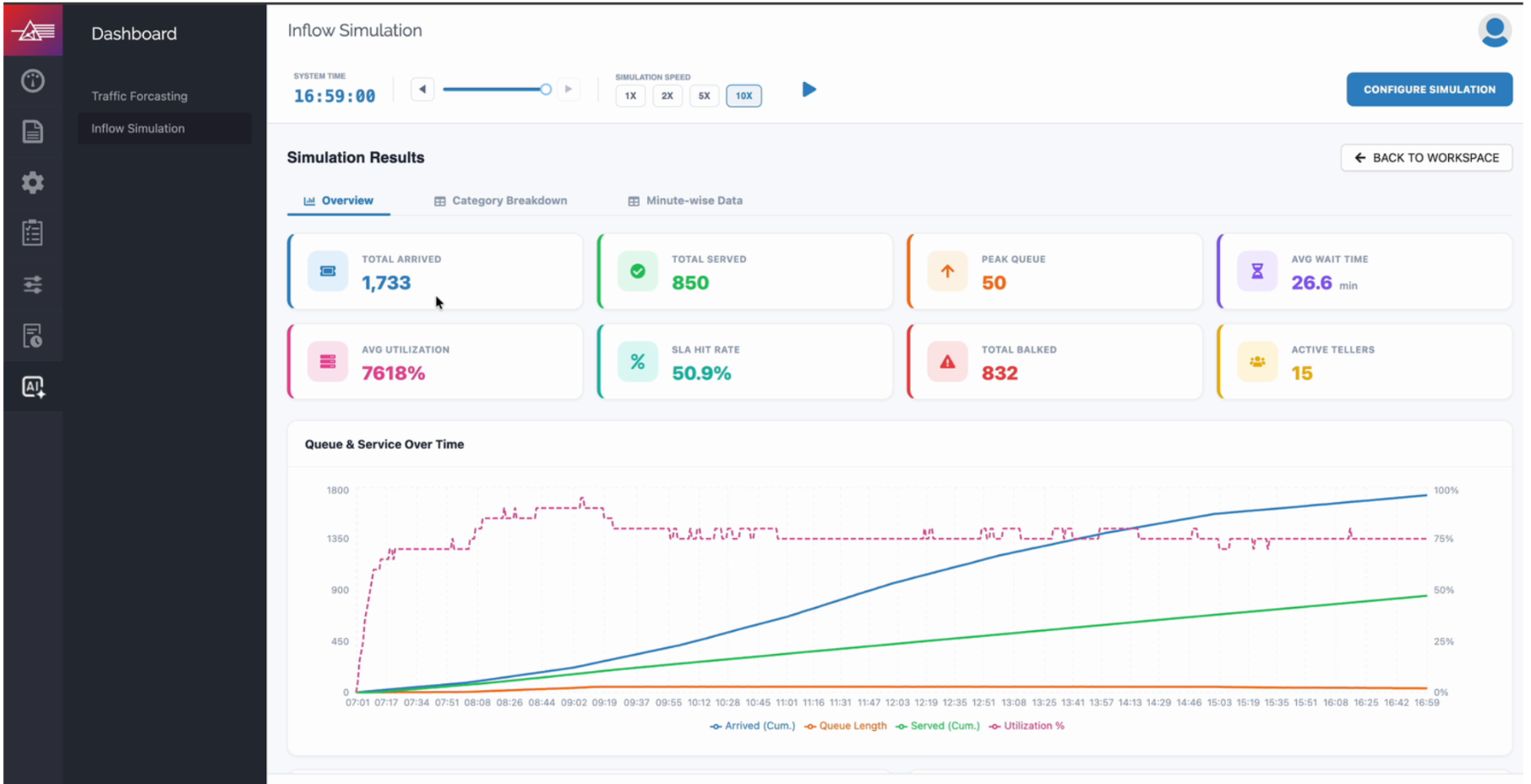
The second feature answers a question forecasting alone cannot: given that predicted demand, what actually happens inside a specific branch configuration? Inflow Simulation is a discrete-event simulator, branded as the Operations Engine, that lets a planner configure a branch’s opening hours, physical waiting-area capacity, service categories, counter clusters and routing rules, then run a full operating day forward on a synthetic clock at up to 10x speed.
The module connects directly to the forecasting engine: an “AI Predict” mode pulls a selected month’s forecast straight in as the simulation’s demand curve, turning two separate capabilities into one planning workflow, forecast the demand, then simulate what that demand does to a specific layout.
Built on the same event data as the live dashboard
A design principle carries through both new modules: every number in Spectra, whether on the live branch summary, the forecast validation chart, or the simulation results screen, is derived from the same four ticket timestamps and the same ticket-state model. There is no second, parallel data pipeline feeding the AI features. That matters operationally; it’s what lets a branch manager reconcile a forecast’s “actual” line against the number they saw live on the floor that day, which is often the first thing a skeptical operations team checks before trusting a new analytics layer.
Use cases across industries
Spectra’s forecasting and simulation modules were built around branch banking, but the same demand-forecasting-plus-layout-stress-testing pattern applies anywhere staffed counters, kiosks or service points face variable walk-in demand.
Banking & financial services: Rostering tellers to seasonal and payroll-driven demand; testing counter allocation before a branch redesign; sizing cash deposit and self-service kiosk fleets ahead of peak periods.
Telecom retail: Predicting SIM-activation and device-service demand by store and season; simulating the queue impact of new self-service kiosks, such as Wavetec’s Edge SIM-dispensing kiosk, before rollout.
Healthcare & outpatient clinics: Forecasting patient check-in volume by day and clinic; simulating how appointment mix and staffing changes affect waiting-room capacity and wait times.
Government & citizen services: Modeling seasonal spikes around renewal deadlines or benefit disbursement dates for DMVs, counties and service centers; testing extended-hours or additional-counter scenarios before committing budget.
Postal networks: Forecasting counter demand across large, multi-service branch networks; simulating the customer-flow impact of consolidating or redesigning high-traffic post offices.
Retail & supermarket service counters: Predicting demand at deli, pharmacy and customer-service counters; testing counter and staffing changes ahead of holiday or promotional peaks.
Enterprise security and governance
Because Spectra 2.0 sits over live operational data across potentially hundreds of branches, its new modules were built with enterprise governance in mind. Branch and region scoping is resolved server-side before any query executes, so users only ever see data for the branches they’re authorized on. The forecasting backend follows a strictly one-way data flow, it never writes back into the live operational database, which limits the blast radius of any model issue to prediction quality, not live queue operations. The platform supports on-premises or cloud deployment with role-based access control, audit logging and accessibility considerations (including WCAG/ADA); consistent with the SOC 2/ISO 27001-aligned security posture Wavetec applies across its enterprise deployments.
About Wavetec
Wavetec is a global customer experience and digital transformation company with 11 offices and solutions exported to more than 80 countries. Its portfolio includes Spectra, Queue Management System, Cloud Appointment, Mobile-Q, WhatsApp Queuing, Donatello Digital Signage, self-service kiosks and AI-powered operational analytics. By developing its hardware and software in-house and supporting deployment, integration and ongoing service, Wavetec helps organizations manage high-volume customer journeys across healthcare, government, banking, aviation, telecom and retail environments.