In today’s competitive hospitality landscape, creating memorable and seamless guest experiences is essential. Hotels are increasingly investing in dynamic digital signage to move beyond static posters and printed notices.
This technology transforms how properties communicate, directly enhancing the hotel guest experience while unlocking new streams of on site revenue. A strategic approach to screens in the lobby, elevators, and restaurants can inform, guide, and delight guests from check in to check out.
The impact is measurable; hotels using digital signage report a 35 percent increase in guest satisfaction, particularly among business travelers. Implementing a coherent digital signage strategy for hotels is no longer a luxury, but an essential component of modern hospitality digital signage and operational excellence.
What Is a Digital Signage Strategy for Hotels?
A digital signage strategy for hotels is a comprehensive plan that aligns technology, content, and placement with specific business goals and guest journey touchpoints. It goes beyond simply installing screens. It involves deciding what to communicate, where and when to communicate it, and how to measure the impact.
This strategy ensures every display, from a large video wall in the lobby to a screen in the elevator, works together as a unified hotel signage system.
It coordinates hospitality digital signage to enhance branding, streamline operations, promote services, and ultimately, create a more engaging and satisfying stay for every guest.
Why Hotels Need a Digital Signage Strategy
Implementing screens without a plan leads to wasted resources and missed opportunities. A defined strategy is crucial for maximizing return on investment and achieving concrete business outcomes. The core need stems from enhancing the hotel guest experience through superior communication.
Digital signs provide instant, easily updated information, reducing guest confusion and frustration. This directly translates into reduced dependency on front desk staff for routine queries, freeing them to handle more complex guest needs.
Furthermore, digital signage is a powerful marketing and revenue driver. It captures attention effectively; 63 percent of people say digital signage catches their attention, helping hotels promote spa treatments, restaurant specials, and local events directly to a captive audience.
This strategic promotion leads to higher engagement with hotel amenities and creates tangible upselling opportunities, directly boosting property revenue.
Key Goals of a Hotel Digital Signage Strategy
A successful strategy should target multiple, interconnected objectives that serve both the guest and the hotel’s bottom line. Clear hotel signage goals provide a framework for decision making and measurement.
The primary goal is often improving guest satisfaction and comfort. This is achieved by providing clear wayfinding, relevant information, and reducing perceived wait times. A close second is driving revenue and increasing guest spend by promoting high margin services like the spa, fine dining, or suite upgrades.
Other critical goals include strengthening brand identity and ambiance with consistent, high quality visual content, and improving operational efficiency by automating announcements and reducing the volume of repetitive guest inquiries. Ultimately, every goal ties into creating a seamless, modern, and memorable hospitality communication strategy.
Where to Place Digital Signage in a Hotel
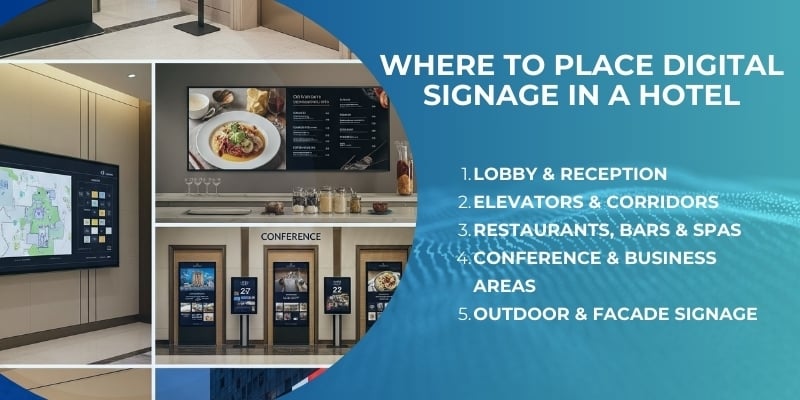
Strategic placement is where your strategy becomes visible. Screens should be positioned at key decision points and waiting areas along the guest journey to inform and influence.
-
Lobby & Reception
This is your digital first impression. Use screens for welcome messages, check in instructions, local weather, and prominent promotions for hotel amenities. It sets the tone and immediately engages guests.
-
Elevators & Corridors
These are high traffic areas with captive audiences. Display event schedules, daily promotions, artful branding, or subtle wayfinding to guide guests to hotel facilities.
-
Restaurants, Bars & Spas
Perfect for dynamic menus that update with daily specials, showcase cocktail features, or promote happy hour deals. This directly influences purchasing decisions at the point of choice.
-
Conference & Business Areas
Display meeting schedules, room assignments, welcome messages for specific groups, and networking information. This professional touch enhances the event experience for organizers and attendees.
-
Outdoor & Facade Signage
Use high brightness displays for grand promotions, branding, or to welcome specific conferences. This attracts external visitors and reinforces the hotel’s presence.
For high impact in these key areas, a hotel might consider a stunning video wall for the lobby or reliable, sleek displays like the Donatello Vertica series for corridors and meeting rooms.
What Content Works Best on Hotel Digital Signage
Content is the voice of your strategy. Effective hotel digital signage content is a mix of useful, promotional, and branded material, tailored to the screen’s location and time of day.
An effective hospitality content strategy rotates through several key types:
- Welcome and branding messages to create a sense of arrival
- Event schedules and conference agendas for business guests
- Promotions for spa, dining, and room upgrades with compelling visuals
- Local attractions
- Concierge tips to encourage exploration
- Emergency and service notifications for real time updates.
The content must be visually striking, concise, and frequently refreshed to maintain engagement. Understanding how digital signage impacts customer behaviour is key to designing content that not only informs but also persuades, encouraging guests to interact more deeply with hotel services.
How to Design an Effective Digital Signage Strategy (Step-by-Step)
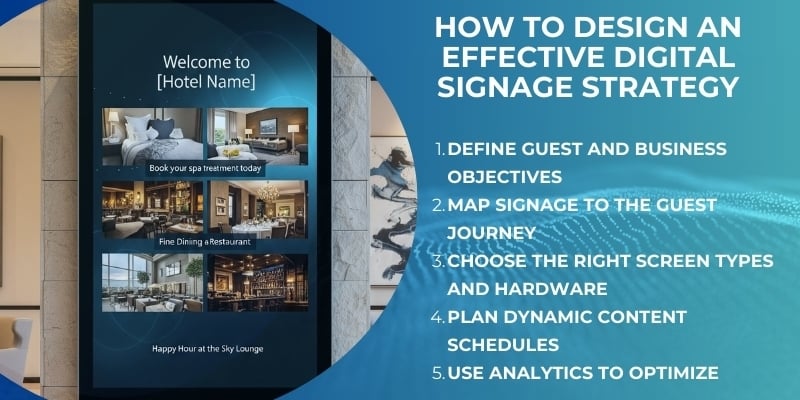
Creating your strategy is a systematic process. Follow this framework for a plan that delivers results.
- Define Guest and Business Objectives: Identify what you want to achieve. Is it higher restaurant revenue, improved conference guest satisfaction, or reduced front desk pressure?
- Map Signage to the Guest Journey: Walk through every touchpoint, from curbside to checkout. Identify where guests need information or might make a spending decision.
- Choose the Right Screen Types and Hardware: Select screens fit for purpose, whether it’s a large format LED in the sunlit lobby or a touchscreen directory in the conference wing.
- Plan Dynamic Content Schedules: Develop a content calendar that aligns with hotel events, meal times, and seasons. Automate where possible.
- Use Analytics to Optimize: Regularly review performance data to see what content resonates and adjust your strategy for continuous improvement. This data driven approach is central to proving how a well executed system can decrease perceived wait times and boost sales across hotel operations.
Technology Needed for a Hotel Digital Signage Strategy
The right technology stack turns your strategy into reality. It consists of reliable hardware and intuitive software.
The foundation is digital signage software for hotels, also known as a Content Management System (CMS). This cloud based platform allows you to design, schedule, and publish content to all screens from a central dashboard, enabling true remote content management.
The hardware includes commercial grade displays designed for 24/7 operation, media players to power the screens, and a robust network infrastructure.
Choosing an integrated solution that combines durable hardware with powerful, easy to use signage CMS software is critical for long term success and scalability, forming the complete digital signage ecosystem for your property.
Measuring the Success of Your Hotel Digital Signage Strategy
To validate your investment and guide improvements, you must track key performance indicators. Measuring digital signage ROI involves both direct and indirect metrics.
Key guest engagement metrics include tracking interaction rates on touchscreens and monitoring average engagement time with content on promotional screens.
Business outcomes can be measured through promotion conversion rates, such as tracking spa bookings that use a promotional code displayed on signage, and calculating the revenue uplift from promoted restaurant specials or upgraded room packages.
Additionally, monitor qualitative feedback like guest satisfaction scores in related areas and track the volume of reduced staff queries for directions or event times, which indicates improved communication efficiency.
Common Mistakes Hotels Make with Digital Signage
Avoiding these pitfalls is as important as following best practices. Common hotel digital signage mistakes can undermine your investment.
These include:
- poor placement where screens are ignored or not visible
- Using generic, static content that becomes “digital wallpaper” and is quickly tuned out
- Relying on outdated or consumer grade screens that fail in a 24/7 environment
- Having no content strategy or update schedule, leading to stale information
The most critical error is having no clear strategy or goals from the outset, resulting in a disjointed network of screens that fails to deliver a cohesive experience or measurable value. Adhering to signage best practices from the start prevents these issues.
Best Practices for Hotel Digital Signage Strategy
To ensure success, adhere to these guiding principles throughout your project.
- Do align every screen and content piece with a specific guest journey stage or business goal.
- Do maintain strong visual branding and high quality content that reflects your hotel’s standard.
- Do implement a regular content review and refresh schedule to keep information relevant.
- Do choose technology that offers reliable remote device management and robust analytics.
- Don’t overcrowd screens with text; use compelling imagery and concise messages.
- Don’t neglect screen maintenance and daily functionality checks.
- Don’t operate in a silo; ensure your hospitality digital signage content is coordinated with other marketing and operational teams.
Following these steps is key to hotel signage optimization.
FAQs
What is a digital signage strategy for hotels?
It is a comprehensive plan that coordinates the placement, technology, and content of digital displays across a hotel property. The goal is to improve guest communication, promote services, enhance branding, and increase operational efficiency, all guided by specific business objectives.
How does digital signage improve hotel guest experience?
It improves the experience by providing instant, clear information for wayfinding and hotel services, reducing confusion and wait times. Engaging content entertains and informs, while personalized promotions make it easier for guests to discover and book amenities like dining and spa treatments.
Where should hotels place digital signage screens?
Key locations include the lobby and reception area, elevators and hallways, outside and inside restaurants and spas, conference and business centers, and on outdoor facades. Placement should follow the natural guest journey through the property.
Does digital signage increase hotel revenue?
Yes, when used strategically. By effectively promoting on site restaurants, bars, spa services, and special events to a captive audience, digital signage can directly increase guest spending on property, driving higher revenue per guest.
What content works best for hotel digital signage?
The most effective content mix includes welcome messages, real time event and promotion schedules, high quality visuals of food and amenities, local attraction guides, and essential service or emergency alerts. Content should be visually driven and updated regularly.
Conclusion
A thoughtful and well executed digital signage strategy for hotels is a powerful tool for modern hospitality management.
It transcends basic communication, actively enhancing the guest journey, strengthening your brand, and contributing directly to the property’s revenue goals.
By strategically placing screens, delivering dynamic and relevant content, and leveraging the right technology, hotels can create a more engaging, efficient, and memorable environment for every guest.
Investing in a comprehensive hotel digital signage solution is an investment in elevated guest satisfaction, operational excellence, and a competitive edge in the hospitality market.
BOOK A FREE DEMO