Outdated notice boards, unclear announcements, and delayed updates continue to cause confusion and frustration for daily commuters, but digital signage in public transportation replaces static systems with real-time, automated displays that keep passengers informed, calm, and moving efficiently.
Outdated notice boards, unclear announcements, and delayed updates continue to cause confusion and frustration for daily commuters,
but digital signage in public transportation replaces static systems with real-time, automated displays that keep passengers informed, calm, and moving efficiently.
Transportation digital signage transforms how transit authorities communicate by delivering clear, visible, and timely information across stations, vehicles, and control zones.
The transportation sector leads digital signage growth with a 9.9% CAGR from 2024 to 2030, driven by real-time screens in airports, subways, and bus stops for schedule and alert management.
Why Public Transportation Needs Digital Signage
Public transportation systems handle thousands to millions of passengers every day, yet many still rely on manual announcements, printed posters, or static LED boards that cannot adapt to live conditions.
These outdated methods struggle to keep up with delays, route changes, or service disruptions, leading to passenger frustration and operational inefficiencies.
Digital signage in public transportation solves these challenges by centralizing communication into passenger information displays that update automatically.
Instead of relying on staff to repeat announcements or replace printed notices, transit communication systems use connected screens to display consistent messages across platforms, terminals, and waiting areas.
Poor visibility is another major issue in transport environments. Loud stations, crowded platforms, and fast-moving passengers make audio announcements easy to miss.
Public transport digital signage ensures information remains visible at all times, reducing reliance on sound-based communication alone.
By presenting schedules, instructions, and alerts clearly, transportation digital signage improves trust.
Passengers feel more confident when they see accurate, up-to-date information, even during disruptions. This directly improves satisfaction and reduces perceived wait times.
Key Benefits of Digital Signage in Transit Systems
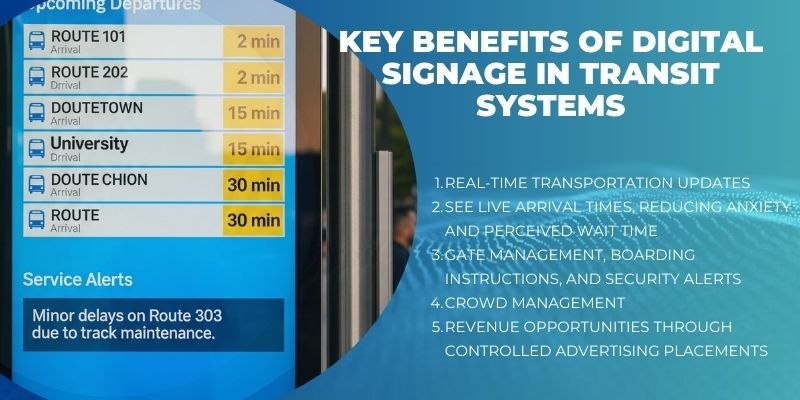
Digital signage delivers value across multiple areas of transit operations, not just passenger communication.
One of the most important benefits is real-time transportation updates. Screens connected to scheduling systems can instantly reflect delays, cancellations, or platform changes without manual input.
Digital signage for bus stops allows commuters to see live arrival times, reducing anxiety and perceived wait time. When passengers know when the next bus or train is coming, they are more patient and less likely to crowd service desks.
Airport digital signage plays a critical role in gate management, boarding instructions, and security alerts. In train stations, platform displays help manage passenger flow by directing people efficiently and preventing congestion.
Another major benefit is crowd management. By displaying clear directions, boarding zones, and service notices, transit authorities can guide movement during peak hours. This improves safety and reduces bottlenecks.
Digital signage also opens revenue opportunities through controlled advertising placements. Transit agencies can display paid promotions, public announcements, or city campaigns without interrupting service information.
Real-Time Communication That Builds Trust
Trust in public transportation depends heavily on information accuracy. When schedules change without notice or announcements are delayed, passengers lose confidence in the system. Digital signage in public transportation addresses this by providing real-time display updates that reflect current conditions.
- Live schedule displays show arrival and departure times that update automatically using transit management systems. If a delay occurs, screens adjust instantly, preventing misinformation from spreading.
- Transport updates such as route diversions, maintenance work, or emergency instructions can be pushed to all screens at once. This ensures consistent messaging across platforms, terminals, and entrances.
- Passenger experience improves when communication feels reliable. Even when delays happen, clear explanations reduce frustration. Digital signage allows transit authorities to explain what is happening and what passengers should expect next.
- Emergency alerts are another critical function. During weather events or safety incidents, screens can switch instantly to alert mode, displaying instructions clearly without relying on audio announcements alone.
Smart Traffic and Lane Management (LED Control Signs)
In addition to passenger areas, digital signage plays an essential role in managing traffic flow and safety. LED lane control signs are widely used on highways, transit corridors, and dedicated bus lanes to regulate movement and reduce accidents.
These signs display dynamic lane status, speed limits, and directional arrows that change based on traffic conditions. Transit management systems use these LED displays to respond quickly to congestion, accidents, or construction work.
LED lane control signs improve safety by providing immediate visual cues that drivers can understand at a glance. Clear symbols reduce hesitation and confusion, especially in high-speed or high-volume areas.
From a transit authority perspective, these traffic display boards reduce the need for physical barriers or manual intervention. Centralized control allows operators to manage multiple zones from one system.
The LED lane control signs market is valued at USD 2.2 billion in 2026 and is projected to reach USD 5.5 billion by 2036, growing at a 9.6% CAGR.
Enhancing Passenger Experience and Accessibility
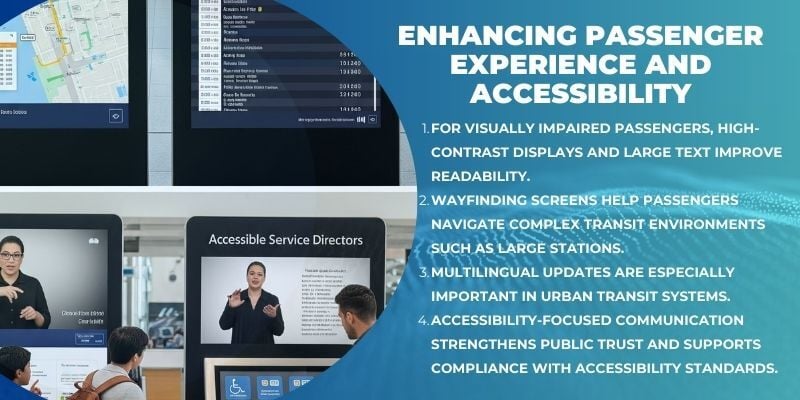
Public transportation serves people of all ages, abilities, and language backgrounds. Digital signage improves accessibility by combining visuals, icons, and optional audio cues that support inclusive communication.
- For visually impaired passengers, high-contrast displays and large text improve readability. For hearing-impaired passengers, visual alerts replace audio-only announcements. This ensures equal access to information.
- Wayfinding screens help passengers navigate complex transit environments such as subways and large stations. Clear arrows, maps, and step-by-step directions reduce confusion and missed connections.
- Multilingual updates are especially important in urban transit systems. Digital signage for subways can rotate messages in multiple languages, helping tourists and new residents feel confident using public transport.
- Accessibility-focused communication strengthens public trust and supports compliance with accessibility standards while improving overall passenger experience.
Integrating Digital Signage with Smart City Infrastructure
Modern transit systems are increasingly connected to smart city infrastructure. Digital signage acts as a communication layer between transport operations, city systems, and passengers.
IoT-enabled transit displays can receive data from sensors, GPS trackers, and control systems. This allows screens to show live vehicle locations, congestion updates, or weather-related alerts.
Connected transportation systems benefit from integration with APIs that link buses, subways, and control rooms. When one part of the system changes, signage updates automatically across all affected locations.
Digital signage CMS platforms manage this complexity by centralizing control. Content scheduling ensures the right message appears at the right time without manual oversight.
Smart city signage in collaboration with media players improves coordination, reduces response times, and supports data-driven decision-making across transit networks.
Monetization Opportunities for Transit Authorities
Public transportation systems operate under constant budget pressure. Digital signage in public transportation offers a practical way to generate additional revenue without affecting service quality.
Screens placed in high footfall areas such as stations, platforms, and terminals become valuable communication assets.
- Digital signage advertising allows transit authorities to display third party ads alongside service information. Local businesses, national brands, and public campaigns often prefer transit environments because of consistent daily traffic. Unlike printed posters, digital ads can be rotated, timed, and updated easily.
- Transit ad networks benefit from content scheduling. Ads can run during peak hours, while public announcements or safety messages take priority during off peak times. This balance keeps passengers informed while creating income.
- Digital OOH displays also support city level messaging. Municipal announcements, tourism promotions, and event notices can be shown without printing costs. This reduces reliance on physical materials while keeping messaging current.
- Some authorities also use branded content partnerships. For example, a travel brand may sponsor destination themed content inside airport or rail terminals. These partnerships feel less intrusive and more useful to passengers.
Agencies that follow structured planning often rely on approaches outlined in digital signage marketing strategy to balance monetization with passenger experience.
Reducing Operational Costs and Manual Dependence
Operational efficiency is one of the strongest reasons to invest in transportation digital signage. Many transit systems still depend on staff to manually update boards, make repeated announcements, or guide passengers during disruptions.
Digital signage reduces this dependence by automating communication. Once content is scheduled, screens update on their own. Route changes, delays, and service notices appear instantly across all locations.
Remote management plays a major role here. Instead of sending staff to each station or stop, updates are pushed from one dashboard. This saves time, fuel, and labor costs, especially for large networks.
Automation also improves accuracy. Manual updates are prone to errors, missed changes, or delays. Digital signage pulls data directly from transit systems, reducing the risk of outdated information.
Fewer printed materials mean lower printing and replacement costs. This also supports sustainability goals. Transit authorities looking to reduce waste often explore eco-friendly practices in digital signage to align cost savings with environmental responsibility.
Over time, these savings help justify the investment and free up resources for service improvements.
Maintenance and Reliability (Uptime Builds Trust)
In public transportation, reliability is critical. A blank or frozen screen can cause confusion just as much as no information at all. Digital signage systems must be designed for continuous operation.
Modern transit digital signage solutions include monitoring tools that track screen status in real time. If a screen goes offline or shows an error, alerts are sent to support teams immediately.
Regular diagnostics help prevent failures before they happen. This includes checking connectivity, playback health, and power stability. These checks can be automated through the signage platform.
Uptime management builds trust with passengers. When screens consistently work, passengers rely on them. This reduces pressure on staff and improves overall confidence in the system.
Critical environments such as airports and subway stations benefit from redundant systems. Backup players or failover content ensures information remains visible even during technical issues.
Transit authorities often select platforms like digital signage solutions that are built for high uptime and large scale environments.
Implementation Roadmap for Transit Authorities
Rolling out digital signage in public transportation does not need to be complex. A structured approach keeps the process manageable and reduces risk.
- The first step is assessment. Authorities should identify pain points such as frequent delays, passenger confusion, or crowded service desks. These issues help define signage goals.
- Next comes choosing the right CMS. A digital signage CMS should support content scheduling, remote monitoring, and system integration. Ease of use matters because staff will manage it daily.
- Hardware selection follows. Screens should match environment needs. Outdoor bus stops need weather resistant displays. Indoor stations focus more on size and viewing distance.
- Integration is the next step. Connecting signage to transit management systems, GPS data, or APIs enables real time updates. This step turns screens from static displays into live communication tools.
- Testing is critical. Before full rollout, authorities should test content accuracy, visibility, and update speed. Feedback from staff and passengers helps refine setup.
- Finally, scaling comes last. Once the system works in one area, it can expand to more routes, stations, or cities using the same framework.
Case Examples (Airports, Subways, Bus Terminals)
Different transport environments use digital signage in different ways, but the goal remains the same: clear communication.
- Airports rely heavily on airport digital signage for gate assignments, boarding calls, and security alerts. Screens placed at check in, security, and boarding areas guide passengers step by step. This reduces missed flights and congestion.
- Subway systems use subway digital signage to show next train times, platform changes, and service disruptions. These displays are especially useful during peak hours when announcements can be hard to hear.
- Bus terminals benefit from digital signage for bus stops that show live arrival times and route information. Passengers feel more comfortable waiting when they know exactly when their bus will arrive.
These real world uses show how public transport display systems adapt to different environments while using the same core technology.
Common Mistakes and Fixes in Transit Signage
Even well funded projects can fail if common mistakes are ignored.
- One frequent issue is inconsistent formatting. Different screens showing different styles confuse passengers. Templates and content rules solve this.
- Low brightness is another problem. Screens that are not visible in daylight or busy stations get ignored. Choosing the right brightness level fixes this issue.
- Poor placement also reduces impact. Screens placed too high, too low, or behind obstacles do not get attention. Observing passenger movement helps determine better locations.
- Lack of maintenance planning causes downtime. Without regular checks, screens fail unnoticed. Scheduled monitoring prevents this.
- Some systems overload screens with too much text. Passengers in transit read fast. One message per screen works best.
Trends and future focused improvements are discussed in our blog “The Future of Display Signage”
FAQs
What are the main uses of digital signage in public transport
Digital signage is used for live schedules, service updates, wayfinding, safety alerts, and advertising across stations and vehicles.
How does real time signage improve passenger experience
It reduces uncertainty by showing accurate arrival times, delays, and instructions, helping passengers feel informed and calm.
Can signage integrate with traffic or GPS data
Yes, most transit digital signage systems integrate with GPS, sensors, and transit APIs for live updates.
Is digital signage expensive to maintain in transit systems
Ongoing costs are lower than manual systems because updates, monitoring, and content changes are automated.
How do LED lane control signs work
They display dynamic symbols and messages that change based on traffic conditions to guide drivers safely.
Conclusion
Digital signage in public transportation is no longer optional. It has become a core system for communication, safety, and efficiency.
From real time transportation updates to accessibility support and operational automation, digital signage touches every part of the transit experience.
When implemented with clear governance, reliable technology, and ongoing review, transportation digital signage reduces manual effort, improves passenger confidence, and supports smarter city infrastructure.
Transit authorities that start with focused goals and scale gradually see the strongest results.
With the right digital signage CMS, remote monitoring, and content strategy, public transport display systems become trusted information tools that support safer, more connected, and more efficient transit networks.
BOOK A FREE DEMO