When was the last time you chose a product solely because of its features? For many people, that moment is hard to recall. Think about a recent visit to a bank, hospital, or government office.
What stayed with you was not the system specifications in the background, but how smooth or frustrating the experience felt while you waited, interacted, and completed your task.
This change in customer choice is not accidental. Modern consumers value convenience, clarity, and interactions that feel personal and respectful.
Long feature lists no longer compensate for confusing processes, long waits, or disconnected service journeys. Customer experience now influences trust and emotional connection far more than functional capability alone.
This blog explores why experience beats features in customer decision-making and how customer choice and experience influence loyalty. It aims to explain why lasting relationships are built through how services are delivered, not just what organizations offer.
Why Experience is Key to Customer Loyalty
Customer loyalty is earned after the first interaction, not at the point of purchase. People return to brands that make them feel understood, respected, and comfortable during every interaction.
A smooth process, clear communication, and thoughtful service leave a lasting impression, regardless of how advanced a product may appear on paper.
This is where customer loyalty and experience come together. When customers receive personalized service and meaningful engagement, trust develops naturally.
Over time, these positive interactions lead to higher customer satisfaction and repeat visits, even when alternatives offer similar capabilities. This reinforces the importance of experience over features in building long-term relationships.
In service-focused operations, experience often determines whether customers feel confident or frustrated. Solutions from Wavetec, such as queue management systems and self-service kiosks, help reduce uncertainty, guide customers through each step, and improve overall service flow.
These improvements encourage loyalty by making interactions feel efficient, consistent, and considerate.
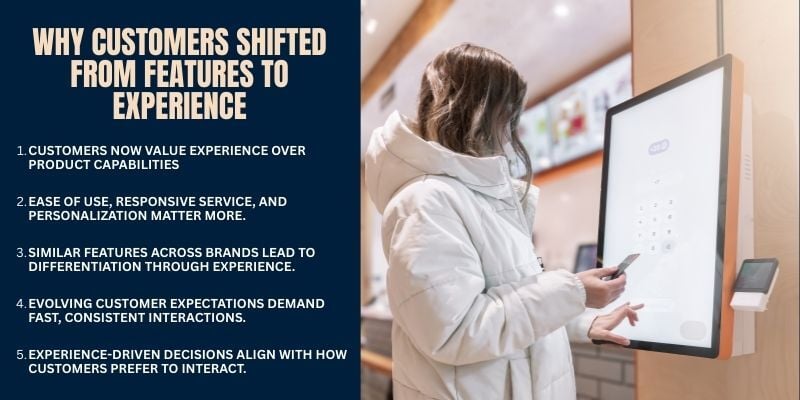
Why Customers Shifted From Features to Experience?
For years, products were marketed by listing what they could do. Specifications, capabilities, and technical advantages dominated messaging, with the assumption that more features would naturally lead to better customer choice. This approach worked when options were limited, and consumers had fewer points of comparison.
That model no longer holds. As markets became crowded with similar offerings, customer experience vs. product features emerged as the real point of distinction.
Ease of use, responsive service, and thoughtful personalization now matter more than the number of functions a product includes.
When features look similar across providers, organizations have little choice but to differentiate through experience. This change is also reflected at the organizational level.
A 2025 report found that 80% of organizations expect to compete primarily on customer experience rather than product features, confirming that experience has become the main area of differentiation.
Customer expectations have also evolved alongside digital adoption. People now expect interactions to be intuitive, fast, and consistent across touchpoints. Delays, confusion, or rigid processes stand out immediately.
Experience-driven decisions follow naturally, as customers choose brands that align with how they want to interact, not just what the product promises on paper.
The Value of Customer Experience in Decision-Making
Every customer decision starts with intent. Some interactions are driven by urgency, such as completing a task quickly. Others are guided by the need for clarity, reassurance, or a sense of control during the process.
These goals influence decisions more strongly than a list of features, especially when customers are short on time or unsure about the next step.
Customer experience affects how confidently a decision is made. Clear steps, predictable outcomes, and well-organized interactions reduce hesitation and help customers move forward.
Features may describe what a product offers, but they do not explain how easily someone can reach an outcome.
This distinction is supported by Forrester’s U.S. Customer Experience Index, which found that emotional response and confidence strongly influence how customers evaluate options and make decisions, even as overall CX quality declined for the third consecutive year.
Over time, decisions influenced by positive experiences create a natural preference for certain brands. Customers are less likely to second-guess their choice when interactions feel simple and reliable.
Experience Vs. Features in Different Industries
Different industries define good experience in their own ways, but the focus remains consistent: customers value how interactions feel over a long checklist of product capabilities. In retail, a shopper might value quick self-checkout and engaging displays.
In banking, people want predictability and minimal queues. In healthcare, reassurance and reduced uncertainty are priorities. Across these areas, businesses are placing experience over product features to meet evolving customer expectations and improve service outcomes.
For example, at Nahdi Care Clinics in Saudi Arabia, Wavetec implemented an integrated queue management system with WhatsApp-based ticketing and real-time updates.
Patients receive updates on their queue position and direction via WhatsApp, reducing idle waiting and allowing staff to manage flow more efficiently.
The deployment led to shorter wait times, improved operational efficiency, and a more relaxed, organized environment for patients and caregivers.
In the banking industry, Maduro & Curiel Bank partnered with Wavetec to deploy a comprehensive queue management solution across multiple branches.
This included self-service kiosks, digital signage, web ticketing, and WhatsApp queuing, allowing customers to join queues remotely and receive real-time updates.
The result was a significant reduction in wait times, smoother service delivery across branches, and greater operational visibility for staff.
These examples show how organizations are shifting priorities: rather than stacking features, they are designing interactions that align with what customers actually experience and value.
When customers feel informed, in control, and respected throughout their journey, businesses in any sector can build stronger engagement and satisfaction.
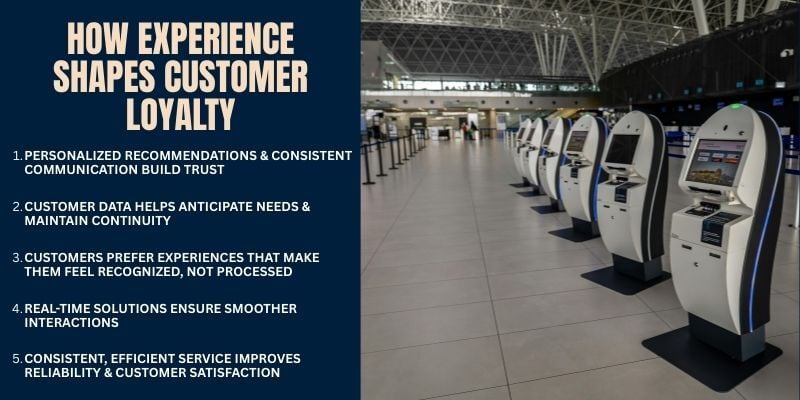
How Experience Shapes Customer Loyalty?
Some of the most recognizable brands today have built loyalty by paying close attention to how customers move through every interaction.
Companies like Apple and Amazon focus less on persuading customers with specifications and more on removing friction across the entire journey.
From personalized recommendations to timely updates and consistent communication, each interaction reinforces familiarity and confidence.
A common thread among these brands is their use of customer data to anticipate needs and maintain continuity across touchpoints.
Personal preferences, past interactions, and usage patterns inform how services are presented, helping customers feel recognized rather than processed. This consistency strengthens relationships over time and reduces the effort required from customers at every stage.
In service-driven industries, Wavetec’s real-time data solutions, like queue management systems and self-service kiosks, enhance customer experiences by ensuring smoother, more efficient interactions.
These solutions guide customers, manage service flow efficiently, and offer personalized updates. This approach makes interactions smoother, increasing reliability and customer satisfaction.
Additionally, research shows that customers are 2.4 times more likely to stick with a brand when their problems are solved quickly, emphasizing how crucial fast, effective solutions are in maintaining loyalty.
The Role of Personalization in Customer Experience
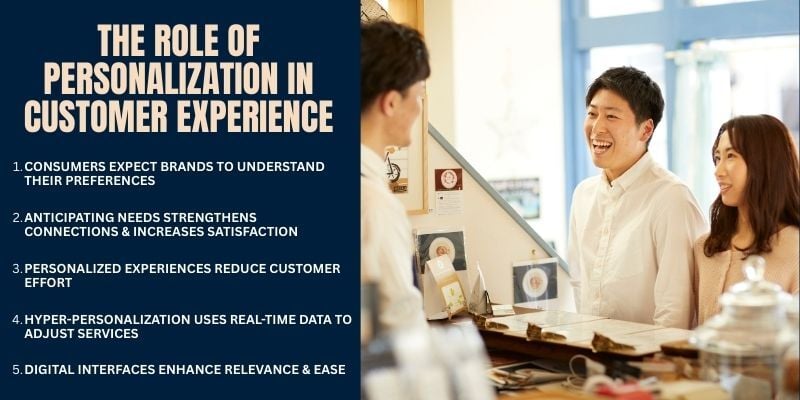
Personalization is vital for building customer loyalty. Today’s consumers expect brands to understand their preferences and offer relevant experiences.
Research from the BCG Global Consumer Radar Survey shows that about four‑fifths of customers globally are comfortable with personalized experiences and expect brands to offer them, emphasizing how much personalization influences satisfaction and loyalty.
Personalized experiences help build stronger connections by making interactions more meaningful. Whether through product recommendations, customer support, or special offers, customers are more likely to feel valued when their needs are anticipated.
This reduces the effort required from customers, leading to better engagement, higher satisfaction, and increased loyalty.
In industries focused on customer experience, hyper-personalization takes this a step further by using real-time data to adjust interactions based on immediate customer needs.
For example, digital interfaces, such as self-service kiosks or mobile apps, can adapt services based on customer actions, making the experience feel more relevant and seamless.
This real-time adaptability improves satisfaction and loyalty, as customers appreciate the ability to control their experience and see their preferences reflected across multiple touchpoints.
The Importance of Consistency Across Channels
Maintaining consistency across all customer touchpoints, whether through a website, mobile app, physical store, or customer support, is essential for creating a seamless brand experience.
When customers engage with a brand across multiple channels, they expect a consistent level of service, messaging, and overall experience. Any inconsistency across these touchpoints can create confusion and undermine brand trust.
Disjointed experiences, such as conflicting information online and in-store, can make customers feel uncertain about the brand’s reliability and prompt them to seek alternatives.
Consistent experiences strengthen brand loyalty by ensuring that customers can rely on the same quality of service across all platforms. When interactions are cohesive, customers are more likely to feel confident in the brand.
This reliability leads to higher customer satisfaction, increased retention, and stronger long-term relationships with the brand.
Conclusion
In today’s market, experience is more important than features when it comes to customer choice and building long-term loyalty.
As consumers increasingly expect personalized, smooth, and efficient interactions, businesses must adapt to meet these needs. Prioritizing customer experience over product features helps build lasting relationships and strengthen brand trust.
To stay relevant, companies must offer consistent and seamless experiences across all touchpoints. By exploring solutions like Wavetec’s queue management systems and self-service kiosks, businesses can enhance customer satisfaction and increase loyalty.
Take the first step towards improving your customer experience and positioning your brand for success.
BOOK A FREE DEMO