

Wavetec provides a Queue Management System to Europcar & Goldcar Across Europe
Executive Summary
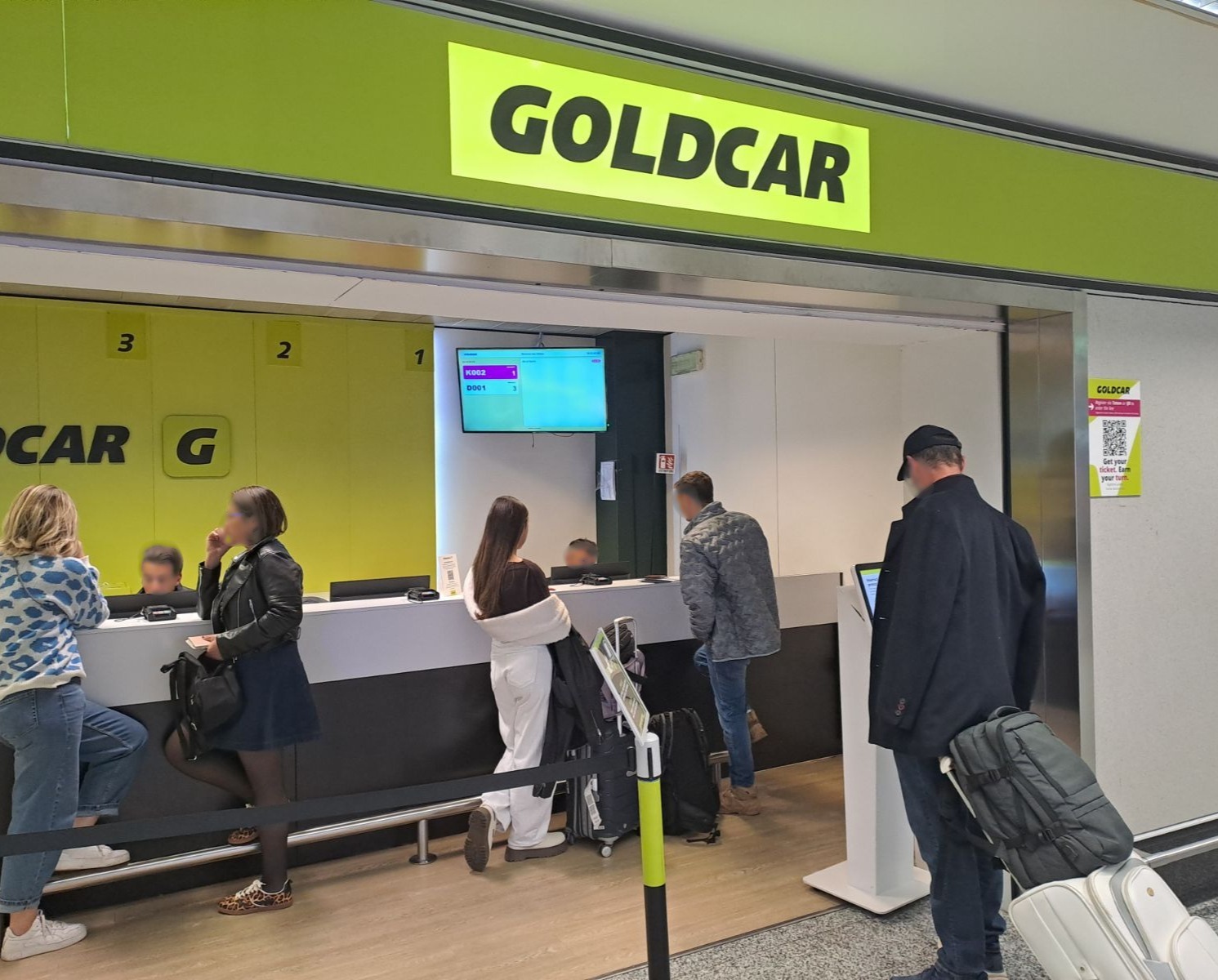
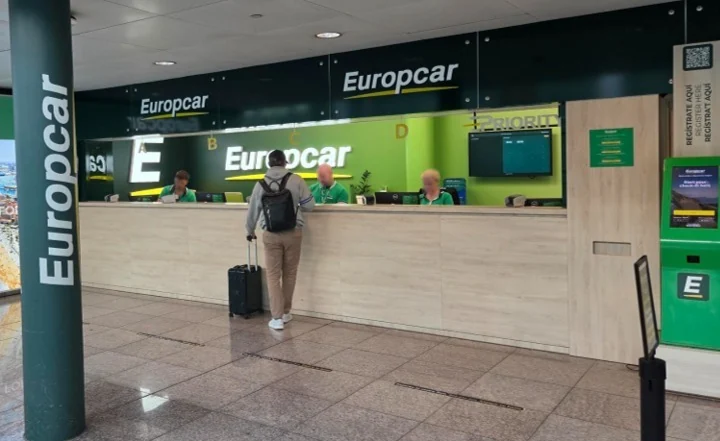
Europcar Mobility Group (EMG) operates one of Europe’s major vehicle rental networks, notably serving customers across its Europcar and Goldcar brands. Its branches manage a varied mix of customers, from travellers arriving with existing vehicle reservations to walk-in customers seeking a rental, assistance or support. Managing this demand becomes particularly complex at high-volume locations and during periods of increased tourism activity.
To create a more consistent and structured customer journey, Europcar Mobility Group partnered with Wavetec to deploy a digital Queue Management System (QMS) across 100+ branches in Europe. The solution brings together digital ticketing, mobile queue access, customer-facing displays, operator calling tools and operational analytics within one connected platform.
The deployment allows customers to join the appropriate queue digitally, whether they have a booking or are visiting as a walk-in customer. Booking customers can be segmented according to their booking details, while customers requiring urgent assistance, such as reporting an issue with a vehicle, key or machine, can be prioritised accordingly. Operators receive a structured way to manage customer flow, while management teams gain visibility into volumes, waiting times, service times and operator performance.
The result is a scalable customer-flow model designed for a large European branch network: customers have greater visibility over their journey, staff have clearer control over queues and managers have access to operational data that can support better decisions.
Why Does Customer Flow Matter for European Car Rental Branches?
Car rental branches operate in an environment where customer demand can change considerably throughout the day and across the year. This is particularly relevant in European tourism destinations, where seasonal travel can create significant variations in customer volumes.
The European Travel Commission reported that international tourist arrivals to Europe increased by 3.2% year-on-year in 2025, while overnight stays increased by 3.1%. Its research also highlights continued strong demand for travel within Europe and a growing interest in both traditional and off-season destinations.
For mobility providers, this creates an operational challenge. Branches need to accommodate customers who may arrive at very different times, require different services and have different levels of priority. A customer with a confirmed reservation may need to collect a vehicle quickly, while another customer may arrive without a booking and require assistance before beginning the rental process.
The Europcar deployment was designed around this complexity. Rather than treating every customer as part of one general queue, Wavetec’s QMS creates a digital framework through which customers can be categorised, prioritised and directed according to their requirements.
What Challenges Was EMG Looking to Address?
Europcar branches needed a consistent approach to managing variable customer volumes across a network of more than 100 European locations. The challenge was not simply the presence of queues, but the need to coordinate different types of customers and service requirements within the same branch environment.
The deployment addressed several operational requirements. These included managing high customer volumes during peak periods, handling both booking and walk-in customers, supporting operators in controlling customer flow and providing management with greater visibility into branch and operator performance. Standardising this process across a large European network was another important consideration.
The original customer classification model also presented limitations. Customers were broadly divided into booking and non-booking categories, making it difficult to manage higher-priority requirements with the level of granularity required in a busy rental environment.
For example, a customer experiencing an issue with a vehicle, key or self service Key collection machine may require immediate assistance rather than being treated in exactly the same way as a standard walk-in enquiry. The new approach provides greater flexibility to prioritise these interactions within the queue logic.
How Does Wavetec’s QMS Work at Europcar?
Wavetec implemented an end-to-end digital Queue Management System that connects customer ticketing, queue orchestration, service calling, visual communication and reporting.
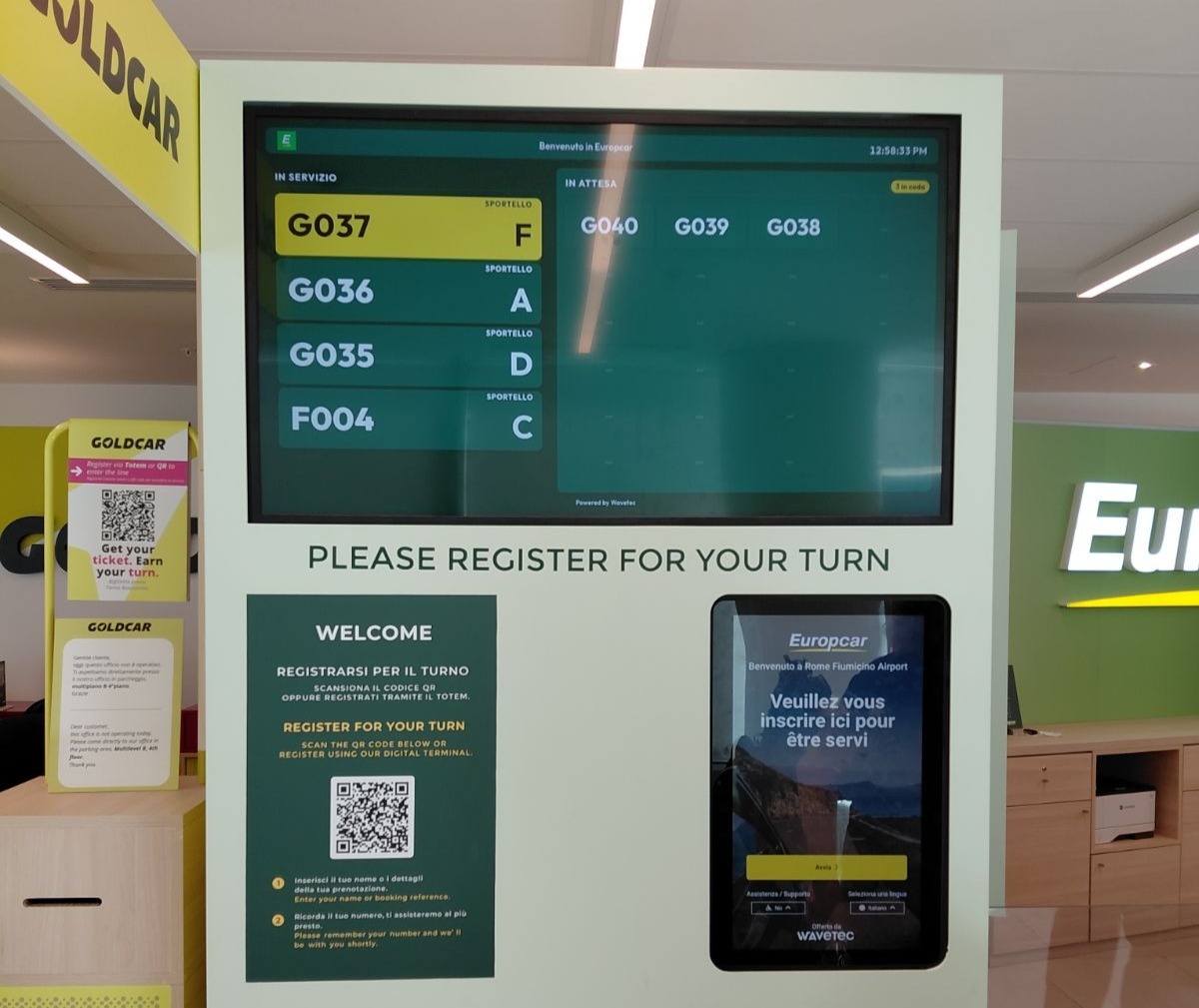
Customers can obtain a ticket through a digital kiosk or mobile ticketing. The ticket can be associated with an existing booking or created for a walk-in visit. Booking customers can then be further segmented according to their specific booking details, allowing the queue to reflect the actual service requirement rather than simply the customer’s arrival status.
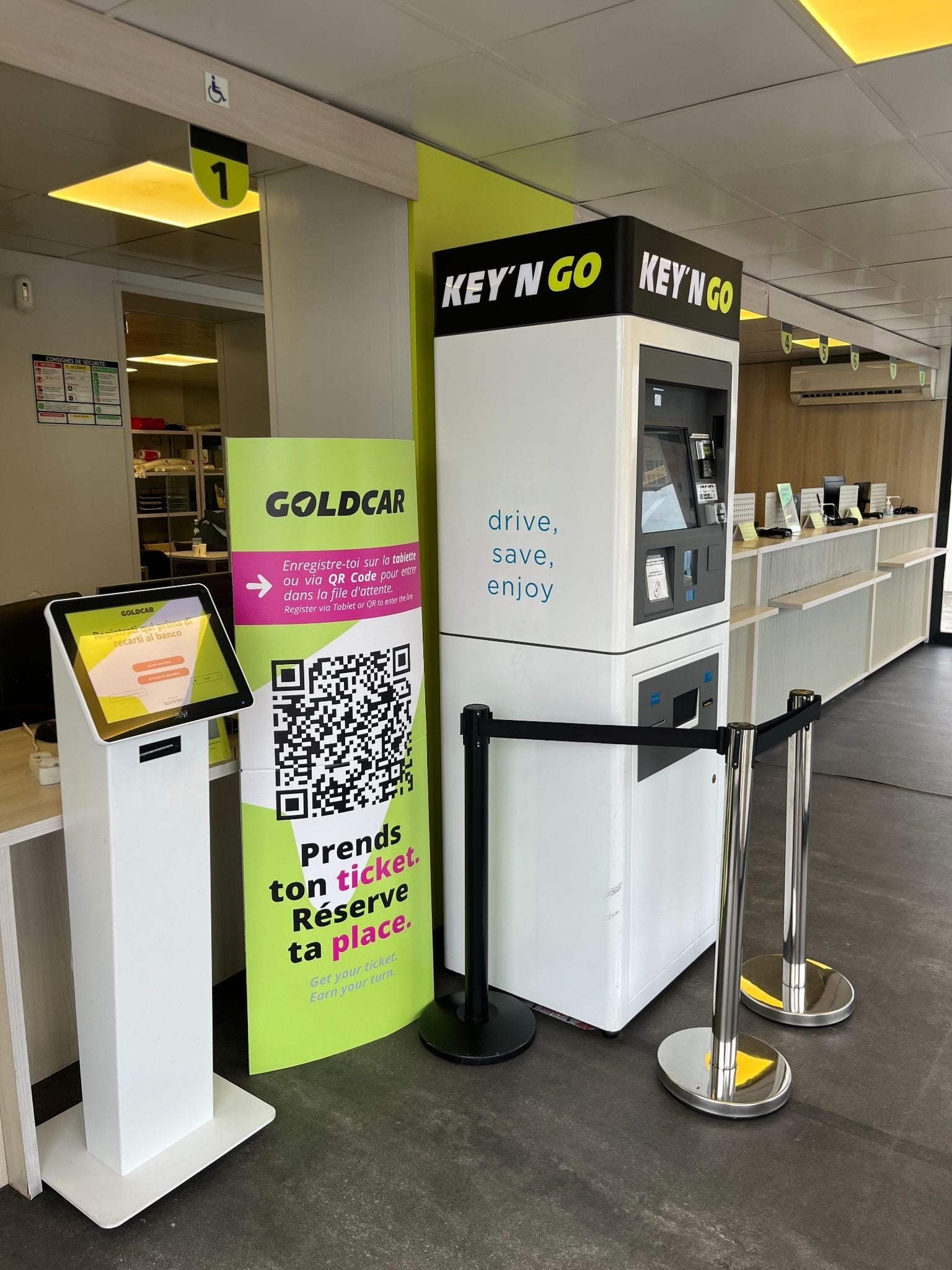
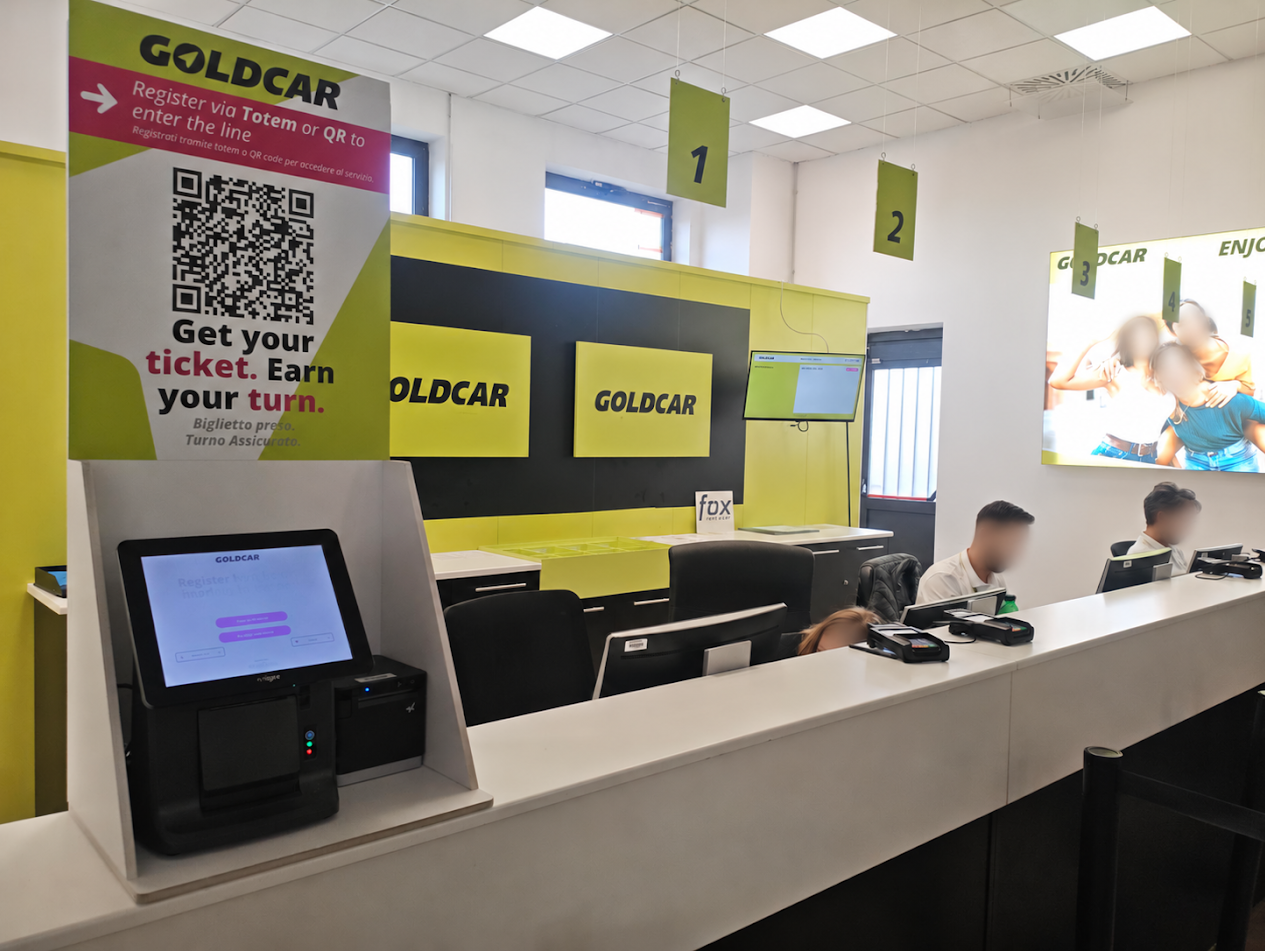
Once a customer enters the queue, they no longer need to remain in a traditional physical line. The system manages the queue digitally while customer-facing monitors provide information about ticket calls and the relevant service point.
At the service counter, operators use the QMS to call customers. The customer is then directed to the appropriate operator or service point, creating a clearer connection between the queue and the actual service process.
Behind this customer-facing journey, the system captures operational information including customer volumes, waiting times, service times and operator performance. Management teams can access this information through a statistics and reporting panel, creating a data layer that can be used to understand how branches are performing.
How Does the Customer Journey Work?
The Europcar & Goldcar customer journey follows a simple digital sequence designed to remove unnecessary uncertainty from the waiting process.
- The customer arrives and checks in via a physical totem or by scanning the QR code
The customer may have an existing vehicle booking or may arrive as a walk-in customer. - The customer receives a virtual or physical ticket
The customer joins the service process through a kiosk or mobile ticketing. - The customer is assigned to the corresponding priority level
The QMS assigns the ticket to the relevant service flow based on the customer’s booking or service requirement. - The ticket number is displayed on the TV screen
The customer can visualize their position in the queue.
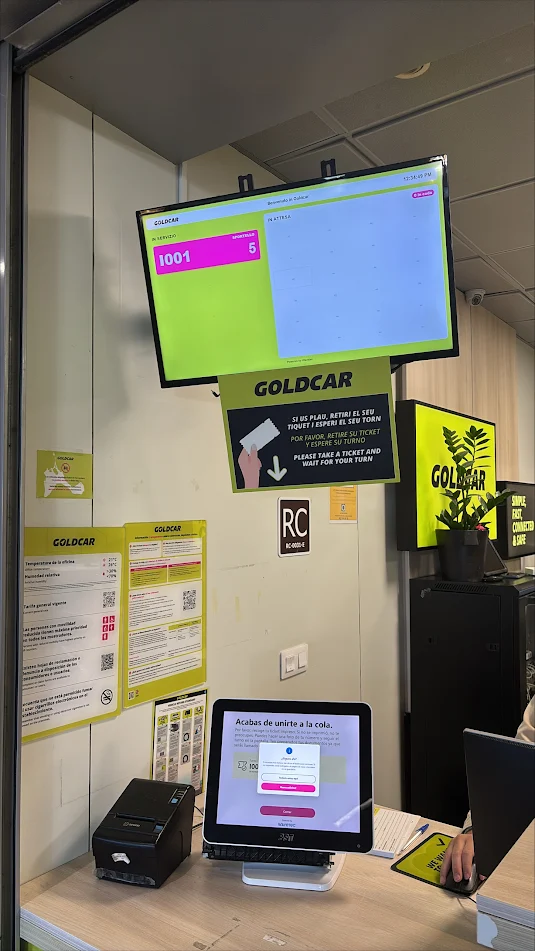
- The customer waits without standing in a physical queue
Instead of remaining in a fixed line, the customer can wait within the designated waiting area while monitoring their ticket status. - The agent calls the customer
Europcar staff use the queue management interface to call the next appropriate customer.
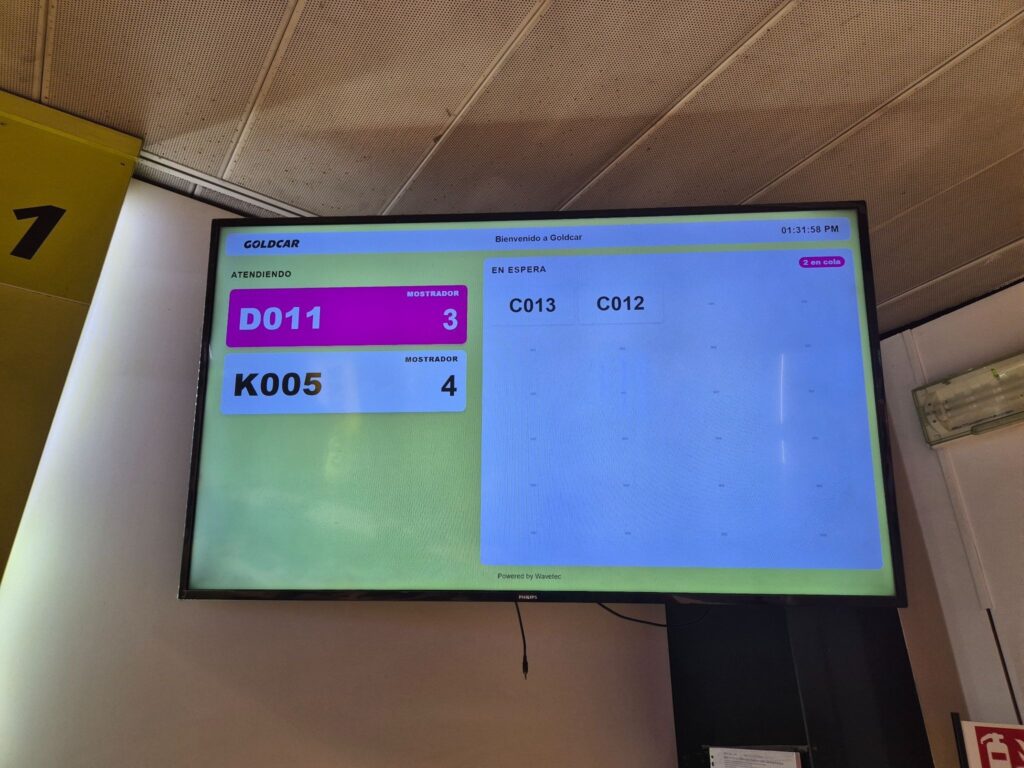
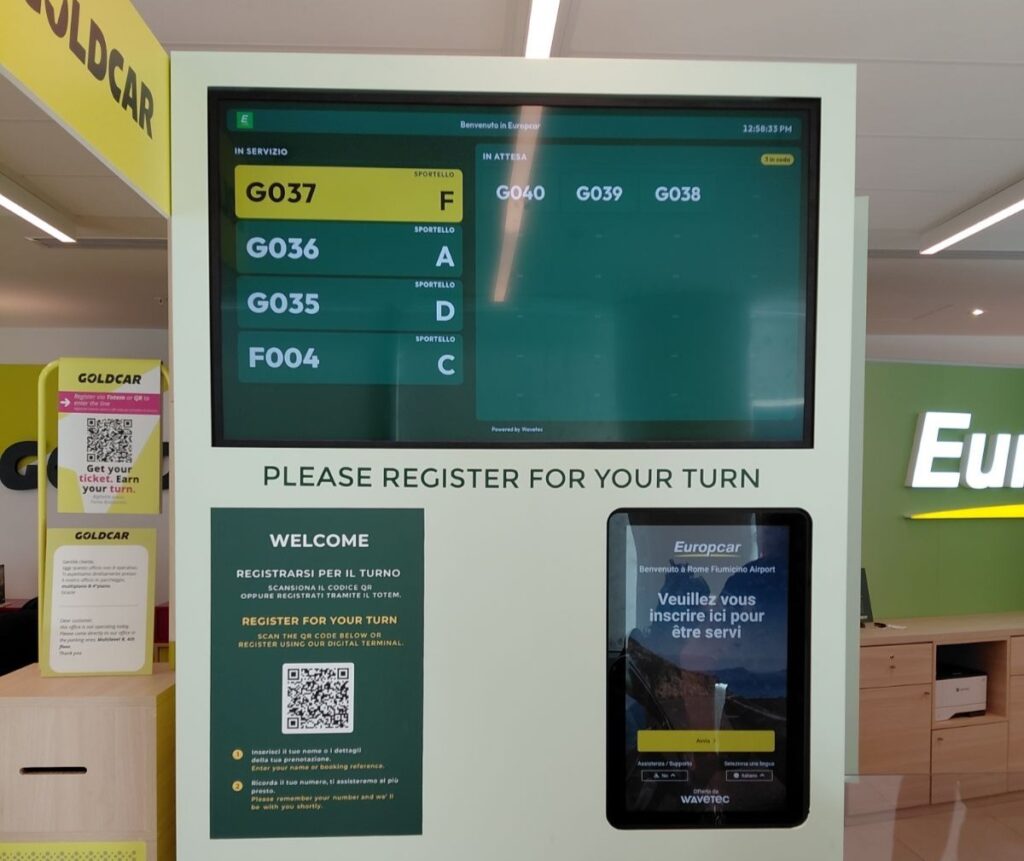
- The customer is directed to the counter
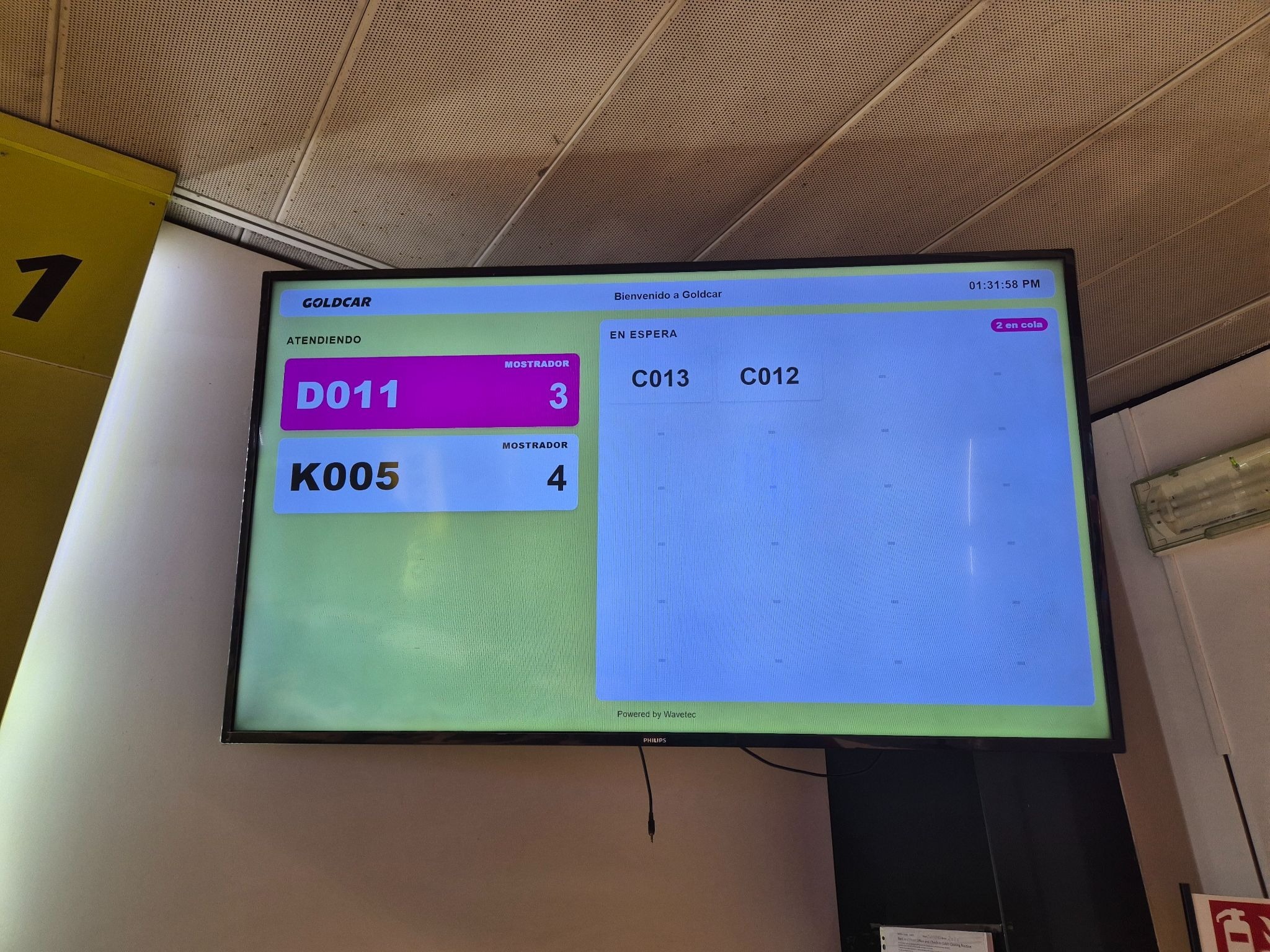
Ticket information is displayed on customer-facing monitors, helping the customer identify where they need to go. - The interaction is completed and recorded
The completed interaction contributes to the operational data captured by the system, supporting ongoing reporting and performance analysis.
What Operational Data Does Europcar Gain from the Queue Management System?
A major advantage of a digital QMS is that the queue becomes a source of operational information rather than simply a mechanism for organising waiting customers.
Wavetec’s deployment captures customer volumes, waiting times, service times and operator performance. This information is consolidated within the reporting environment, allowing management teams to examine branch activity and identify operational patterns.
For a network spanning more than 100 branches, this visibility can be particularly valuable. Instead of relying solely on individual branch observations, management can use structured data to understand where demand is increasing, how long customers are waiting and how service activity is progressing.
The broader value is the creation of a common operational framework across the branch network. Each location can manage its customer flow through the same underlying digital approach while retaining the flexibility needed for local operating conditions.
How Is Wavetec Extending Queue Management with AI?
Wavetec is extending its queue management platform from historical reporting towards predictive customer-flow operations through Spectra 2.0.
Spectra 2.0 combines live operational analytics with machine-learning-based demand forecasting and discrete-event simulation. Rather than only showing what has already happened, the platform is designed to help operations teams anticipate future customer demand and test different operational scenarios before implementing them.
For a high-volume branch network, this creates several potential applications. Historical customer volumes, service durations and other operational variables can be used to forecast future demand. Managers can then model scenarios such as changes in staffing or service capacity and assess how those changes could affect customer flow.
Wavetec has reported results from deployments using its forecasting module that include a 19-percentage-point improvement in service-level compliance, a 23% reduction in avoidable overtime and a 40–60% reduction in weekly manual roster-adjustment time. These figures are Wavetec deployment data and should be treated as such rather than as independent industry benchmarks.
For Europcar, the important distinction is that these AI capabilities represent the direction of Wavetec’s broader platform rather than a claim that every capability is currently part of the Europcar deployment.
Where Else Is Wavetec Applying Similar Customer-Flow Technology in Europe?
Europcar is part of a wider portfolio of European deployments where Wavetec applies digital queue management to environments with fluctuating demand and multiple customer requirements.
In Spain, Consum uses Wavetec’s Queue Management System across 500+ stores, combining kiosks, Spectra, mobile ticketing and digital signage. Waiting times fell from around 12 minutes to under five, while basket size increased by 5–7% during peak hours.
In Italy, Rossi Pharmacy uses Wavetec’s solution across six service categories, combining an M-18 kiosk, Spectra, Donatello digital signage and WhatsApp queuing.
These deployments demonstrate a common principle: the technology is not limited to one industry. The same customer-flow foundation can be configured around different service categories, priorities, customer volumes and operational processes.
What Does the Europcar Deployment Mean for Customer Experience?
For customers, the most visible change is a more structured and transparent waiting experience.
Instead of joining an undifferentiated physical line, customers can enter a digital queue that reflects their booking or service requirement. They can then follow ticket information on customer-facing screens and move to the appropriate service point when called.
For operators, the system provides a consistent method for managing customer flow and prioritising different service requirements. For management, the reporting layer provides greater visibility into customer demand and operational performance.
The combination creates a more connected customer journey in which ticketing, queue management, service calling and analytics work as parts of one system rather than separate processes.
What Are the Key Outcomes of Europcar’s Queue Management Deployment?
The deployment has created a more organised digital approach to customer flow across Europcar’s European branch network.
The key outcomes include improved management of peak-period customer volumes, clearer differentiation between booking and walk-in customers, more flexible prioritisation of specific customer requirements, and better coordination between customers and operators. Management teams also gain access to structured information on customer volumes, waiting times, service times and operator performance.
Most importantly, the deployment establishes a digital foundation that can evolve beyond basic queue organisation. As customer-flow data becomes increasingly available, it can support more advanced analytics, forecasting and simulation capabilities.
For a mobility business operating across a dynamic European travel market, this creates an opportunity to manage customer flow not simply as a waiting-line problem, but as an operational process that can be measured, understood and continuously improved.
FAQs
How many Europcar branches use Wavetec’s Queue Management System?
Wavetec’s QMS is deployed across more than 100 Europcar & Goldcar branches in Europe.
How do the customers join the queue?
Customers can receive a ticket through a digital kiosk or mobile ticketing. Tickets can be associated with an existing booking or created for walk-in customers.
Can Europcar & Goldcar prioritise customers with specific requirements?
Yes. Customers with a booking can be segmented according to their booking details, while customers reporting issues with vehicles, keys or machines can receive prioritised assistance.
What information does Europcar’s queue management system track?
The system captures operational data including customer volumes, waiting times, service times and operator performance. This information feeds into statistics and reporting for management teams.
Can the same queue management technology be used in other European industries?
Yes. Wavetec has deployed similar customer-flow technology across European retail and healthcare environments, including Consum in Spain and Rossi and Due Leoni pharmacies in Italy. These deployments demonstrate how ticketing, queue orchestration, digital signage and analytics can be adapted to different service environments.