How CLSC de Chicoutimi Streamlined Patient Flow with Wavetec
Executive Summary
In Québec, the first contact with the health network often happens at a local service point. The Government of Québec’s first-line care policy defines first-line services as the ones a person consults first for a health problem, and it names CLSCs (centres locaux de services communautaires) among them. For the patient, the experience of that first visit starts in the waiting area: getting a ticket, understanding the queue and knowing when to move.
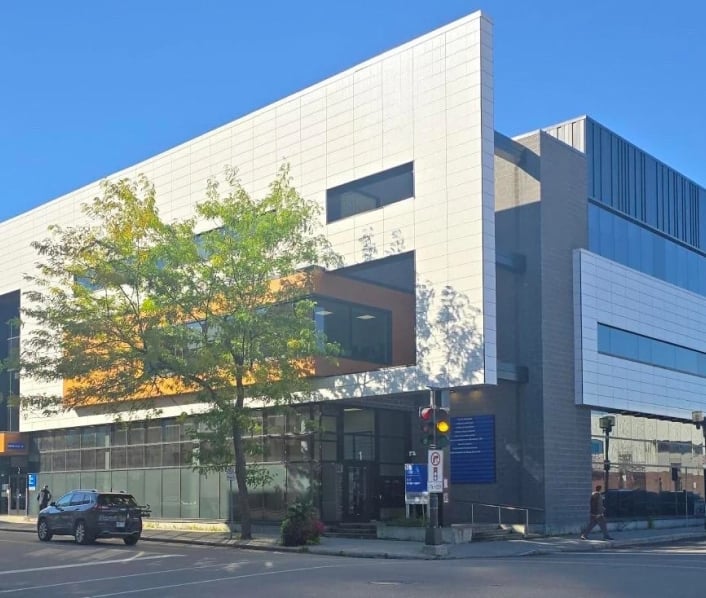
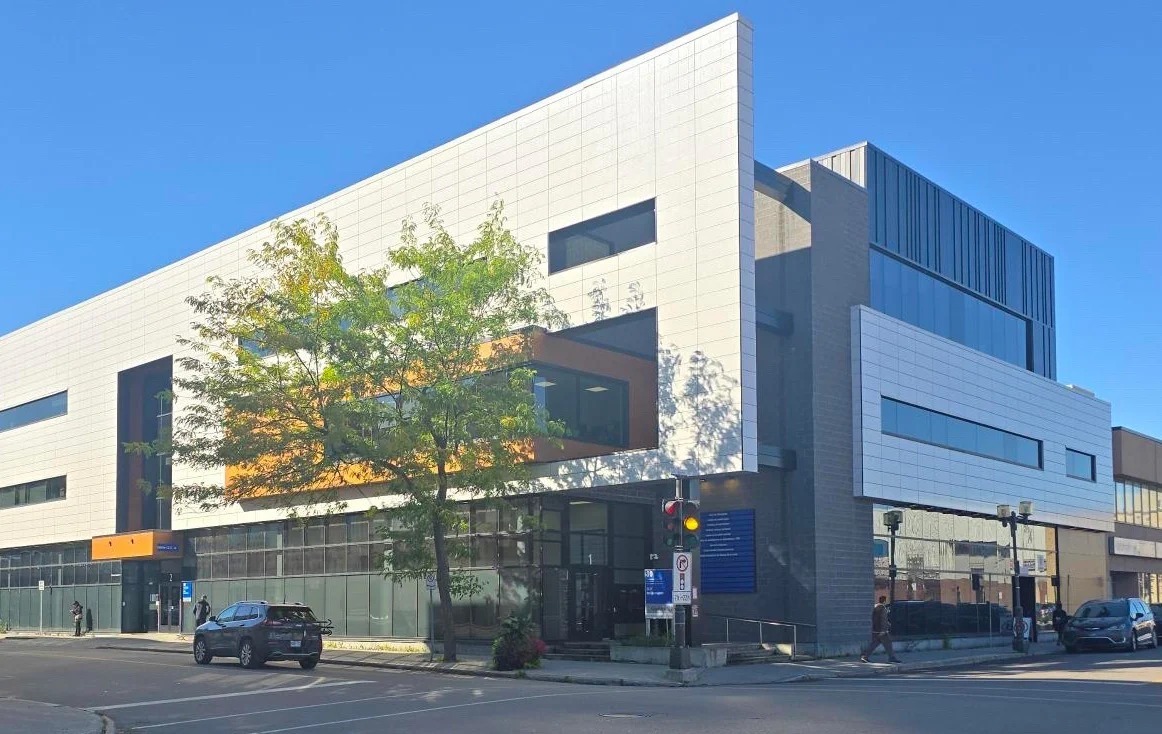
CLSC de Chicoutimi operates within the Centre intégré universitaire de santé et de services sociaux du Saguenay–Lac-Saint-Jean. The site needed a localized, patient-friendly solution that could handle distinct appointment flows and fit with its existing technical infrastructure.
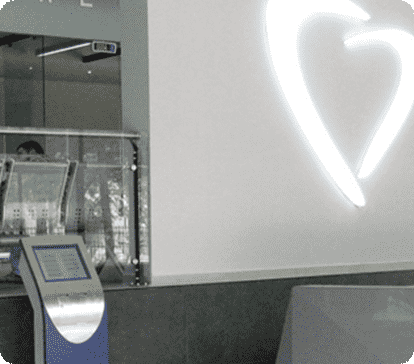
Wavetec, working with Perron Telecom, configured and deployed a patient-flow and queue management solution built around four connected elements: a desktop ticket dispensing unit (TDU) with a French-language ticketing experience, French-language announcements, Donatello digital signage for patient-facing communication, and the Spectra dashboard for queue visibility and operational reports.
The result is a waiting area where ticketing, announcements, signage and reporting work as one system, in the language patients use.
With 11 offices, customers in more than 80 countries and deployments across 30+ US States, including every Canadian province, Wavetec delivers projects like this one through local partners and its own engineering, hardware and support teams.
What Is a Patient Flow Management System?
A patient flow management system organizes how people move through a healthcare facility, from the moment they ask for a service to the moment they are called. It combines ticketing, call-forwarding, waiting-area displays and analytics so that patients know where they stand and staff and managers can see what is happening in real time.
What was the Challenge that CLSC de Chicoutimi faced?
CLSC de Chicoutimi faced three requirements at once:
- Language: Patients needed to take a ticket, follow their place in the queue and hear service notifications in French.
- Distinct appointment flows: Different types of visits needed to be organized without confusing patients or staff.
- Existing infrastructure: The new components had to align with the site’s operational and technical environment rather than replace it.
This matters beyond one facility. Access to first-line care is a recognized pressure point across Canada.
Analysts at the Canadian Institute for Health Information (CIHI), writing in Healthcare Quarterly in January 2026, reported that only one in four older adults in Canada could get a same- or next-day appointment the last time they needed one, the lowest rate among the countries surveyed, and 31% of older adults who had visited an emergency department said they could have been treated at their regular place of care had it been available. The Government of Québec describes today’s first-line offer as fragmented and hard to navigate, and its policy calls for digital technologies that improve navigation, access and the efficiency of information exchange.
When access is tight, every minute in a waiting area counts. Clear ticketing and communication will not create new appointments, but they help the sites that do offer care use each visit well and keep patients informed while they wait.
The Solution: Ticketing, Signage and Analytics Working Together
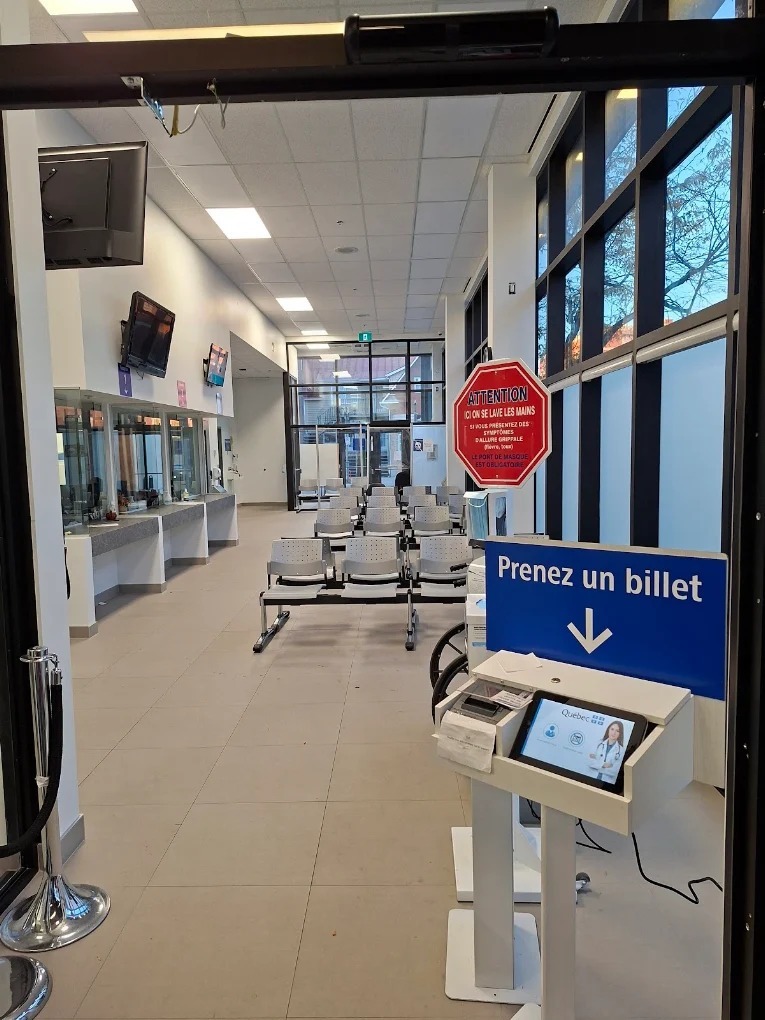
Wavetec and Perron Telecom coordinated the configuration and deployment so that each technology component matched the site’s operational and technical needs. The deployment brings together:
- Desktop TDU with French-language ticketing: Patients request a ticket in French, and the system manages patient queues for the site’s distinct appointment flows.
- French-language announcements: Audio notifications help patients follow their queue progression and know when they are being called throughout their visit.
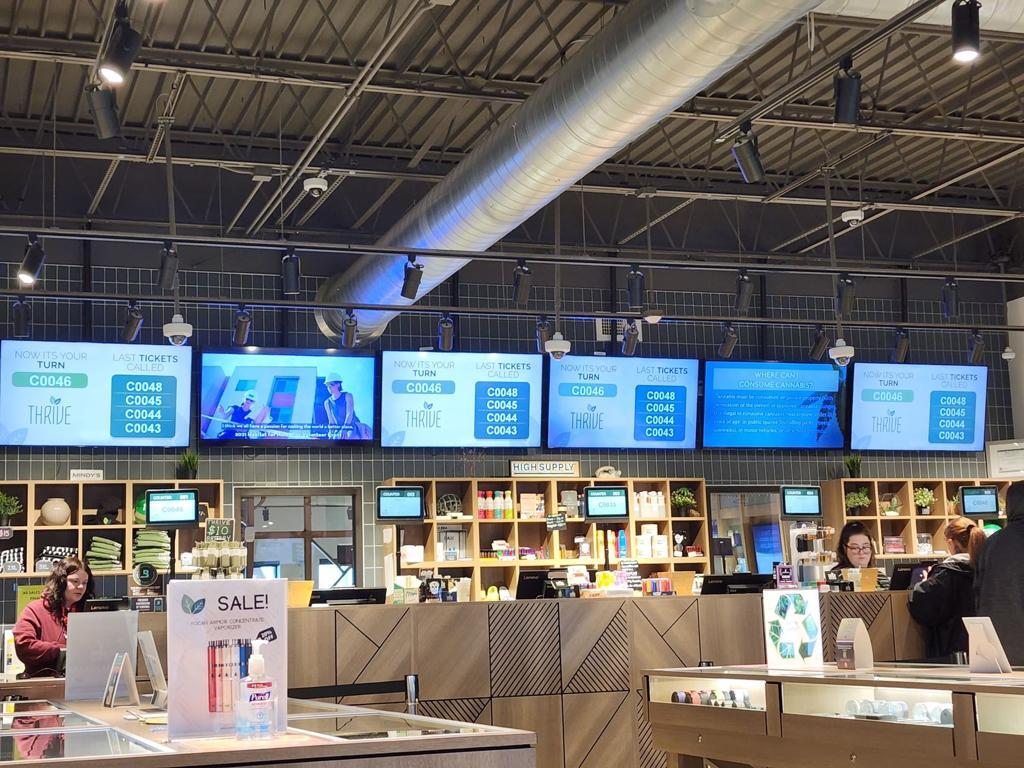
- Donatello digital signage: Wavetec’s in-house media player platform supports patient-facing communication and announcements, so the same display that shows queue information can carry other messages.
- Spectra dashboard and reporting: Visibility into queue activity and access to operational reports.
This is Wavetec’s full-stack approach in practice: queue management software, digital signage, ticketing hardware and analytics are built in-house, then deployed and supported with a local partner who knows the site.
Deloitte’s 2026 US Health Care Outlook, based on a survey of 120 US health system and health plan executives, advises organizations to favour integrated digital platforms with shared capabilities, data and governance over disconnected point tools, and found that about 70% plan alliances with technology or digital companies in 2026.
How Does the Patient Journey Work at CLSC de Chicoutimi?
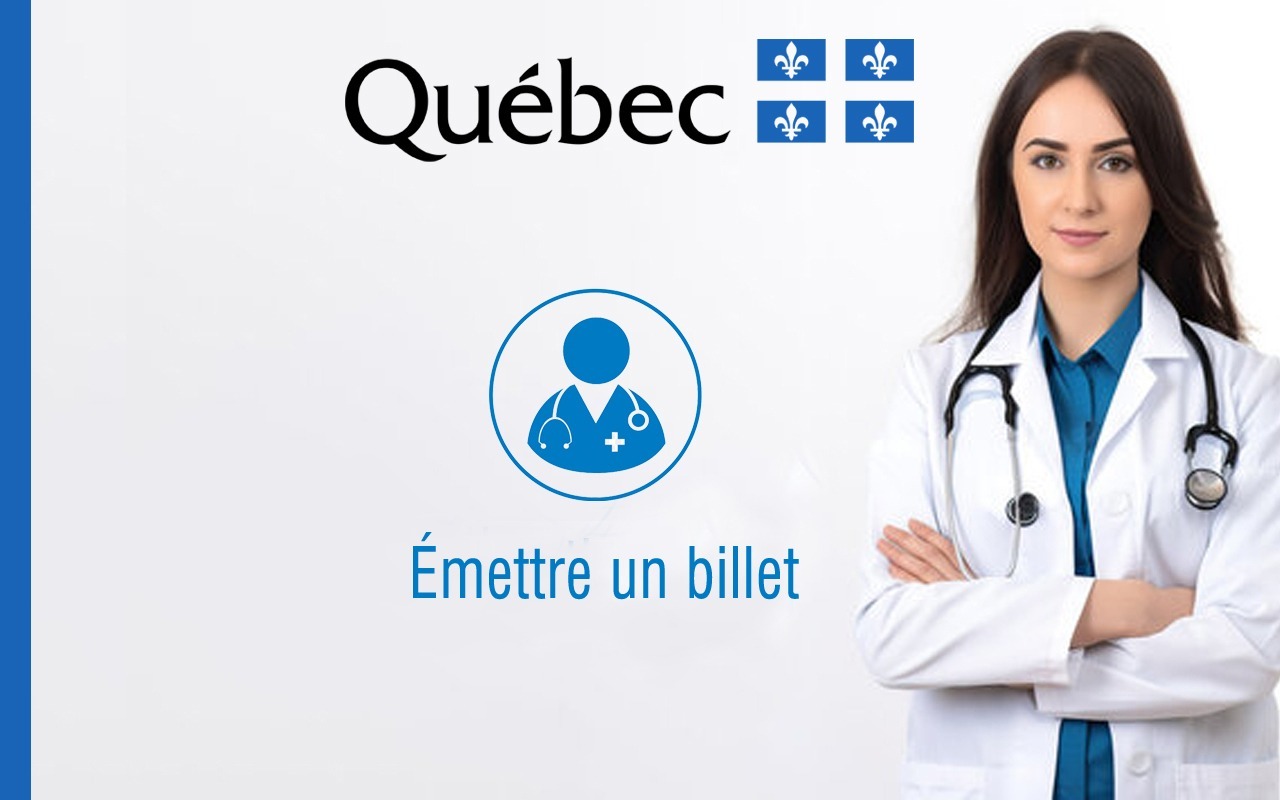
1. The patient arrives and takes a ticket
At the desktop TDU, the patient uses a French-language ticketing experience. There is no need to ask the staff how the queue works.
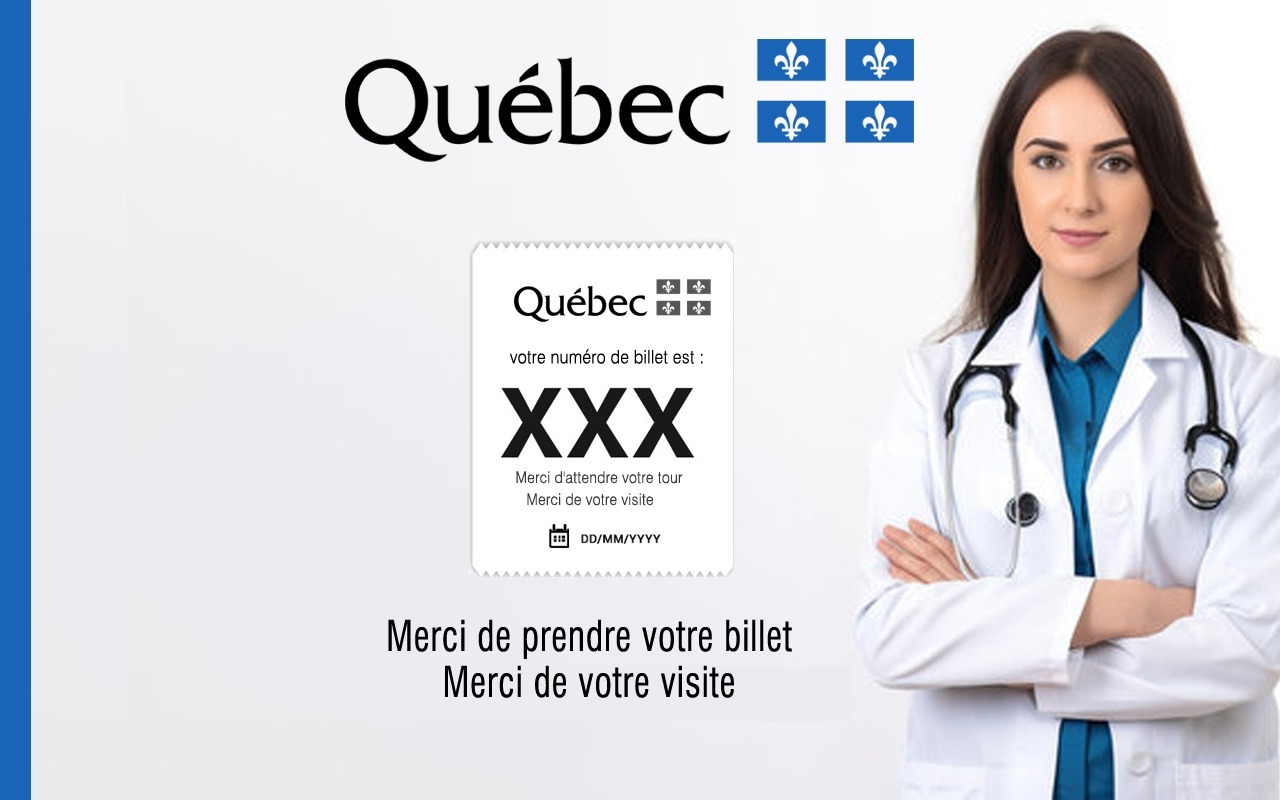
2. The ticket joins the right flow
The system organizes tickets according to the site’s distinct appointment flows, so patients with different needs are managed in an orderly way.
3. The patient follows progress while waiting
French-language announcements and Donatello signage keep patients informed about their queue progression and service notifications.
4. The patient is called
The announcement and the display work together, so patients understand when they are being called for service rather than relying on a single cue.
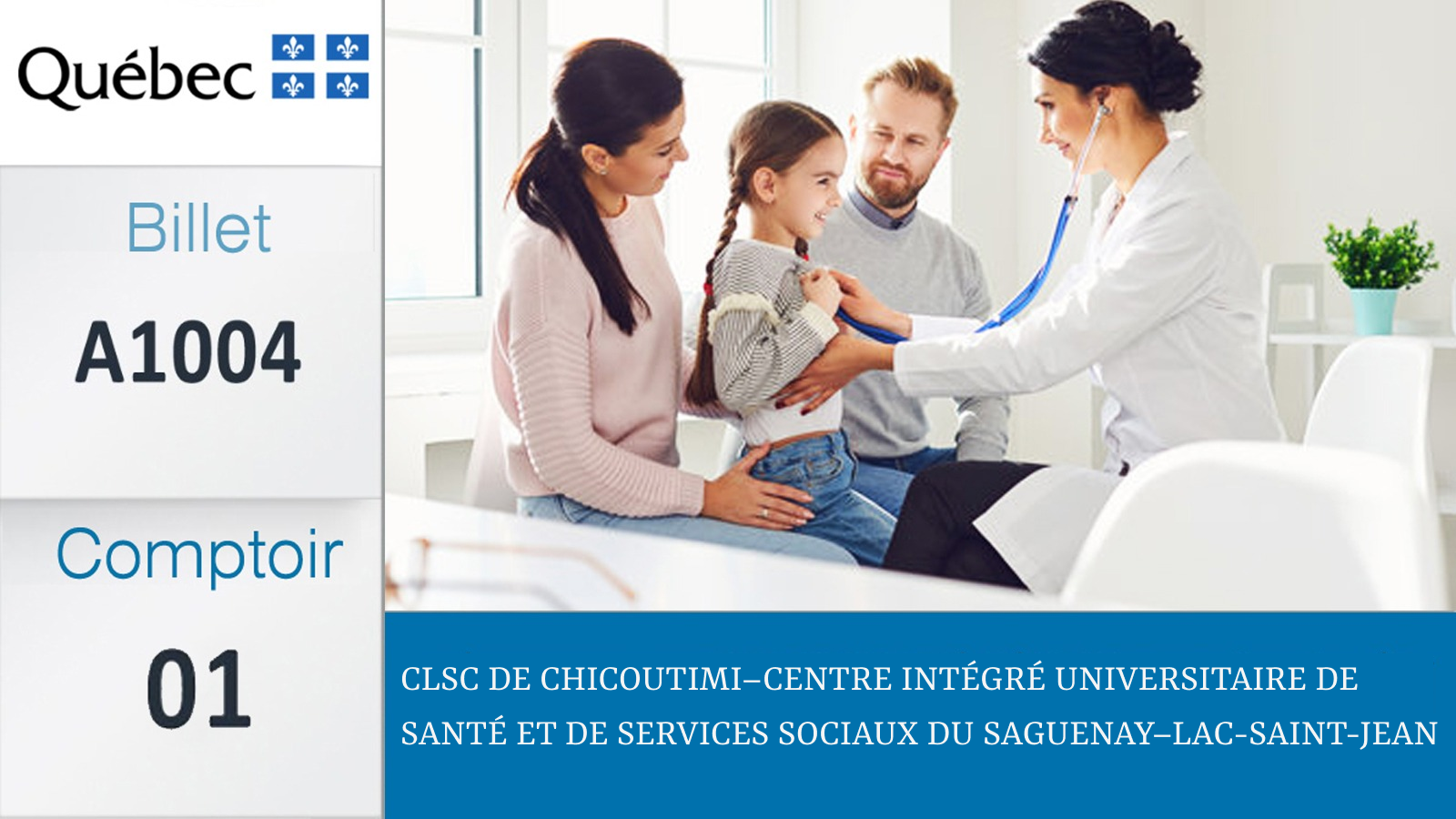
5. The facility sees what happened
Queue activity flows into Spectra, where the facility can review dashboards and operational reports.
From the patient’s side, the technology stays in the background. They take a ticket, follow the screen and the announcements, and go when called.
Accessibility, Security and Trust
Healthcare technology has to be usable by everyone and safe to trust. Wavetec’s self-service kiosks are designed with ADA accessibility requirements in mind, including accessible reach heights, tactile controls and audio support.
Wavetec’s information-security framework includes ISO/IEC 27001:2022 certification for its information security management system, SOC 2 certification and GDPR compliance.
A waiting area serves patients with very different needs, so the experience should not depend on a single sense or skill. At CLSC de Chicoutimi, ticketing, announcements and signage are in French, and queue progress is communicated through both audio announcements and on-screen display. A patient who cannot easily read a screen or hear a call still has a second cue. Accessible kiosk design (reach heights, tactile controls and audio support) extends the same principle to the moment a patient takes a ticket.
Queue systems also handle operational data that facilities need to protect. The Wavetec platform supports role-based access, so staff see only what their role requires, along with audit logs that record activity, encryption in transit and configurable data-retention controls. The certifications give the facility independent assurance on top of those controls. ISO/IEC 27001:2022 is the international standard for managing information security, SOC 2 is an independent audit of the controls a provider has in place, and Wavetec’s GDPR compliance covers the handling of personal data.
Results and What This Means for the Facility
What the deployment delivers today is a coordinated, French-language patient communication layer: ticketing, queue management, announcements, signage and reporting configured for the site’s appointment flows. Site-specific performance metrics are not part of this case study.
| What this means | In practice |
| For patients | A ticketing and notification experience in French, with audio and visual cues to follow their place in the queue. |
| For front-line staff | An organized flow for each appointment type, with fewer manual queue questions in the waiting area. |
| For facility managers | Dashboards and reports on queue activity through Spectra. |
| For the health network | A data foundation that can support future capacity and resource-allocation decisions. |
From Monitoring Patient Flow to Planning Capacity with AI
Spectra shows what is happening. The next question is what to do about it. This is where Wavetec’s Nexia AI ecosystem comes in, as a potential next step and not part of the current deployment.
Through Nexia Consultant, organizations can move beyond monitoring performance to identifying what could improve it. Using operational data, forecasting and simulation, the tool helps teams evaluate demand, test service scenarios and receive recommendations based on expected outcomes. For a facility like CLSC de Chicoutimi, that could support day-to-day planning.
For example, the team could ask which days and times are likely to be busiest next month?, whether current service capacity is enough for peak periods, what happens to waiting times if patient volumes rise?, and whether reallocating resources to a specific period would improve the patient experience.
The value of this step depends on having enough historical queue data, which the current deployment begins to build.
Why Wavetec?
Wavetec brings the full stack to a project like this one. Queue management software, Donatello signage, ticketing hardware and Spectra reporting, all come from Wavetec, so the components were designed to work together and are supported by one vendor. Delivery stays close to the customer as well: Perron Telecom coordinated with Wavetec to align the technology with the site’s requirements, which lets Wavetec combine global product capability with local knowledge of the site.
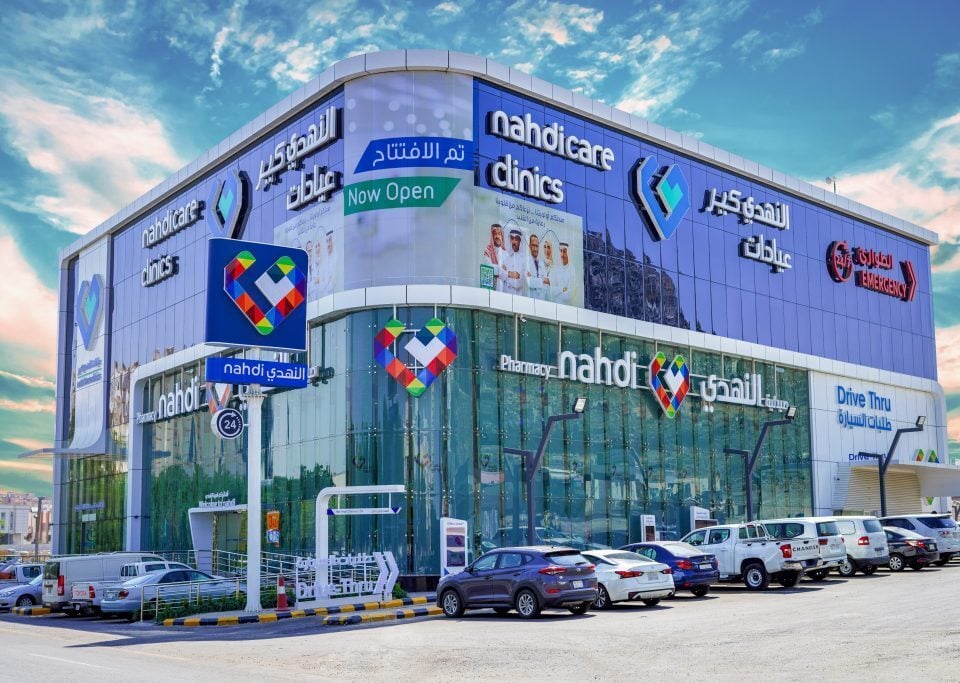
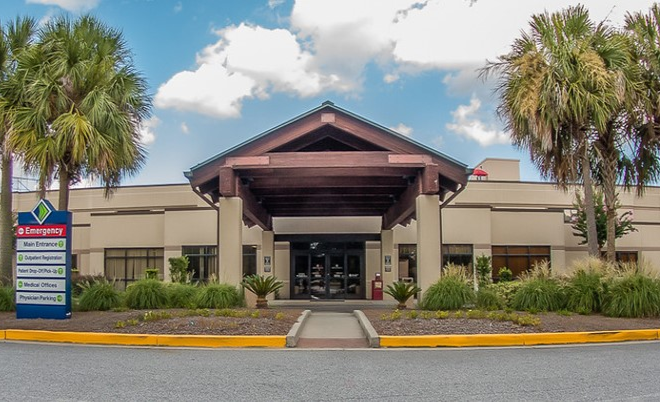
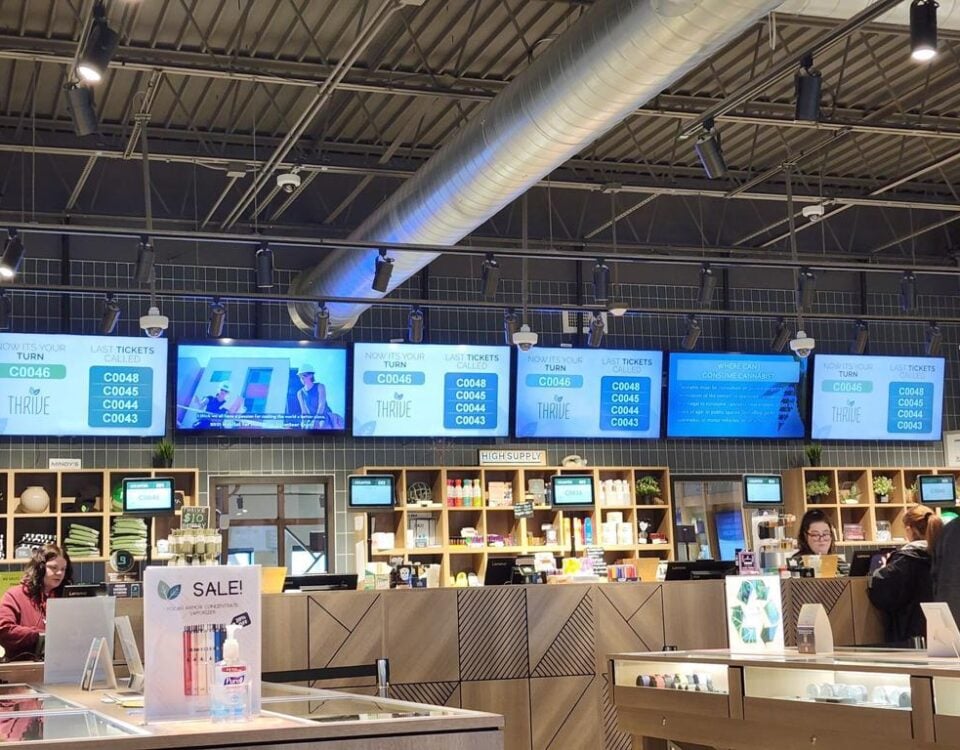
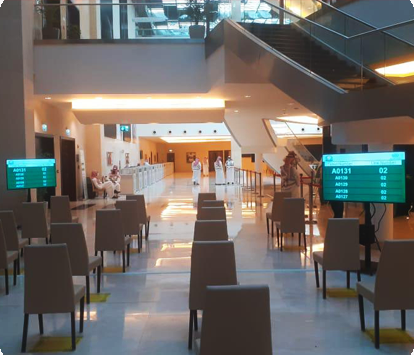
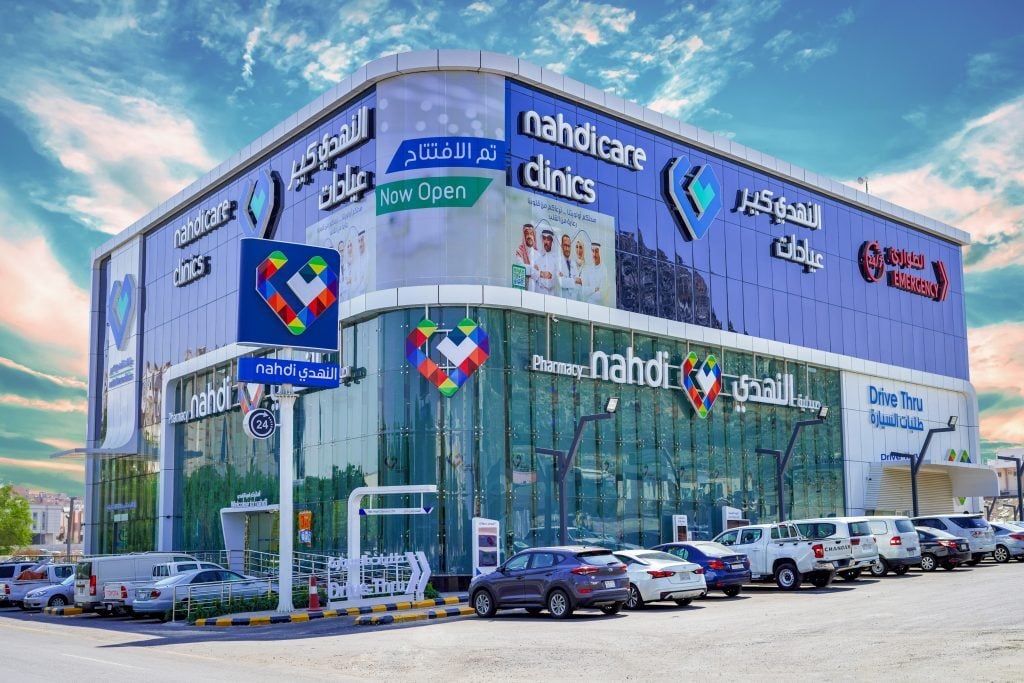
Wavetec also brings healthcare experience to the table. CLSC de Chicoutimi joins other healthcare customers Wavetec supports in the US and Canada, including Liberty Regional Medical Center and MariMed’s Thrive Dispensaries, as well as Nahdi Care Clinics in the wider healthcare sector. In Canada, Wavetec also supports DriveTest Ontario with appointments, check-in and queuing for a high-volume public service.
Frequently Asked Questions
What did Wavetec implement at CLSC de Chicoutimi?
Wavetec, with Perron Telecom, deployed a patient-flow and queue management solution that includes a desktop TDU with French-language ticketing, French-language announcements, Donatello digital signage and the Spectra dashboard and reporting.
Is the patient experience available in French?
Yes. Ticket issuance and announcements are delivered in French, so patients can follow their queue progression and service notifications in their own language.
What role did Perron Telecom play?
Perron Telecom worked with Wavetec to configure and deploy the solution, coordinating the different technology components so that they aligned with the site’s operational and technical requirements.
What does Spectra provide to the facility?
Spectra provides dashboards and reporting on queue activity, giving the facility visibility into service activity and access to operational reports.